



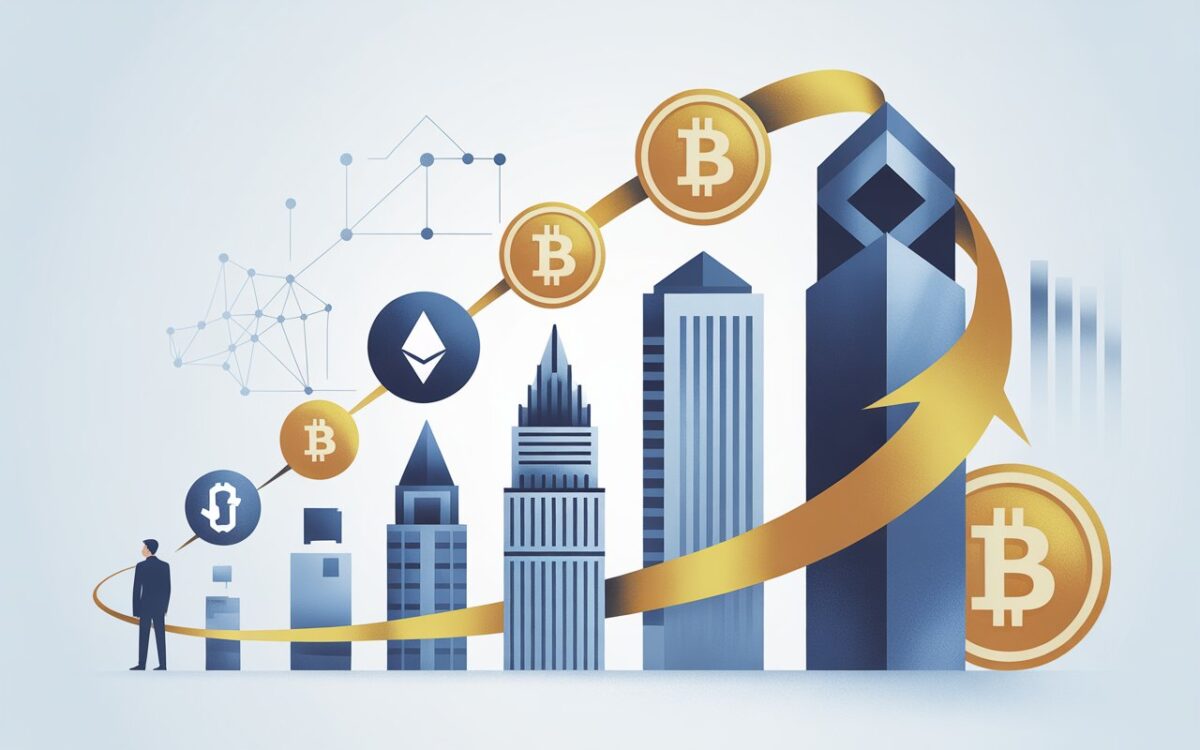


Over the past decade, crypto investment has transitioned from a fringe experiment to a core consideration within institutional portfolios. What began as a speculative asset class led by early adopters has evolved into a rapidly institutionalizing ecosystem—one that is increasingly shaped by compliance, infrastructure, and yield-driven strategies rather than hype or volatility.
Two recent developments highlight this changing landscape:
- Ripple’s US $500 million funding round, which valued the company at roughly US $40 billion, demonstrated the growing appetite for exposure to regulated digital asset infrastructure.
- A new global hedge fund survey revealed that over 55 percent of hedge funds now have positions tied to digital assets—up from 47 percent in the previous year.
These signals mark a clear pivot in institutional sentiment. The market narrative is no longer “if” digital assets belong in a portfolio, but “how” to gain exposure efficiently, transparently, and sustainably.
From Speculation to Structure: The Evolution of Crypto Investment
In the early years, crypto investment revolved around token speculation—buying, holding, and hoping for appreciation. While that stage built the market’s foundations, it also exposed its limitations: volatility, lack of transparency, and insufficient regulatory clarity.
Now, institutional investors are approaching digital assets with a new framework, one that mirrors traditional finance. Instead of chasing price momentum, they are seeking yield-oriented, infrastructure-backed, and legally compliant models. These approaches resemble structured financial products—designed to generate consistent returns and withstand market fluctuations.
This shift is catalyzed by the same forces driving broader economic change: digitization, decentralization of computing resources, and a growing demand for transparent, auditable systems of value creation.
RockToken: Infrastructure as an Investment Gateway
Among the new generation of firms bridging institutional standards with accessible investment models, RockToken stands out for its infrastructure-driven approach.

Rather than focusing on speculative trading, RockToken enables investors to participate in computing-based asset contracts—agreements that derive value from operational output and data-processing efficiency. In essence, the company transforms computing infrastructure into an investable, revenue-generating asset class.
This model offers several advantages:
- Real productivity backing: Each participation contract is tied to measurable computing output, giving the asset tangible performance metrics rather than abstract valuation.
- Predictable, yield-based returns: Participants share in the ongoing productivity of RockToken’s global data operations, creating a more stable and trackable income stream.
- Lower entry barriers: Through its US $99 experience package, RockToken opens the door for individuals to explore infrastructure-linked digital investments without significant capital exposure.
- Transparency and trust: Operational data and performance metrics are openly auditable, aligning with the institutional demand for visibility and accountability.
By offering this combination of accessibility and institutional-grade oversight, RockToken demonstrates how next-generation digital investment can serve both retail and professional audiences.
Why Institutional Attention Matters
Institutional participation is more than a signal of confidence—it’s a stabilizing force.
When hedge funds, banks, and asset managers allocate capital to digital asset infrastructure, they bring rigorous due diligence, compliance oversight, and longer investment horizons. This, in turn, encourages service providers and platforms to adopt higher operational standards.
RockToken’s ongoing expansion across Asia and Oceania follows this trend closely. Its distributed infrastructure model mirrors the broader institutional preference for asset diversification, sustainability, and predictable yield generation. By aligning participation contracts with verifiable productivity, the company reduces dependence on price speculation and promotes long-term value creation.
The Broader Outlook: Tokenized Infrastructure and Real-World Utility
What’s happening across the market is more than just a bull-cycle revival—it’s the beginning of a structural transformation.
Tokenized infrastructure and real-world asset (RWA) integration are creating new pathways for investors to participate in digital economies backed by tangible productivity. Computing power, energy efficiency, and distributed storage are emerging as the next generation of yield-bearing assets.
As the line between physical and digital capital continues to blur, platforms like RockToken are helping redefine what crypto investment means: not speculative exposure, but ownership of productive capacity in the digital age.
Final Thoughts: Building Trust in a Post-Speculation Era
The evolution of crypto investment mirrors the broader maturing of digital finance. Institutional capital is not chasing volatility; it is looking for structure, reliability, and return consistency. That is precisely where RockToken and similar infrastructure-based models fit in—bridging trust with performance.
For investors, the message is clear: the next era of digital finance won’t be built on tokens alone, but on the systems, computing power, and operational networks that support them. RockToken’s expansion into accessible, yield-oriented computing contracts represents a practical step toward that reality.
To learn more or explore the US $99 experience package, visit https://rocktoken.com.


