





TLDR
- TSMC reported fourth-quarter net income of NT$505.74 billion, beating estimates by 5.7% and marking the eighth straight quarter of year-over-year profit growth
- Revenue hit NT$1.046 trillion ($33.73 billion) in Q4, surpassing forecasts, while full-year 2025 revenue exceeded $100 billion for the first time
- Advanced chips of 7-nanometer or smaller accounted for 77% of wafer revenue, with AI and high-performance computing making up 55% of total sales
- Capital expenditure for 2026 is projected at $52-56 billion, up at least 25% from 2025’s $40.9 billion
- Revenue guidance for 2026 expects close to 30% growth, with Q1 2026 projected between $34.6-35.8 billion
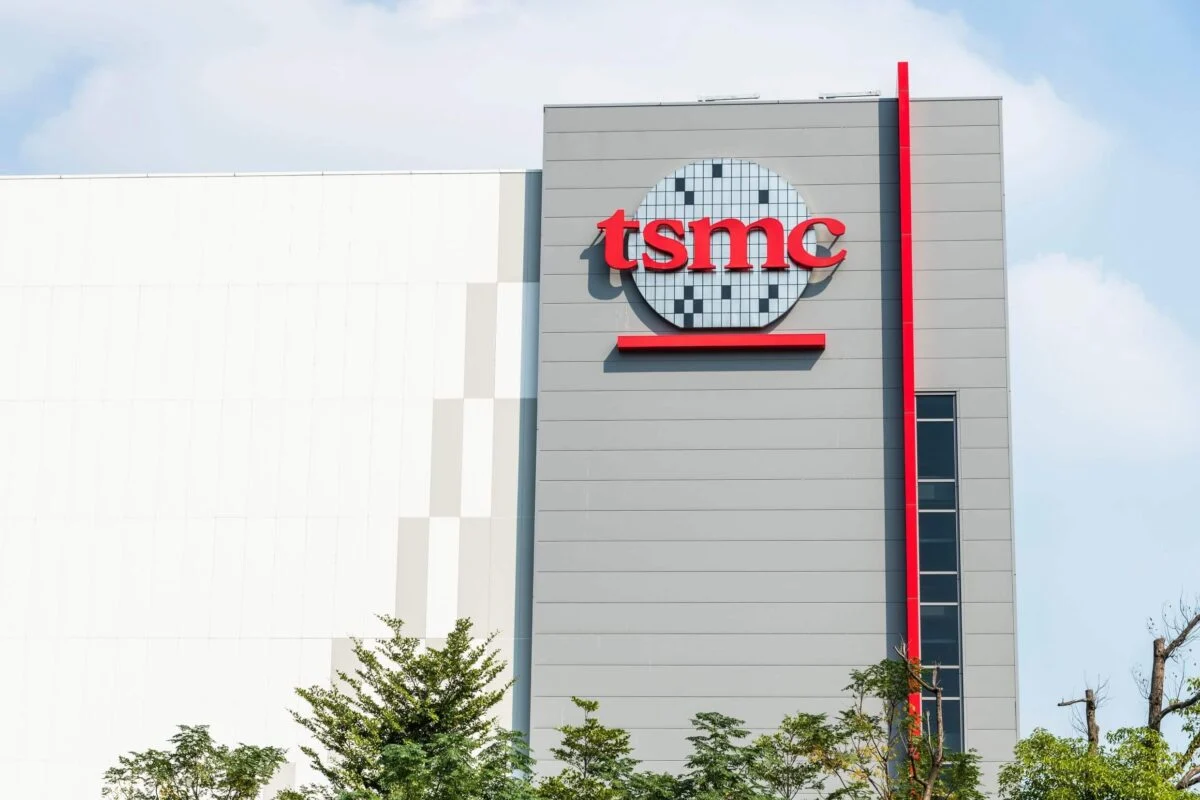
TSMC delivered another blowout quarter, with fourth-quarter profit jumping 35% year-over-year to NT$505.74 billion. The result topped analyst estimates and marked a fresh record for the world’s largest contract chipmaker.
TSMC Q4’25 Earnings Highlights:
✅ Revenue beat — $33.73B vs $33.3B est
✅ Gross margin beat — 62.3% vs 60.5% est
✅ Operating margin beat — 54.0% vs prior 49–51% guide
✅ Net profit beat — $16.30B vs $15.2B est👉 TSMC $TSM smashed expectations across the board, signaling… pic.twitter.com/6z22KlZkAo
— Trader Edge (@Pro_Trader_Edge) January 15, 2026
Revenue for the December quarter climbed 20.5% to NT$1.046 trillion, also beating forecasts. The company has now posted profit growth for eight consecutive quarters as AI chip demand continues to surge.
The Taiwan-based manufacturer produces advanced processors for major clients including Nvidia and AMD. Its high-performance computing division, which includes AI and 5G applications, represented 55% of sales during the quarter. Smartphone-related demand accounted for 32% of sales.
Taiwan Semiconductor Manufacturing Company Limited, TSM
AI Boom Drives Spending Plans
TSMC’s capital expenditure forecast for 2026 signals strong confidence in continued AI growth. The company expects to spend between $52 billion and $56 billion this year, up from $40.9 billion in 2025.
CEO C.C. Wei addressed investor concerns about AI demand sustainability head-on. “You’re trying to ask us whether AI demand is real or not. I’m also very nervous about it,” Wei said during the earnings call. “We’re investing $52 billion to $56 billion in capex, right? If we don’t do it carefully, that’d be a big disaster for TSMC.”

Chief Financial Officer Wendell Huang guided current quarter revenue to hit between $34.6 billion and $35.8 billion. At the midpoint, this represents 38% growth year-over-year and a 4% sequential increase.
For full-year 2026, the company expects revenue growth near 30%. This pace exceeds average analyst estimates and reflects ongoing demand for leading-edge chip technology.
Advanced chips measuring 7-nanometer or smaller made up 77% of total wafer revenue in Q4. For full-year 2025, these chips represented 74% of revenue, up from 69% in 2024.
TSMC is ramping up production of its cutting-edge 2-nanometer chips after rolling out mass production last quarter. Smaller nanometer sizes allow faster processing speeds and better energy efficiency.
The strong outlook sent shares of key supplier ASML Holding up 7.6% to a record in Europe. ASML’s market value surpassed $500 billion on the news.
Memory Shortage Creates Headwind
TSMC acknowledged a potential challenge from the ongoing memory chip shortage. Manufacturers have prioritized high-bandwidth memory for AI accelerators, creating supply constraints that could affect consumer electronics.
Wei downplayed concerns about impact on TSMC’s business. He noted the company focuses on high-end smartphones, which show less sensitivity to memory price increases.
Global tariff policies present another risk factor for 2026. TSMC is expanding internationally with major projects in Japan, Europe, and Arizona to mitigate tariff impacts.
The company expects to play a key role in an upcoming trade deal between the US and Taiwan. TSMC may commit to additional chip fabrication facilities beyond its current plan to invest up to $165 billion in the US.
Overseas plants will operate at lower margins compared to Taiwan facilities. However, the geographic diversification could help offset tariff-related challenges in markets like the United States.
Counterpoint Research senior analyst Jake Lai predicts 2026 will be another “breakout year” for AI server demand. “With TSMC’s ongoing 2nm capacity expansion and new production contributing to revenue, along with continuous expansion of advanced packaging… TSMC is expected to maintain strong performance in 2026,” Lai said.
ASML’s stock surge following TSMC’s results reflects investor optimism about the semiconductor equipment maker’s role in the chipmaker’s expansion plans. The company surpassed $100 billion in annual revenue for the first time in 2025.
Stop guessing and start investing with confidence. KnockoutStocks gives you the AI insights, market intelligence, and stock research you need to spot opportunities, cut through the noise, and make smarter investment decisions — all in one powerful platform.
Sign up today and get 50% OFF full access to our premium stock picks.
Simply use coupon code SPECIAL50 at checkout to claim your exclusive discount.
Get 3 Free Stock Ebooks
Discover top-performing stocks in AI, Crypto, and Technology with expert analysis.
- Top 10 AI Stocks - Leading AI companies
- Top 10 Crypto Stocks - Blockchain leaders
- Top 10 Tech Stocks - Tech giants



