


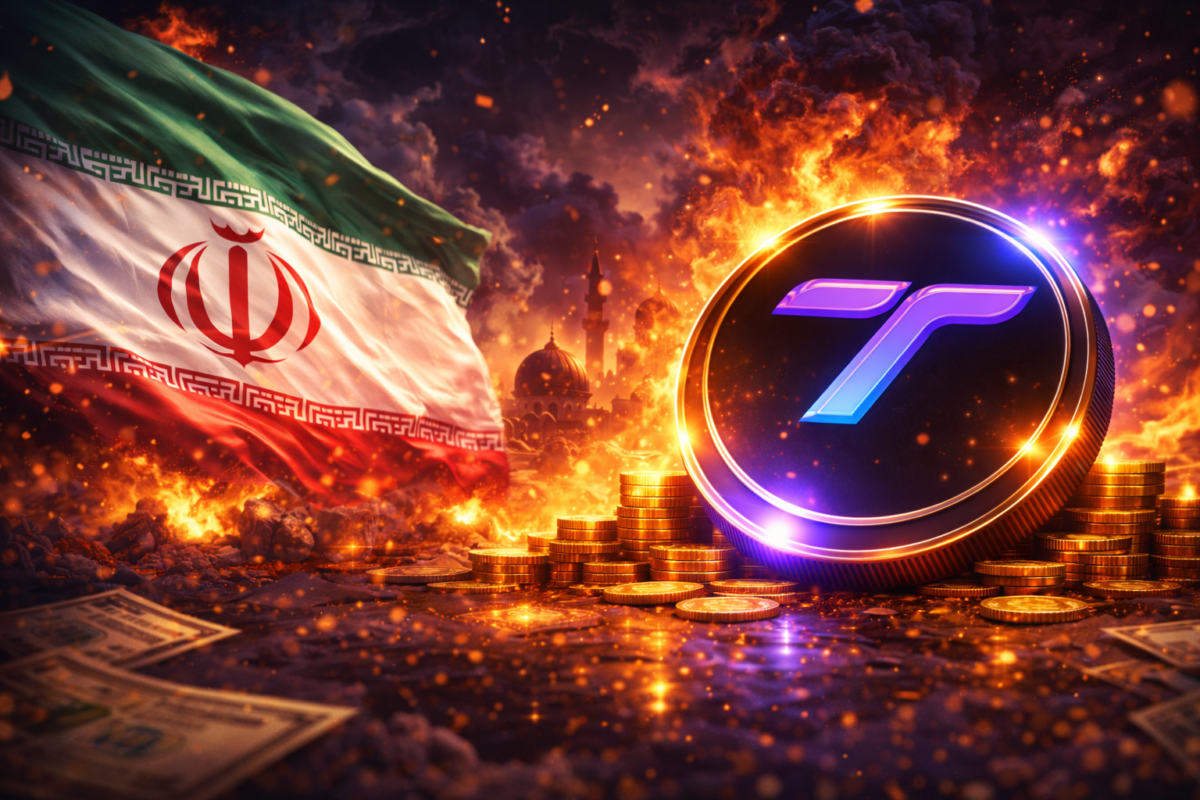
Crypto adoption rarely tells a single story. In some markets, growth comes from innovation and choice. In others, it emerges from necessity, when existing financial systems begin to fail. Recent data from Iran highlights the second path, showing how digital assets can surge in usage during periods of economic and political stress.
At the same time, projects like Tapzi are developing under very different conditions. Instead of relying on instability to drive demand, Tapzi is positioning itself around participation, competition, and deliberate execution. That contrast is shaping how many investors now think about sustainability and reassess the best crypto to buy now beyond headline-driven metrics.
A recent report by Chainalysis shows that Iran’s cryptocurrency ecosystem processed more than $7.78 billion in total activity during 2025. Growth accelerated compared with 2024 and closely followed periods of political and economic stress.
Chainalysis noted that on-chain volumes spiked during major events, including the January 2024 Kerman bombings, Iran’s missile strikes against Israel in October 2024, and a sharp escalation in June 2025. These episodes occurred alongside sanctions pressure, inflation estimated between 40% and 50%, and a national currency that has lost roughly 90% of its value since 2018.
The report also found that addresses linked to the Islamic Revolutionary Guard Corps accounted for over 50% of crypto value received in late 2025. During mass protests and internet blackouts, many ordinary Iranians moved funds off exchanges into personal Bitcoin wallets, signaling a shift toward self-custody as a defensive response.
Crisis Usage Does Not Equal Durable Adoption
Iran’s experience underscores a critical distinction. Not all crypto growth reflects the strength of an ecosystem. In many cases, usage rises because people have limited alternatives. While digital assets can provide short-term relief under those conditions, demand driven by crisis often fluctuates with enforcement risk, political developments, and capital controls.

For investors, this difference matters. Platforms built around emergency demand face structural uncertainty. Projects designed around voluntary participation follow a different path, shaped by engagement, retention, and product delivery rather than necessity. This distinction is increasingly influencing how the best crypto to buy now are evaluated.
Tapzi Is Built Around Skill and Choice
Tapzi operates within a very different adoption framework. Built on BNB Smart Chain, Tapzi is a skill-based Web3 gaming platform where users participate by choice, and outcomes depend on performance.
Players stake TAPZI tokens in direct, head-to-head games such as Chess, Checkers, Tic Tac Toe, and Rock-Paper-Scissors. Each match follows a winner-takes-all structure, with rewards redistributed between participants rather than issued through inflation or external incentives. There are no emissions schedules and no reliance on macro stress to drive activity. Demand is linked directly to gameplay.
This design places Tapzi among projects focused on organic engagement, which is why it continues to appear in conversations around Best Crypto Presales and Best Altcoins to buy as investors become more selective.
Presale Progress Reflects Intentional Participation
Tapzi’s presale remains live and continues to move forward at a steady pace. Out of a fixed supply of 150,000,000 TAPZI tokens, more than 113 million have already been sold, placing completion above 79%. The presale price is set at $0.0035, with a stated launch price of $0.01.
Unlike markets where crypto usage spikes during instability, Tapzi’s momentum reflects transparent, voluntary participation. Progress is visible in real time, offering clarity that is often missing from open-market trading. This consistency has helped Tapzi remain visible among investors reassessing the best crypto to buy now as global adoption narratives grow more nuanced.
Tapzi Price Outlook Through 2030
Tapzi’s first year on the open market is expected to be defined by price discovery rather than long-term trend formation. With a low presale entry and a planned launch price of $0.01, early volatility is likely as liquidity forms and early participants test exits. If selling pressure outweighs adoption, price could drift lower and take time to recover. A more balanced outcome would see Tapzi stabilizing near its launch level as usage builds gradually. Stronger upside would depend on sustained engagement shortly after launch and limited early selling.
By 2027, Tapzi’s valuation will be shaped primarily by execution. If the platform remains active but struggles to expand its user base, price may remain subdued or fade. A healthier trajectory assumes steady delivery across the roadmap, rising match volume, and consistent on-chain activity. Under those conditions, Tapzi could trade at meaningfully higher levels as liquidity deepens and confidence improves. A stronger outcome would require visible traction beyond early adopters and continued retention.
Looking ahead to 2030, Tapzi’s path will likely be clear. If the platform matures successfully, sustains participation, and manages supply responsibly, long-term pricing could reflect that durability. If growth stalls or engagement declines, price could retrace toward earlier levels. In either case, execution will matter far more than market sentiment.
Why the Contrast Matters
Iran’s crypto surge shows how digital assets can function as emergency financial infrastructure. Tapzi represents a different use case, where crypto is tied to competition, entertainment, and voluntary participation. Both models exist within the same market, but they carry very different implications for long-term value.
As crypto adoption matures, investors are paying closer attention to why people use these systems. That shift is redefining how many assess the best crypto to buy now, separating platforms built on pressure from those built on engagement.
Conclusion
Iran’s cryptocurrency activity surpassed $7.78 billion in 2025, driven by conflict, sanctions, inflation, and currency collapse. Chainalysis data shows that both state-linked entities and ordinary citizens increasingly relied on crypto as instability intensified.
At the same time, Tapzi continues to develop without depending on crisis-driven demand. Its skill-based gaming model, late-stage presale, and activity-linked token design offer a contrasting path to adoption. As investors reassess the best crypto to buy now and search for the next crypto to explode, Tapzi stands out as a project built around participation rather than necessity.
Join Tapzi’s $500,000 community giveaway and compete across nine prize categories to earn $TAPZI tokens—sign up today and become an early adopter!
Media Links:
Website: https://www.tapzi.io/
Whitepaper: https://docs.tapzi.io/
X Handle: https://x.com/Official_Tapzi
Frequently Asked Questions (FAQs) About the Best Crypto Presale 2026
Why did Iran’s crypto usage increase in 2025?
Sanctions, high inflation, regional conflict, and currency weakness pushed many users toward crypto as a defensive alternative.
What role does the IRGC play in Iran’s crypto ecosystem?
Addresses linked to IRGC-affiliated networks accounted for more than half of crypto value received in late 2025, according to Chainalysis.
Why did Bitcoin self-custody rise among Iranians?
During protests and internet shutdowns, many users moved funds off exchanges to protect savings.
How is Tapzi different from crisis-driven crypto adoption?
Tapzi is used voluntarily for skill-based gaming rather than as a hedge against economic instability.
What will shape Tapzi’s long-term value?
User adoption, gameplay activity, platform reliability, and consistent execution will be the primary drivers.


