






TLDR
- BitMine Immersion Technologies holds 4.24 million ETH worth roughly $9.6 billion, down from $14 billion in October, resulting in over $6 billion in unrealized losses.
- The company bought an additional 40,302 Ether last week, just before prices dropped toward $2,300 on Saturday.
- Chairman Tom Lee warns the crypto market is still deleveraging and early 2026 could remain difficult before any potential recovery.
- BitMine earns approximately $164 million annually from staking its Ether holdings, which provides little cushion against major price drops.
- Market liquidations and thin liquidity have accelerated the sell-off, with roughly $19 billion wiped out during October’s crash.
BitMine Immersion Technologies is facing the harsh reality of crypto treasury investing. The publicly traded company now carries over $6 billion in unrealized losses on its Ether holdings.
Bitmine Immersion Technologies, Inc., BMNR
The timing couldn’t have been worse. BitMine added 40,302 ETH to its portfolio last week, bringing total holdings to 4.24 million coins. Days later, prices collapsed.
Ether slid toward $2,300 on Saturday. The decline pushed BitMine’s holdings down to approximately $9.6 billion in value. That’s a steep drop from the October peak of nearly $14 billion.
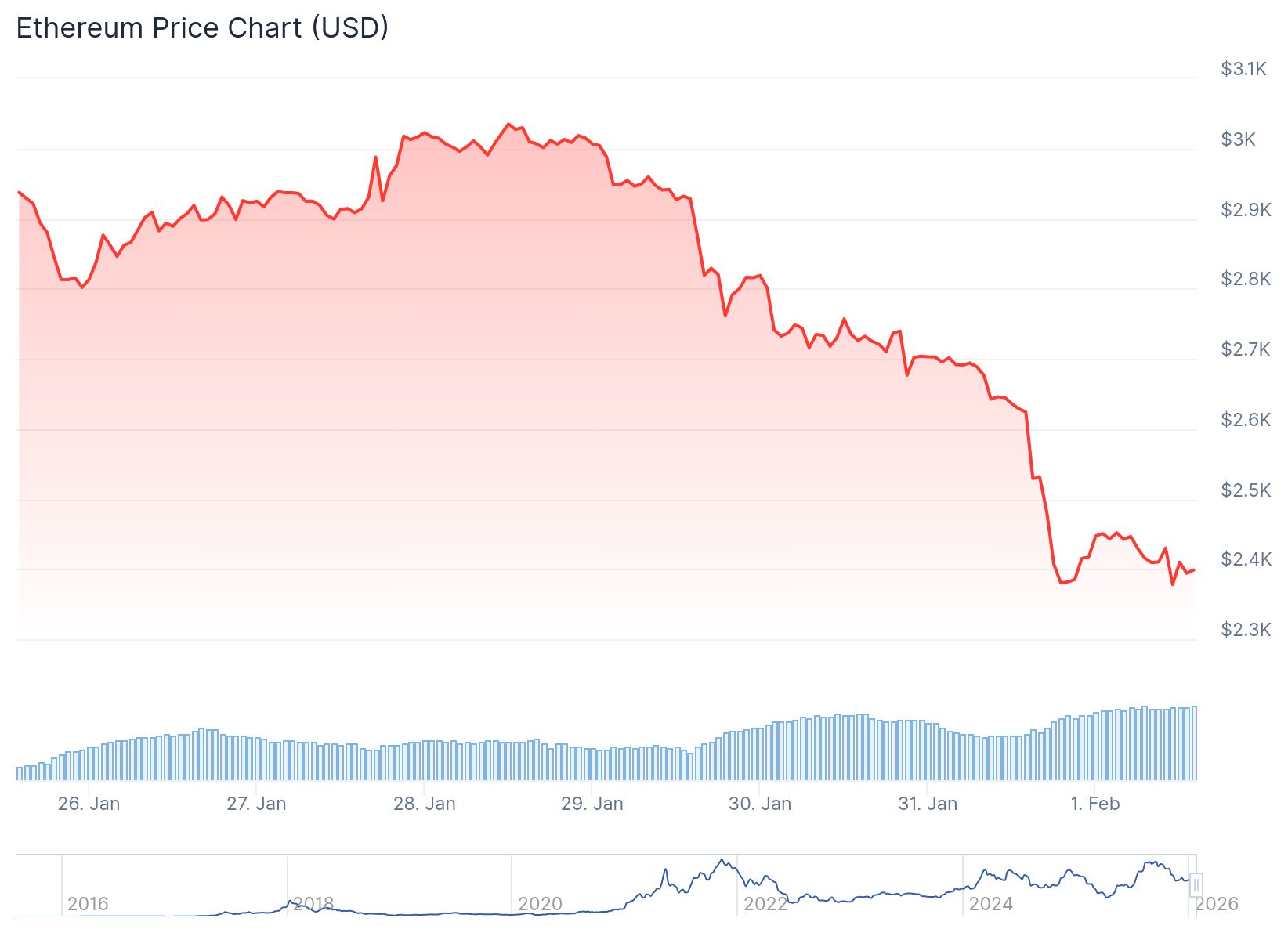
Data from Dropstab confirms the losses. The platform tracks digital asset prices and portfolio valuations in real time.
Chairman Tom Lee, a well-known investor backing the company, has shifted his tone. He now warns that early 2026 will likely remain painful for crypto markets.
Lee points to ongoing deleveraging across the sector. The October crash wiped out roughly $19 billion in market value and reset investor positioning.

“The market is still feeling the effects,” Lee said in a recent interview. He maintains that longer-term fundamentals remain intact but acknowledges near-term headwinds.
Liquidity Problems Fuel the Decline
Market conditions turned ugly fast. The Kobeissi Letter described the environment as fragile with choppy liquidity at best.
Extreme leverage created what traders call “air pockets” in pricing. When positions started unwinding, prices dropped sharply with few buyers stepping in.
The sell-off gained momentum as forced liquidations hit derivatives markets. Major venues reported increased liquidations as Ether fell, adding more pressure to spot prices.
Herd-like positioning made things worse. When everyone rushes for the exit at once, prices can gap down quickly.
BitMine’s strategy of accumulating large Ether positions works well in bull markets. In bear markets, the exposure magnifies losses.
Corporate crypto treasuries have become popular this cycle. Companies use their balance sheets to bet on digital assets. The strategy can generate massive gains but comes with serious downside risk.
Staking Revenue Offers Little Protection
BitMine has staked a portion of its Ether holdings. The company estimates annual staking revenue at approximately $164 million.
That income stream fluctuates with network yields. During sharp price drops, staking rewards do little to offset portfolio losses.
Market maker Wintermute released an assessment outlining what a sustained 2026 recovery would require. The list includes renewed momentum in Bitcoin and Ether, broader ETF participation, and expanded digital asset treasury adoption.
Retail investor participation remains limited. Money has flowed toward faster-growing sectors like artificial intelligence and quantum computing instead.
Wintermute argues these structural improvements are necessary to restore what it calls a “wealth effect” across crypto markets. Without them, recovery could take longer than bulls expect.
Lee acknowledged the shift in conditions despite earlier optimism about late 2025. The October sell-off changed everything, forcing a reset in risk appetite across digital assets.
BitMine’s purchases last week came just before the latest leg down. The company now sits on more than $6 billion in paper losses as markets continue working through deleveraging.
Stop guessing and start investing with confidence. KnockoutStocks gives you the AI insights, market intelligence, and stock research you need to spot opportunities, cut through the noise, and make smarter investment decisions — all in one powerful platform.
Sign up today and get 50% OFF full access to our premium stock picks.
Simply use coupon code SPECIAL50 at checkout to claim your exclusive discount.
Get 3 Free Stock Ebooks
Discover top-performing stocks in AI, Crypto, and Technology with expert analysis.
- Top 10 AI Stocks - Leading AI companies
- Top 10 Crypto Stocks - Blockchain leaders
- Top 10 Tech Stocks - Tech giants



