






TLDR
- Kyle Samani, Chairman of Forward Industries, publicly criticized Hyperliquid and founder Jeff Yan, calling it “everything wrong with crypto”
- Samani’s criticism came just three days after stepping down from Multicoin Capital on February 5, 2026, after nearly a decade as co-founder
- On-chain data shows wallets linked to Multicoin purchased over $40 million in HYPE tokens in late January, creating speculation about internal conflicts
- Hyperliquid announced HIP-4 markets for prediction-market-like outcome trading and has processed over $12 billion in volume through TradeXYZ
- The HYPE token has shown strong performance this year, with analysts attributing gains to the HIP-3 upgrade enabling permissionless perpetual markets
Kyle Samani stepped down from Multicoin Capital on February 5, 2026, after almost ten years as co-founder. Three days later, he posted sharp criticism of Hyperliquid on social media.
🚨"EVERYTHING WRONG WITH CRYPTO"
Kyle Samani, Chairman of Forward Industries, says Hyperliquid represents “everything wrong with crypto,” calling out the platform and its founder Jeff Yan.
He didn’t go into detail, but the comments hint at deeper tensions around control,… pic.twitter.com/aIW46zMOAl
— Coin Bureau (@coinbureau) February 8, 2026
The timing raised questions in the crypto community. On-chain analysts identified wallets believed to be linked to Multicoin that purchased over $40 million worth of HYPE tokens in late January. The close proximity of these events led to speculation about possible disagreements over investment strategy.
Samani serves as Chairman of Forward Industries, a Nasdaq-listed treasury company focused on holding Solana. His background makes the criticism more pointed. He called Hyperliquid “everything wrong with crypto” in a post on February 8.
The executive made several claims about the platform and its founder Jeff Yan. He stated that Yan fled his home country to build and that Hyperliquid facilitates crime and terror. Samani also criticized the platform for being closed source and permissioned.
These allegations lack legal proof in some cases. Yan left his home country to build in what he considered a better environment. No verified evidence exists that Hyperliquid facilitates terrorism.
Multicoin’s Solana Focus Versus HYPE Investment
Multicoin Capital built its reputation backing Solana. In September 2025, the firm led a $1.65 billion private investment into Forward Industries alongside Jump Crypto and Galaxy Digital. They created what they called “the world’s leading Solana treasury company.”
The investment strategy centered on transparent yields through staking and DeFi protocols. Multicoin highlighted Solana’s native yields of 8.05% as of September 2025. The firm released research on projects like Jito, which powered over 94% of all Solana stake by March 2025.

Hyperliquid represents a different approach. The platform runs a decentralized perpetual futures exchange with its own blockchain. It offers high leverage and low fees but faces criticism for its centralized validator system and closed-source code.
The contrast between these platforms became a point of discussion. One user questioned whether Samani’s presence at Multicoin prevented HYPE purchases. His departure coincided with the firm’s reported accumulation of the token.
MLM analysts flagged the suspicious wallet activity in late January. They tracked purchases totaling tens of millions of dollars. Additional analysis showed substantial ETH flows rotated into HYPE over several days through intermediary wallets.
Platform Growth Continues Despite Criticism
Hyperliquid announced plans to launch HIP-4 markets at the start of February. These markets will enable prediction-market-like outcome trading. The platform described outcomes as fully collateralized contracts that settle within a fixed range.
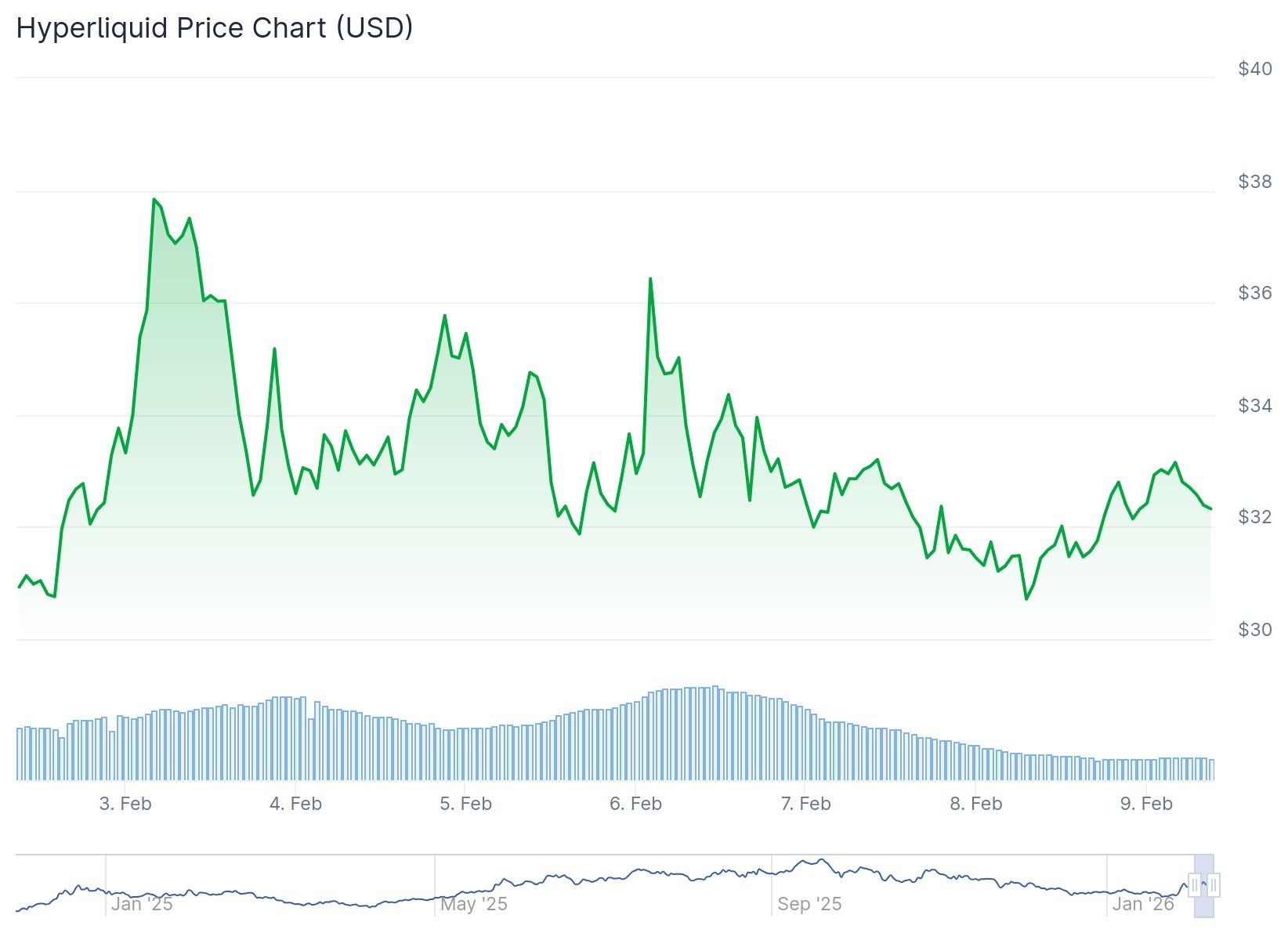
The HYPE token has performed well this year. Analysts linked the price gains to the HIP-3 upgrade launched earlier. This upgrade enabled permissionless perpetual markets, allowing providers to tokenize real-world assets like Nasdaq Futures, Gold, and Forex.
TradeXYZ, the leading market provider using HIP-3, processed over $12 billion in volume. This represents roughly four times the volume before the upgrade. The growth demonstrates user adoption of the new features.
Sam Ruskin, a research analyst at Messari, discussed the potential impact of HIP-4. He suggested it could benefit pre-IPO trading on Hyperliquid. Ruskin noted that upcoming IPOs like OpenAI, SpaceX, and Anthropic will create demand for betting markets.
He explained that pre-IPO perpetuals rely on unverified private data, making them risky. Prediction markets eliminate the oracle problem entirely. Without oracles, there is no liquidation risk and less incentive for toxic flow.
Some community members defended Hyperliquid against Samani’s criticism. They argued the platform represents crypto’s original principles. Hyperliquid directs revenue toward token buybacks and community incentives rather than venture capital returns.
The debate highlights an ideological split in crypto markets. One side prioritizes transparency, decentralization, and community ownership. The other champions performance, liquidity depth, and institutional-grade infrastructure.
Neither Multicoin nor Samani has confirmed that Hyperliquid played a role in the departure. Leadership changes at venture firms often stem from long-term strategic shifts or personal decisions. Official disclosures remain limited.
The HYPE token is showing signs of recovery. The 4-hour chart displays a higher low, suggesting a potential trend reversal if buyer momentum continues.


