






TLDR
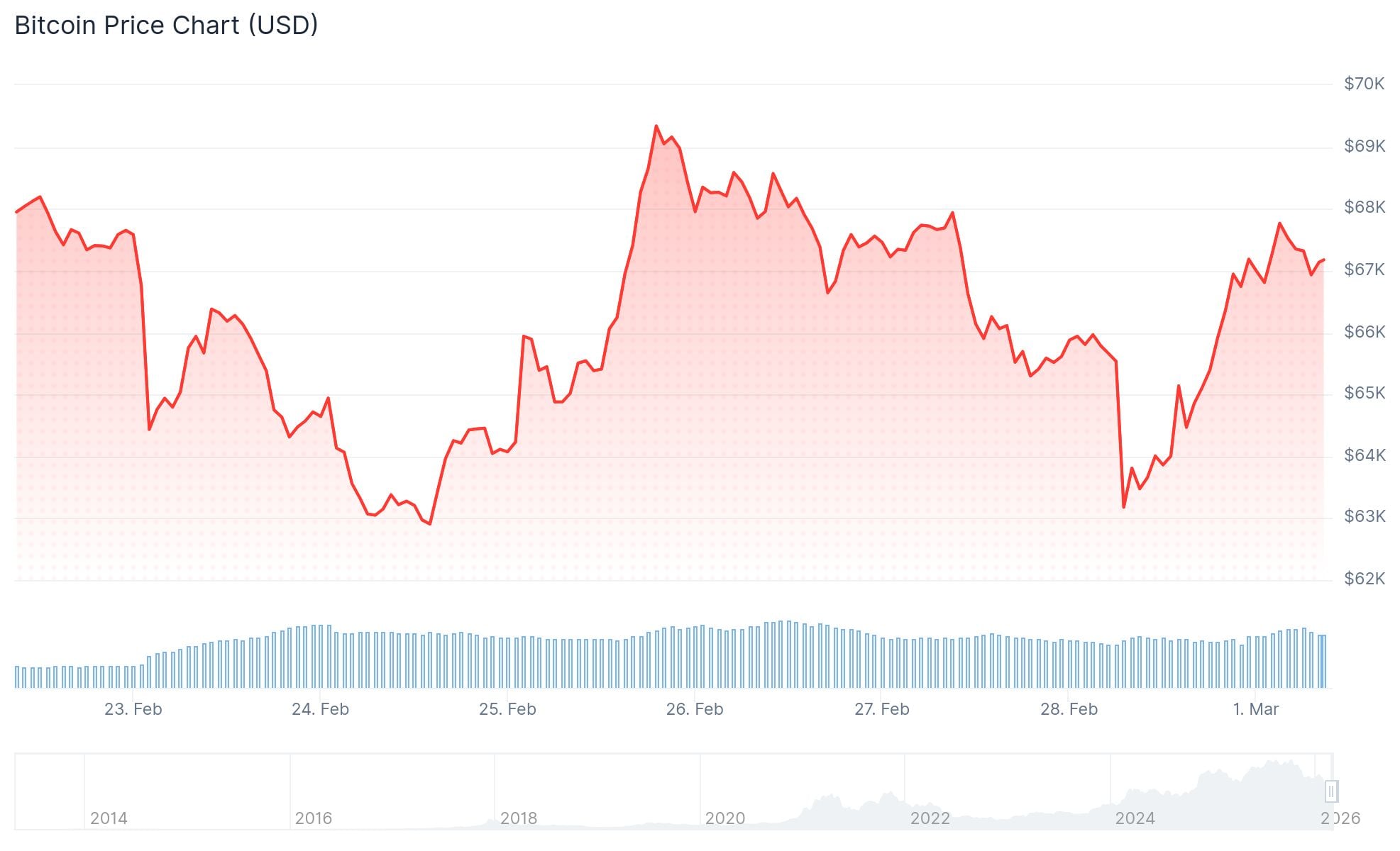
- Bitcoin is range-bound around mid-$60,000s and ether near $2,000, with thin trading volumes across major exchanges.
- JPMorgan says the Clarity Act — if passed — could be a major catalyst for crypto markets in the second half of 2026.
- The Clarity Act would split crypto oversight between the SEC and CFTC and let new projects raise up to $75 million without full SEC registration.
- The bill has stalled in the Senate after Coinbase withdrew support, citing concerns over innovation and competition.
- Morgan Stanley has applied for a federal trust bank charter to custody digital assets, expanding its crypto strategy under OCC oversight.
Bitcoin has been stuck in a tight range near the mid-$60,000s for weeks. Ether is trading around $2,000, and volumes across major exchanges have thinned out. Traders are looking for a catalyst to break the deadlock.
JPMorgan analysts think they’ve found one. In a recent report, analysts led by Nikolaos Panigirtzoglou pointed to the Clarity Act — a proposed U.S. crypto market structure bill — as a potential trigger for a second-half rally.
“We continue to believe that a potential approval of the market structure legislation most likely by mid year could serve as a positive catalyst for crypto markets,” the analysts wrote.
The Clarity Act would divide crypto oversight between the Commodity Futures Trading Commission and the Securities and Exchange Commission. Tokens would be classified as either digital commodities or securities depending on their nature.
JPMorgan said putting major tokens under CFTC jurisdiction would reduce legal uncertainty. A grandfather clause would let certain tokens — including XRP, Solana, Litecoin, Hedera, Dogecoin, and Chainlink — be treated as commodities if tied to spot ETFs listed before January 1, 2026.
The bill would also allow new crypto projects to raise up to $75 million annually without full SEC registration, subject to disclosure rules. JPMorgan analysts said this could revive onshore issuance and venture funding that has moved overseas.
Clarity Act Hits a Wall
Despite its promise, the bill has stalled. A Senate Banking Committee markup was postponed in early 2026 after Coinbase, the largest U.S. crypto exchange, withdrew its support. Coinbase said the current text could limit innovation, weaken competition, and restrict stablecoin rewards.
Coinbase CEO Brian Armstrong said banking trade groups were largely responsible for the delays, not individual banks. The bill now sits in limbo as lawmakers work through disagreements on key provisions.

Meanwhile, Wall Street is not waiting around. Morgan Stanley has filed an application with the Office of the Comptroller of the Currency for a national trust bank charter. The proposed entity, Morgan Stanley Digital Trust National Association, would be based in Purchase, New York.
Morgan Stanley Goes All-In on Crypto Custody
If approved, the subsidiary would custody digital assets, support token transfers linked to client investments, and offer staking services. It would not take deposits or issue loans.
Morgan Stanley manages around $9 trillion in client assets. The firm began offering Bitcoin investment funds to wealth management clients in 2021 and expanded crypto trading through its E*Trade platform in 2025.
In January 2026, it filed for spot Bitcoin, Solana, and Ethereum ETFs and named Amy Oldenburg as head of digital asset strategy. A federally chartered trust bank could bring custody and staking in-house, reducing reliance on third-party providers like Zerohash.
The OCC’s public comment period runs through March 20, 2026. If approved, Morgan Stanley would enter a field that already includes BNY Mellon and State Street.


