






TLDR
- Gold futures fell 7% Monday, wiping out all 2026 gains
- Spot gold dropped to ~$4,288/oz — its worst weekly fall since 1983
- Trump gave Iran a 48-hour deadline to reopen the Strait of Hormuz
- Rising oil prices from the conflict are stoking inflation fears and reducing rate cut expectations
- Silver and platinum also fell sharply; the ECB and Bank of England signaled possible rate hikes
Gold prices have taken a sharp hit this week, falling hard as the ongoing US-Israel-Iran conflict pushes oil prices up and fuels fears of sticky inflation.
Spot gold dropped to around $4,288 per ounce on Monday. That’s a fall of more than 10% last week alone — the worst weekly performance for the metal since 1983.
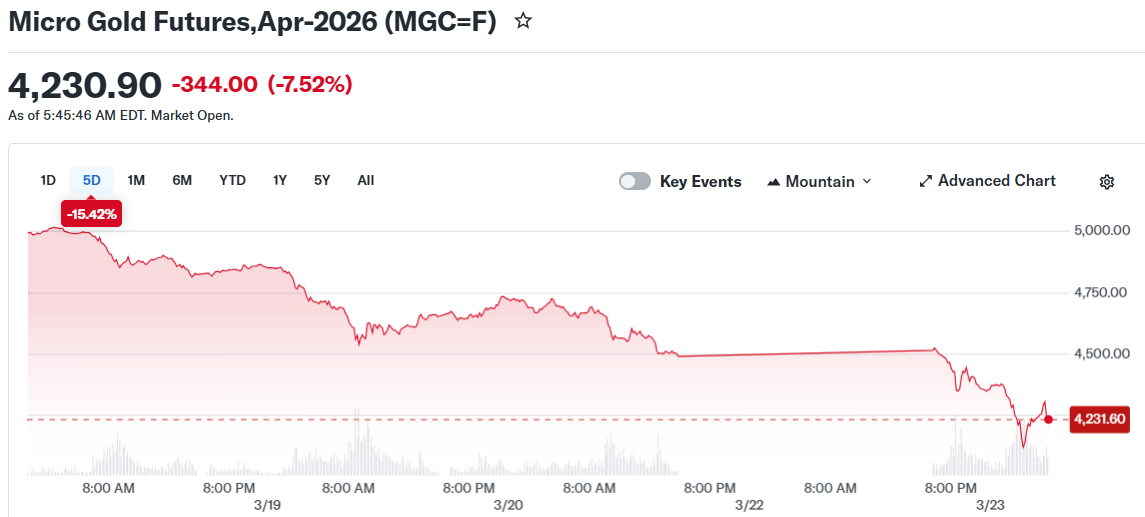
Gold futures were down around 7% in Monday morning trading. The losses have erased everything the metal gained so far in 2026.
Gold came into the year with strong momentum. It had posted a historic 65% gain in 2025. But the war in the Middle East has changed the picture fast.
The main driver of the selloff is inflation. Rising oil prices, caused by the conflict, are making markets worry that central banks will keep rates high — or even raise them.
Why Inflation Is Hurting Gold
Gold doesn’t pay interest. When interest rates stay high or go higher, investors tend to prefer assets that do. That makes gold less attractive.
The US dollar has also strengthened, which adds more pressure on gold prices. A stronger dollar makes gold more expensive for buyers using other currencies.

Greg Shearer, head of base and precious metals strategy at JPMorgan, described the drop as “an extremely brutal flush.” He said gold got caught up in a broad “sell everything” trade, not just targeted selling.
Both the European Central Bank and the Bank of England have signaled they may raise rates this year. The Federal Reserve hasn’t signaled hikes, but markets have steadily priced out any expectations for cuts in 2025.
OCBC analysts said the market is “trading less on geopolitical hedging flows and more on fears that stickier inflation could prompt a more hawkish central bank stance.”
Trump’s Iran Deadline Adds More Pressure
Over the weekend, President Trump gave Iran 48 hours to reopen the Strait of Hormuz, threatening to “obliterate” critical energy infrastructure if Tehran refused.
🚨 “If Iran doesn’t FULLY OPEN, WITHOUT THREAT, the Strait of Hormuz, within 48 HOURS from this exact point in time, the United States of America will hit and obliterate their various POWER PLANTS, STARTING WITH THE BIGGEST ONE FIRST…” – President DONALD J. TRUMP pic.twitter.com/htLz1A0Mf7
— The White House (@WhiteHouse) March 22, 2026
Iran responded by threatening to attack energy and water infrastructure across the Middle East and to fully close the strait.
The conflict between Israel and Iran has now entered its fourth week. An escalation could push oil prices even higher, worsening inflation fears further.
Despite the geopolitical tension, gold has not benefited from safe-haven buying as it normally would. Instead, inflation concerns have dominated trader sentiment.
Other metals fell too. Silver dropped 2.7% to $65.90 per ounce. Platinum fell 3.9% to $1,850 per ounce. Copper also saw sharp declines.
ING commodities strategist Ewa Manthey noted that in times of stress, gold’s high liquidity can make it a source of funds — meaning investors sell it to cover losses elsewhere.
JPMorgan analysts remain bullish on gold longer term. They wrote that if the energy disruption continues and growth is impacted, “the backdrop for gold will likely quickly flip materially bullish.”
Spot gold was trading at its weakest level since late December as of Monday morning.
Stop guessing and start investing with confidence. KnockoutStocks gives you the AI insights, market intelligence, and stock research you need to spot opportunities, cut through the noise, and make smarter investment decisions — all in one powerful platform.
Sign up today and get 50% OFF full access to our premium stock picks.
Simply use coupon code SPECIAL50 at checkout to claim your exclusive discount.
Get 3 Free Stock Ebooks
Discover top-performing stocks in AI, Crypto, and Technology with expert analysis.
- Top 10 AI Stocks - Leading AI companies
- Top 10 Crypto Stocks - Blockchain leaders
- Top 10 Tech Stocks - Tech giants



