





TLDR
- Gold hit as high as $4,475 an ounce Friday before pulling back to around $4,408–$4,417
- Trump extended his Iran energy attack deadline to April 6, saying talks are “going very well”
- Iran publicly denied any negotiations with the US are taking place
- Gold has fallen more than 15% since the Iran-Israel war began nearly a month ago
- Turkey’s central bank sold and swapped about 60 tons of gold worth over $8 billion in two weeks
Gold rose sharply in Asian trading on Friday, climbing around 2% before giving back some of those gains later in the day. Spot gold was trading up around 0.9% at $4,417 an ounce by mid-morning London time. Gold futures also rose, gaining around 0.8% to $4,442.
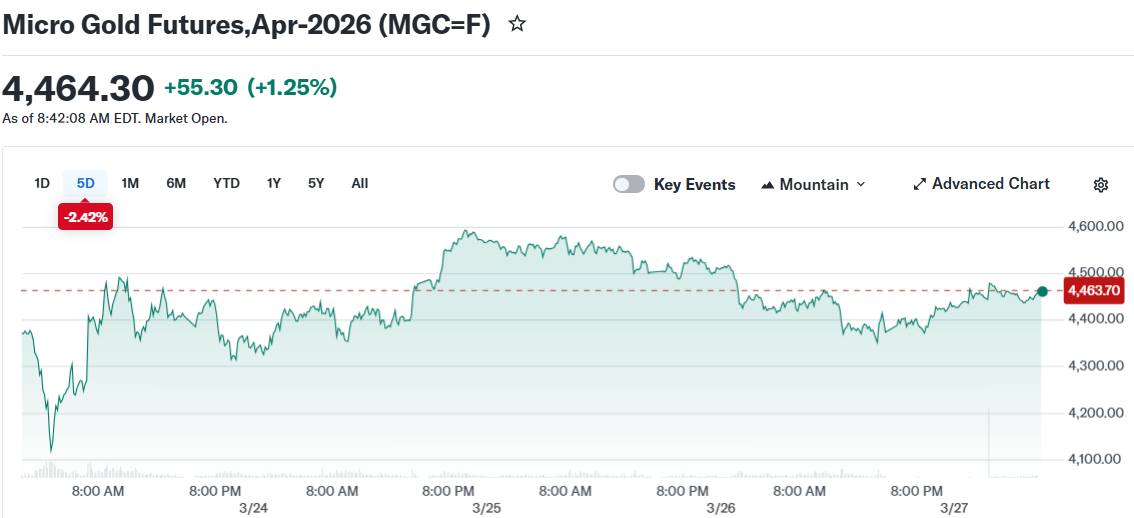
Despite the daily gain, gold was still on track for a weekly loss of roughly 1.7%.
The moves came after US President Donald Trump extended his deadline for Iran to reopen the Strait of Hormuz. Trump originally threatened to strike Iranian energy facilities if the waterway was not unblocked. He then pushed the deadline to Friday, and on Thursday extended it again to April 6.
Trump sets a new Iran deadline: April 6 pic.twitter.com/SOVLyGGZ5j
— Annmarie Hordern (@annmarie) March 26, 2026
Trump posted on Truth Social that the extension came at Iran’s request. He said talks between the two sides were “ongoing” and going “very well.” He called media reports to the contrary “erroneous.”
Iran’s government publicly denied that any talks with Washington are happening.
Why Gold Has Struggled Since the War Began
Gold has fallen more than 15% since the Iran-Israel war started nearly a month ago. That is a large drop for an asset usually seen as a safe haven during conflict.
The main reason is oil. The near-closure of the Strait of Hormuz has pushed oil prices sharply higher. Around one-fifth of the world’s oil flows through that waterway. Higher oil prices raise inflation fears, and that leads investors to expect central banks to hold interest rates higher for longer. Gold, which pays no yield, tends to do poorly in high-rate environments.

Gold also hit record highs near its peaks in January, and some analysts say those highs may have attracted profit-taking.
The US dollar has also gained strength. The US Dollar Index was up slightly on Friday at around 99.99. A stronger dollar makes gold more expensive for buyers using other currencies, which can weigh on demand.
Central Bank Selling Adds Pressure
Turkey’s central bank sold and swapped about 60 tons of gold over two weeks. That amounts to more than $8 billion worth of bullion.
Central bank buying had been one of the key drivers of gold’s rally over the past two years. Selling from a major central bank adds downward pressure to the market.
Silver was roughly steady on Friday at $68.11 an ounce. Platinum and palladium both edged higher.
Iran and Israel continued to exchange missile fire on Friday. Tehran also targeted several Gulf states on Friday morning.
Stop guessing and start investing with confidence. KnockoutStocks gives you the AI insights, market intelligence, and stock research you need to spot opportunities, cut through the noise, and make smarter investment decisions — all in one powerful platform.
Sign up today and get 50% OFF full access to our premium stock picks.
Simply use coupon code SPECIAL50 at checkout to claim your exclusive discount.
Get 3 Free Stock Ebooks
Discover top-performing stocks in AI, Crypto, and Technology with expert analysis.
- Top 10 AI Stocks - Leading AI companies
- Top 10 Crypto Stocks - Blockchain leaders
- Top 10 Tech Stocks - Tech giants



