





TLDR
- The U.S. and Iran agreed to a two-week conditional ceasefire just before Trump’s deadline for escalation
- Iran agreed to temporarily reopen the Strait of Hormuz, a key global oil shipping lane
- Iran released a 10-point peace plan that includes lifting all sanctions and U.S. troop withdrawal from the region
- Trump called the plan a “workable basis” but said nuclear stockpiles would have to be dealt with
- A Wall Street strategist laid out 8 reasons the ceasefire is likely to hold, citing political and economic pressure on both sides
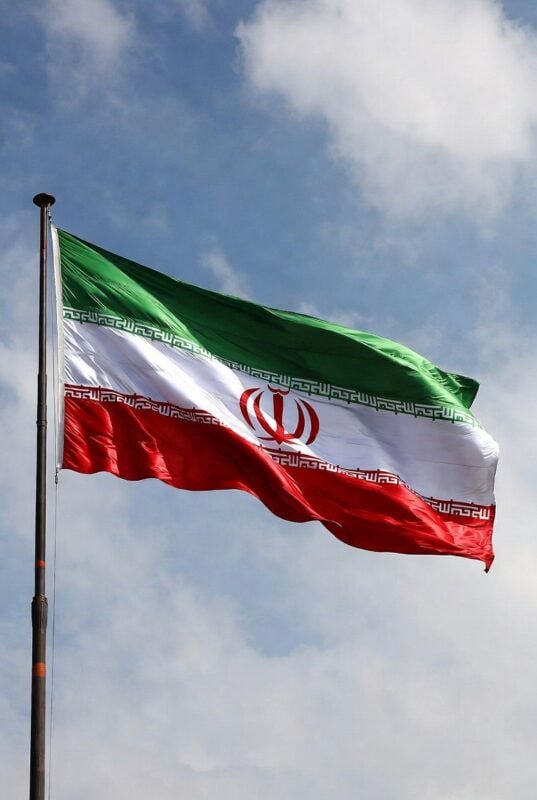
The United States and Iran struck a conditional ceasefire late Tuesday, just under two hours before President Trump’s self-imposed deadline. The deal halted planned U.S. attacks on Iranian infrastructure for two weeks, on the condition that Iran immediately reopen the Strait of Hormuz.
🇺🇸🇮🇷🇨🇳 Trump calls the ceasefire "a complete and comprehensive victory for America" and says he believes China pushed Iran to negotiate.
If true, that's the entire thesis of this war coming full circle.
The U.S. bombed Iran. Iran closed the Strait.
China's economy bled.… https://t.co/bZQ7xyN7HG pic.twitter.com/miDevqKxoZ
— Mario Nawfal (@MarioNawfal) April 8, 2026
Israel also agreed to the ceasefire, the White House confirmed.
Global markets rallied sharply on the news. Crude oil prices fell steeply.
Trump had earlier threatened to destroy “a whole civilization” if Iran did not comply. The agreement marked a sharp change in tone.
Iran has since put forward a 10-point proposal as the basis for longer-term negotiations. The full document has not been officially released, but reporting from Al Jazeera outlines its main demands.
The plan calls for a U.S. commitment to non-aggression, acceptance of Iran’s nuclear enrichment program, the lifting of all sanctions, the end of UN Security Council and IAEA resolutions against Tehran, and the withdrawal of all U.S. combat forces from bases in the region.

It also demands full compensation for war damages, to be paid by ships passing through the Strait of Hormuz, along with the release of all frozen Iranian assets abroad.
Trump described the plan as having “very good points” and said most had already been negotiated. But he pushed back on the version Iran made public, suggesting it did not reflect what was actually being discussed.
“They’re not the maximalist demands that Iran is claiming,” Trump told Sky News.
On the nuclear issue, Trump was firm. “That will be perfectly taken care of, or I wouldn’t have settled,” he told AFP.
What the Strategists Are Saying
Adam Crisafulli, a strategist at Vital Knowledge, said the ceasefire is likely to hold and gave eight reasons why.
He argued that Trump’s main escalatory options — bombing civilian infrastructure, militarily reopening Hormuz, or seizing Iran’s enriched uranium — are all bad choices that make continued conflict unlikely.
Crisafulli also said the U.S. can claim it achieved its main military goals, having degraded Iran’s missile and nuclear infrastructure.
He warned that a stagflationary shock is already working through the global economy from five weeks of conflict, and may not show up fully in data until late summer or fall.
On the political side, Republican polling numbers have dropped sharply, and opposition to the war inside the White House was broader than previously reported. Vice President Vance, Secretary of State Rubio, and other senior officials were all reportedly skeptical of continued military action.
Congressional appetite for more war funding is fading too. The White House is now seeking between $80 billion and $100 billion in supplemental funding, down from an initial Pentagon request of over $200 billion.
The Strait of Hormuz Dispute
Control of the Strait of Hormuz is the most contested part of any deal.
Iran’s plan calls for safe passage to resume under Iranian military oversight. Reports suggest Iran and Oman could charge transit fees of up to $2 million per vessel, with revenue going toward reconstruction.
Iran has also said it could shut the strait again if talks break down.
Analysts say Iran’s demands are unlikely to be accepted as written. They are seen as an opening position for negotiations, not a final offer.
Talks between the two sides over Iran’s nuclear program have been running for nearly a year, with little progress. The pre-conflict status of the Strait of Hormuz — as an internationally shared waterway — remains a key sticking point, as Iran is now pushing for direct control over it.
Stop guessing and start investing with confidence. KnockoutStocks gives you the AI insights, market intelligence, and stock research you need to spot opportunities, cut through the noise, and make smarter investment decisions — all in one powerful platform.
Sign up today and get 50% OFF full access to our premium stock picks.
Simply use coupon code SPECIAL50 at checkout to claim your exclusive discount.
Get 3 Free Stock Ebooks
Discover top-performing stocks in AI, Crypto, and Technology with expert analysis.
- Top 10 AI Stocks - Leading AI companies
- Top 10 Crypto Stocks - Blockchain leaders
- Top 10 Tech Stocks - Tech giants



