





TLDR
- Treasury calls Clarity Act essential for clear crypto market regulation
- US seeks to retain leadership as global crypto adoption expands
- Lack of rules pushed firms to move to Singapore and Abu Dhabi
- Clarity Act defines asset classification and platform requirements
- Stablecoin law sets base but broader crypto framework still needed
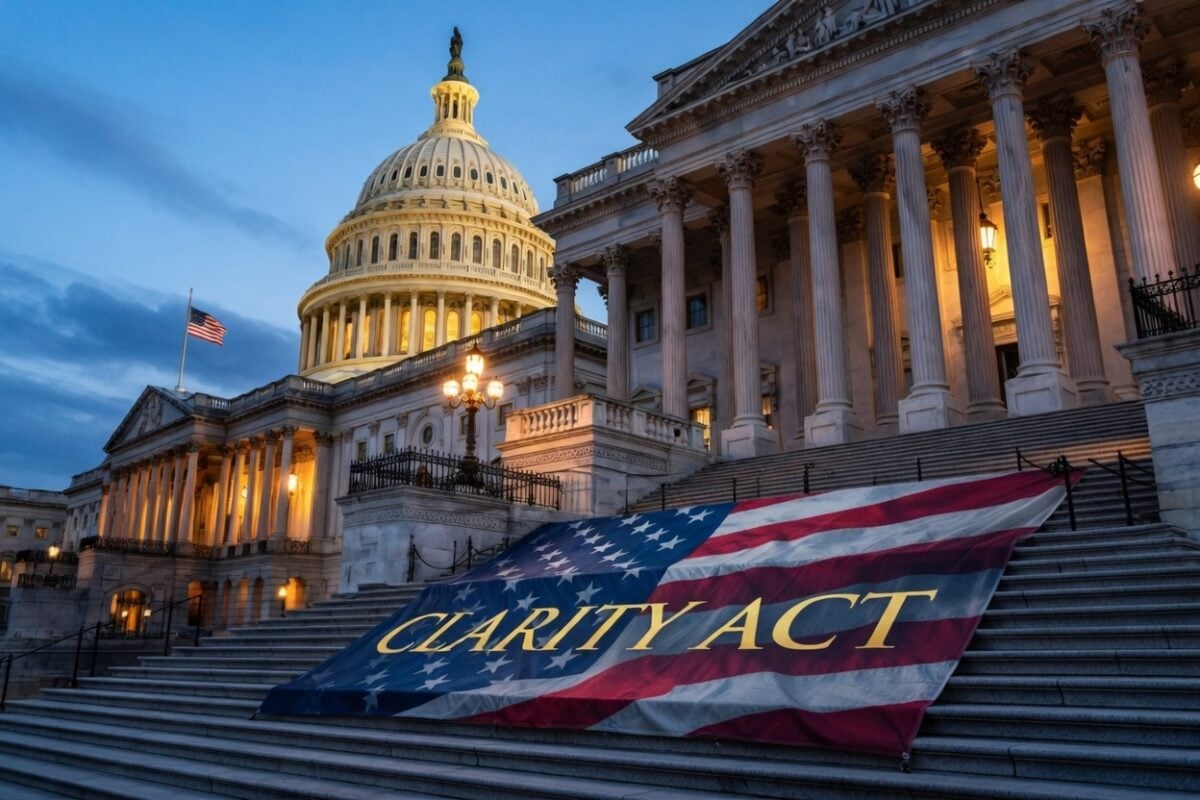
The US Treasury has positioned the Clarity Act as central to shaping crypto market regulation. Treasury Secretary Scott Bessent described the bill as a national priority. He linked economic security to national security and stressed the need for clear digital asset rules.
In his remarks, Bessent said, “Senate floor time is scarce, and now is the time to act.” He added that the Clarity Act would support earlier progress made under the Genius Act. That law established a framework for dollar-backed stablecoins and strengthened the dollar’s role in digital finance.
Need for Clear Rules in Expanding Crypto Market
Digital assets have grown rapidly in recent years. Market capitalization has ranged between $2 trillion and $3 trillion. About one in six Americans now owns some form of digital asset, showing wider adoption. Financial institutions have also increased their involvement. Many firms have launched or applied for crypto-related products.
Blockchain technology now supports payments, settlements, and asset exchanges. These trends show that crypto has moved beyond a niche sector. However, regulatory uncertainty has created challenges. Previous actions by the Securities and Exchange Commission and the Commodity Futures Trading Commission often overlapped. This led to confusion for developers, exchanges, and investors.
As a result, some firms moved operations abroad. Countries such as Singapore and Abu Dhabi offered clearer rules. These regions provided defined registration processes and compliance standards, which reduced risk for businesses.
Clarity Act Aims to Define Market Structure
The Clarity Act seeks to address these gaps. It outlines regulatory roles and defines when a digital asset qualifies as a security. It also sets registration paths for trading platforms and intermediaries. The bill includes investor protection measures. These cover disclosure requirements and custody rules. It also introduces tools to address illicit finance and misuse within digital markets.
Bessent stated that stablecoin progress alone is not enough. “The promise of Genius can’t be realized without Clarity’s support,” he said. He noted that stablecoins are only one part of a broader financial system that includes tokenized assets and decentralized platforms.

The U.S. Treasury Secretary is weighing in on the push to pass crypto market structure legislation in a new @WSJ op-ed.@SecScottBessent framed it as a national priority, saying “economic security is national security,” and argued the Clarity Act is the cornerstone to bringing…
— Eleanor Terrett (@EleanorTerrett) April 9, 2026
The legislation also supports software developers. It aims to ensure that innovation remains within the United States. Clear legal standards would help developers understand their responsibilities and reduce uncertainty.
Urgency as Global Competition Increases
The Treasury has warned that time is limited. Lawmakers face a tight Senate schedule, and delays could affect US competitiveness. Other countries continue to advance their own regulatory frameworks and attract crypto firms. Bessent stressed that strong domestic rules could bring activity back to the US. Clear laws would improve oversight and strengthen compliance with anti-money laundering standards.
They would also reduce reliance on offshore markets. The Treasury maintains that US leadership depends on timely action. The country has historically set financial standards, but that position could shift without updated policies. The Clarity Act is seen as a step to maintain that role in digital finance.
Congress has already passed the Genius Act, showing that progress is possible. The Treasury now urges lawmakers to complete the broader framework. The outcome will shape where future crypto innovation develops and how it is regulated.


