





TLDR
- A $292–$293 million exploit of Kelp DAO’s rsETH bridge triggered a bank-run on Aave, draining over $15 billion from the protocol.
- Aave’s major lending markets hit 100% utilization, locking roughly $5 billion in USDT and USDC with no way to withdraw.
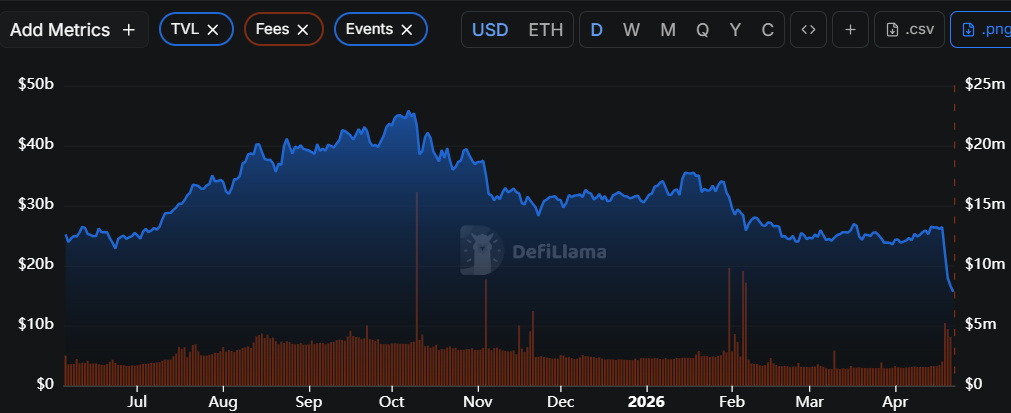
- Total value locked fell from $48.5 billion to around $30.7 billion — a drop of roughly one-third in days.
- CertiK researcher Natalie Newson warned Aave’s “self-defense systems are down,” meaning bad debt could keep growing.
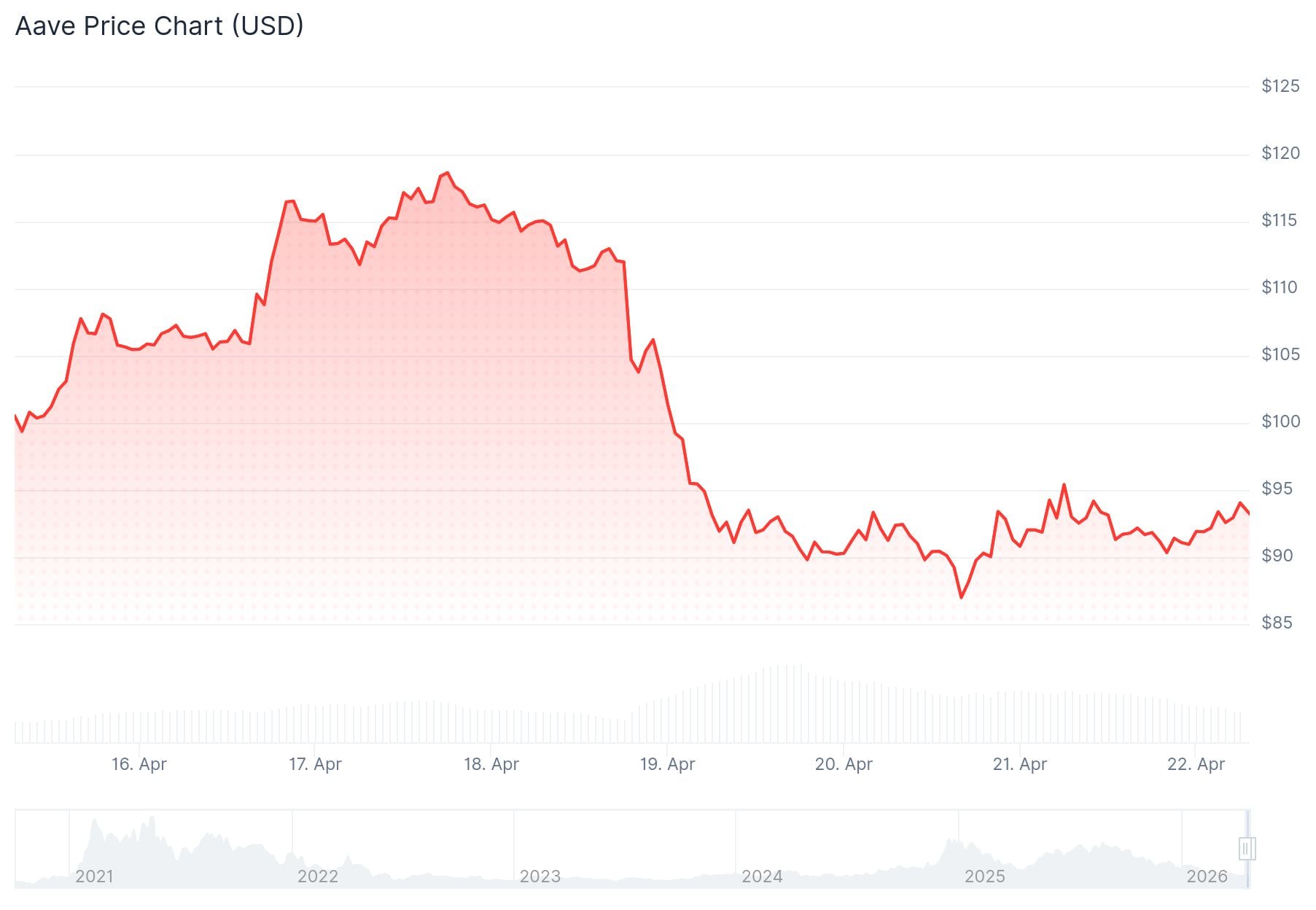
- AAVE token is trading around $91, holding just above the $90.47 support level, with resistance at $98.80.
Aave, one of the largest decentralized lending platforms in DeFi, is facing a serious liquidity crisis after a hack on a separate protocol triggered a chain reaction that froze its core markets.
The trouble started on April 18, when attackers exploited a vulnerability in a LayerZero V2 bridge between Unichain and Ethereum. This allowed them to drain around $293 million worth of rsETH from Kelp DAO without burning the corresponding tokens on the source chain.
Those stolen tokens were then deposited into Aave V3 as collateral. The attacker used them to borrow nearly $200 million in WETH. When news spread of the unbacked collateral, users began pulling funds fast.
(1/2 ) $AAVE signals around the Kelp exploit discovered with Claude via Santiment MCP:
☝️ Whale transactions (>$100K) spiked from 2–6 per hour to 43 within ~90 min of the exploit.
☝️ Exchange inflows went from ~$38K to $3M within ~90 min, peaking at $8.5M on Sat afternoon.
☝️… pic.twitter.com/sKI9U5uyju— Santiment (@santimentfeed) April 20, 2026
Over $6.6 billion left Aave in under 24 hours. Major players including Justin Sun and the MEXC exchange were among those pulling large sums. The ETH market hit 100% utilization first, then the USDT and USDC pools followed.
At 100% utilization, a lending protocol has no available liquidity. That means users cannot withdraw, and the system cannot process liquidations.
DeFi commentator DeFi Warhol explained it plainly: “It actually means no liquidity available for withdrawals. Liquidations can’t be processed.” He added that roughly $3 billion in USDT and $2 billion in USDC are now stuck with no clean exit.
Aave’s Self-Defense Systems Are Down
Natalie Newson, a senior blockchain security researcher at CertiK, said the situation puts Aave in serious trouble.

“100% utilization doesn’t just mean a lack of liquidity; it means the protocol’s self-defense systems are down,” she said. Without liquidity, undercollateralized positions cannot be closed, and bad debt keeps building.
Newson pointed out that Aave itself was not hacked. “It got stuck due to the fallout from someone else’s bridge failure,” she said. LlamaRisk estimated bad-debt scenarios ranging from $123.7 million to $230.1 million.
Aave’s governance body acted quickly — freezing rsETH reserves, setting loan-to-value ratios to zero, and adjusting interest rates. But the damage to TVL was already done.
Capital Moves to Competing Protocols
AmberCN reported on April 22 that total outflows from Aave over three and a half days reached $15.1 billion. TVL dropped from $48.5 billion to $30.7 billion.
Morpho also saw $1.5 billion leave. SparkLend, by contrast, gained $1.3 billion in fresh deposits — with some funds believed to come from the same whales that exited Aave.
Aave’s on-chain revenue fell from $1.1 million in early February to $625,000 as of Monday.
Aave founder Stani Kulechov, when asked for comment by CoinDesk, said: “I do not have anything useful to say.”
The AAVE token trades at around $91.22, sitting just above the key support level at $90.47. Resistance sits at the 20-day EMA near $98.80.


