






TLDR
- Microsoft, Google, and IBM are investing heavily in quantum computing, but it is not yet a revenue driver for any of them
- Microsoft uses Azure Quantum to give enterprises cloud access to quantum hardware, with strong Buy ratings from Wall Street
- Google leads in quantum research but lacks a clear path to making money from it
- IBM has the most defined quantum roadmap and the largest enterprise partner network
- All three stocks lean toward Buy ratings, but quantum is a long-term play, not a short-term earnings story
Quantum computing is no longer a distant, theoretical breakthrough—it’s rapidly becoming one of the most closely watched frontiers in global markets. As tech giants and specialized startups race to achieve quantum advantage, investors are beginning to position themselves early in what could be a multi-trillion-dollar industry.
From breakthroughs in cryptography and drug discovery to optimization problems that classical computers struggle to solve, the potential applications are vast—and Wall Street is paying attention.
In 2026, the conversation around quantum computing stocks has shifted from pure speculation to strategic allocation. Major players are increasing investments, partnerships are accelerating, and early commercial use cases are starting to emerge. But with hype still outpacing reality in some areas, identifying the companies with genuine long-term potential is more important than ever.
In this article, we break down the best quantum computing stocks to watch in 2026—highlighting Wall Street’s top picks, the technology behind them, and which companies are best positioned to benefit as the quantum era begins to take shape.
Microsoft
Microsoft’s quantum effort runs through its Azure cloud platform. Azure Quantum lets businesses and developers access different types of quantum hardware online. The company is also researching topological qubits, which are designed to be more stable than current options.
Microsoft Corporation, MSFT
Quantum is a small part of Microsoft’s overall business right now. Most analysts focus on Azure cloud growth and enterprise software when they value the stock. But integrating quantum into Azure means Microsoft can capture early demand without needing a hardware breakthrough first.
Wall Street is positive on Microsoft. The stock holds a Strong Buy consensus, with most analysts rating it a Buy and very few issuing Hold or Sell ratings.
Google runs its quantum work through a division called Google Quantum AI. The company is considered a research leader and has already shown early performance breakthroughs. It continues to invest in improving qubit quality and error correction.
Unlike Microsoft, Google does not have a well-defined commercial platform for quantum yet. Access is available through cloud services, but the path to revenue is less clear.
Analyst sentiment on Alphabet is still broadly positive, with a strong mix of Buy ratings. However, the stock attracts more neutral views than Microsoft, partly due to questions about its core advertising business and the lack of a clear quantum monetization plan.
IBM
IBM is the most mature of the three. It has a published roadmap for scaling quantum systems and runs the IBM Quantum platform, which connects a global network of enterprise and research partners.
International Business Machines Corporation, IBM
IBM focuses on superconducting qubits and has set specific milestones for performance and scalability. Quantum plays a more visible role in IBM’s story than it does for Microsoft or Google.
Analyst ratings on IBM are more balanced. The stock holds a Moderate Buy consensus, with a mix of Buy and Hold ratings. Some analysts are cautious because IBM’s overall growth is slower than other large tech companies.
Final Thoughts
Quantum is not a major revenue contributor for any of these three companies today. IBM has the most structured plan, Microsoft has the strongest platform advantage, and Google has the deepest research credentials.
Report: The Quantum Computing Stocks We Didn’t Include in This Article
We actually looked at far more Quantum Computing companies than the ones included in this article.
The three mentioned here are just a small sample — several others stood out just as much, and in some cases even more, based on trend, growth, and overall market strength.
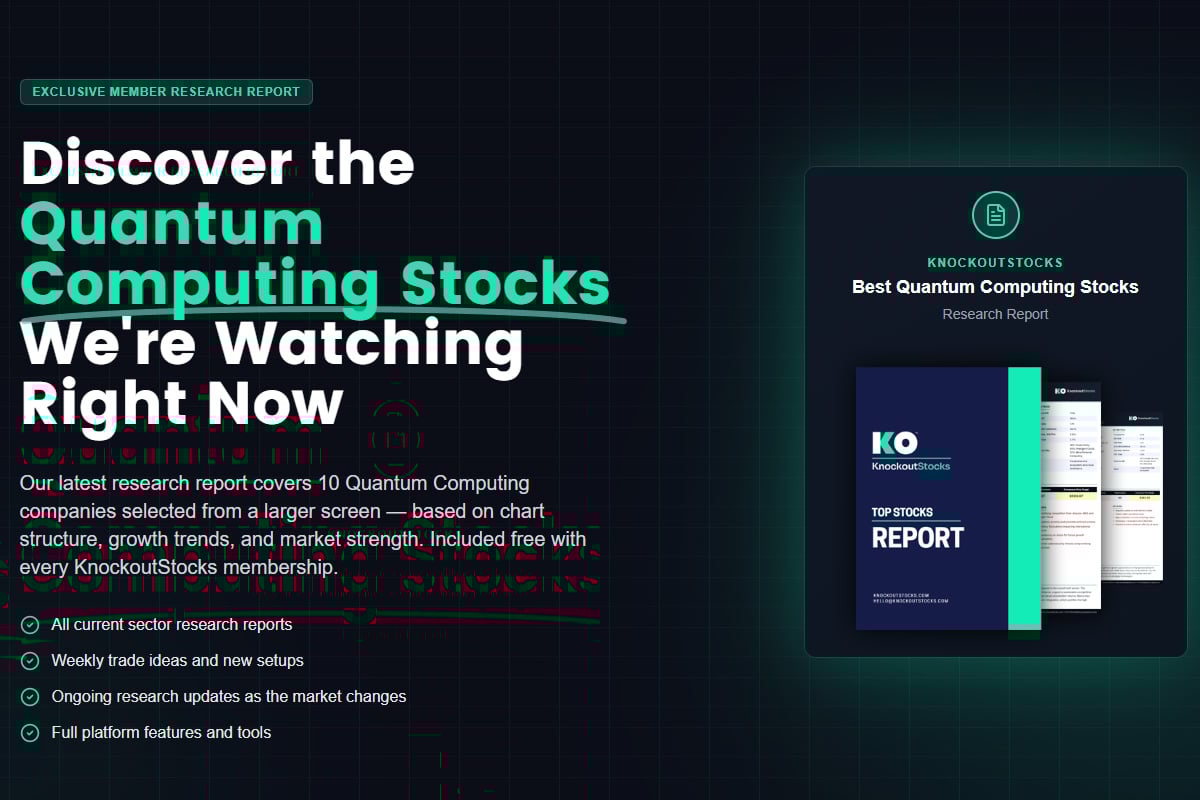
A few of these are not widely covered yet, which is exactly why they caught our attention during the screening process. Instead of publishing everything publicly, we put together a separate report covering 10 Quantum Computing stocks that currently look high-potential based on our internal rankings and latest research.
This is the same list we’re actively watching, with charts, key levels, and notes on each company.
👉 If you want to see the full list before it becomes more widely discussed, you can access the Quantum Computing Stocks report here
Stop guessing and start investing with confidence. KnockoutStocks gives you the AI insights, market intelligence, and stock research you need to spot opportunities, cut through the noise, and make smarter investment decisions — all in one powerful platform.
Sign up today and get 50% OFF full access to our premium stock picks.
Simply use coupon code SPECIAL50 at checkout to claim your exclusive discount.
Get 3 Free Stock Ebooks
Discover top-performing stocks in AI, Crypto, and Technology with expert analysis.
- Top 10 AI Stocks - Leading AI companies
- Top 10 Crypto Stocks - Blockchain leaders
- Top 10 Tech Stocks - Tech giants



