






TLDR
- Aster announced 99% of all daily platform fees will be used to buy ASTER from the open market starting June 17.
- Each buyback is matched by an equal burn from reserve holdings, creating a combined 198% buyback-and-burn effect.
- Total ASTER supply is set to fall from 8 billion to 3 billion through ongoing burns.
- All repurchased tokens are distributed to veASTER stakers via the Loyalty Rewards program.
- ASTER broke above $0.65 resistance and is now approaching the $0.81 level.
Aster launched a major tokenomics upgrade on June 17, 2026, sending its native token ASTER surging more than 20% in a single day.
The core of the update is straightforward: 99% of all daily fees generated on the platform will now be used to buy ASTER directly from the open market.
Buybacks are executed automatically using a time-weighted average price process and settled on-chain. The project has published the wallet address — 0xa0edBaBcb48034e368de286b49F9603C7AfA1b60 — so anyone can verify the purchases.
[Tokenomics Update] $ASTER Buyback and Burn Steps Up to 198%
Aster is upgrading its buyback so the platform's own activity both rewards stakers and sets $ASTER on a deflationary path.
Starting from 12:00 PM UTC today, 99% of Aster's daily platform fees buy back $ASTER. An equal…
— Aster 🥷 (@Aster_DEX) June 17, 2026
For every token bought back, an equal amount of ASTER is permanently burned from the project’s reserve holdings, starting with the team allocation.
This creates what Aster calls a “198% combined buyback-and-burn effect,” where the circulating supply shrinks from two sides at once.
Supply Reduction Target
Burns happen on a bi-weekly schedule and will continue until the total token supply drops from 8 billion to 3 billion ASTER.

As of June 17, total supply stood at approximately 7.82 billion, with a circulating supply of around 2.68 to 2.70 billion tokens.
All tokens purchased through buybacks go directly into the Loyalty Rewards program. Each reward epoch includes a fixed 300,000 ASTER base pool, plus all tokens accumulated through that day’s buybacks, distributed to veASTER holders based on lock weight.
Aster Spot listings add further buying pressure. Each permissionless token listing on the platform requires a 50,000 USDT fee, and all proceeds from those fees are routed into the same buyback system.
Price Response
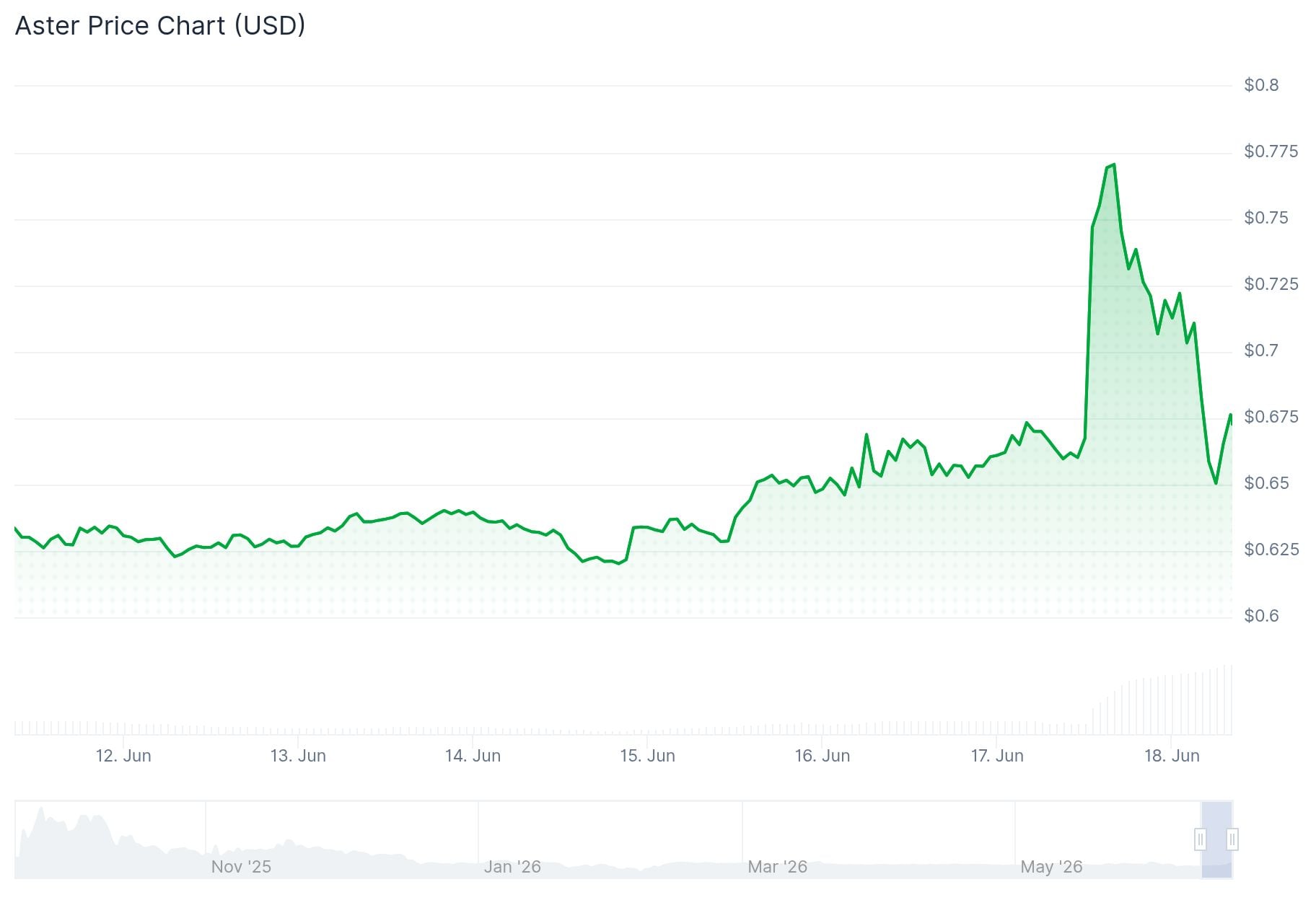
ASTER hit close to $0.80 shortly after the announcement before some profit-taking pulled it back. The token was last seen trading near $0.74, up around 13% on the day.
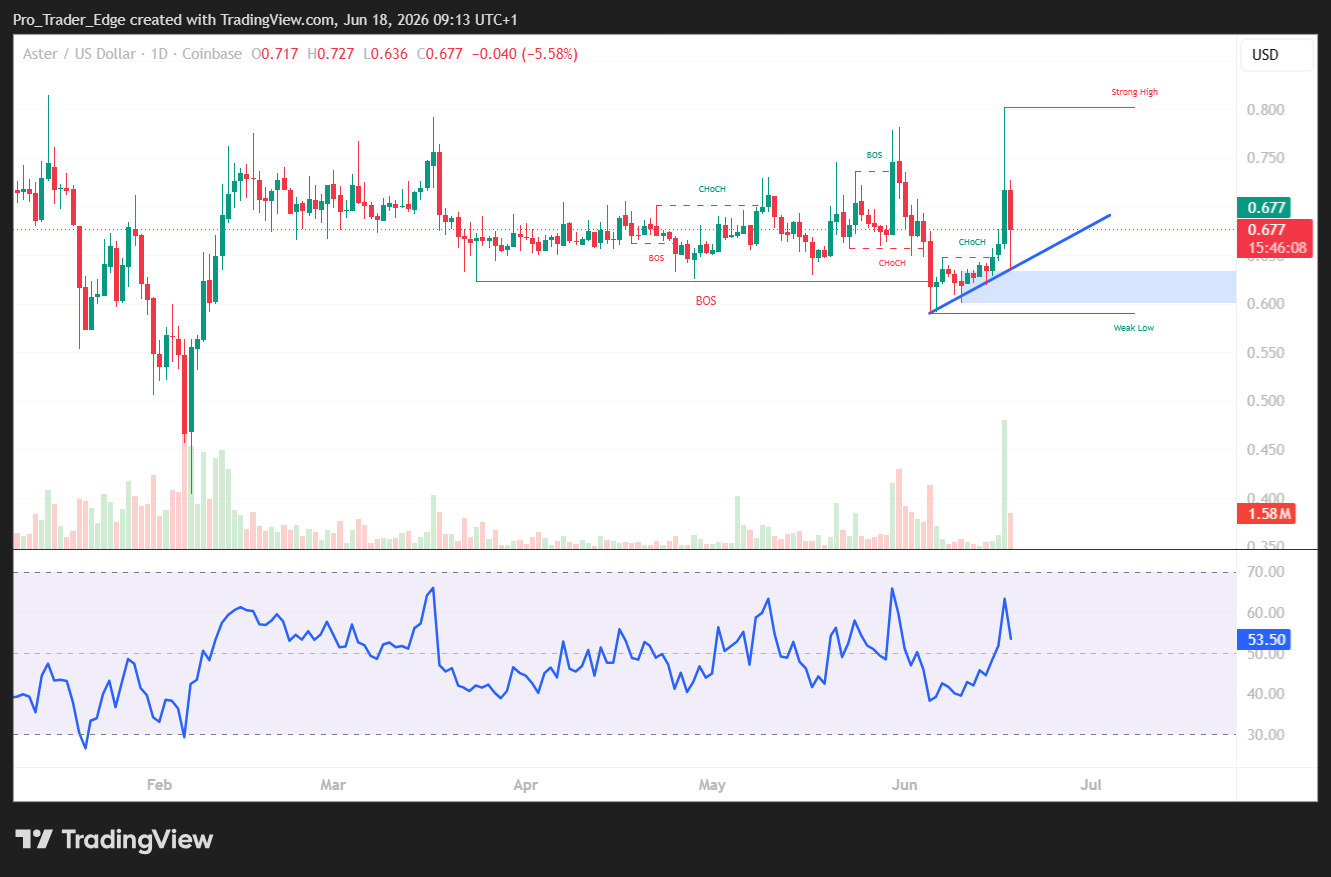
On the daily chart, ASTER broke above the $0.65 level that had acted as resistance since April.
The Relative Strength Index moved above 65, and the MACD produced a bullish crossover with expanding positive histogram bars.
The next key level sits at $0.81, which has seen multiple rejections on the daily chart. If ASTER clears that zone, it would move into price territory not tested since late 2025.
The $0.65 area is now being watched as potential support if the price pulls back.
This upgrade builds on earlier versions of the program that directed 70–80% of fees to buybacks, pushing that figure to near-total revenue capture.


