





TLDR
- European natural gas fell for a sixth straight session, nearing two-month lows
- The US and Iran signed an interim peace deal, including reopening the Strait of Hormuz
- The Dutch front-month contract dropped to €40.04/MWh; UK gas fell to 96.45p/therm
- Trump warned he would restart attacks if Iran failed to honour the 14-point agreement
- Tankers from Qatar and other vessels have begun returning to the Middle East
European natural gas prices dropped for the sixth session in a row on Thursday, pushing closer to their lowest levels since late April.
The benchmark Dutch front-month contract fell to €40.04 per megawatt hour. The British natural gas contract slipped below the 100-mark to 96.45 pence per therm.
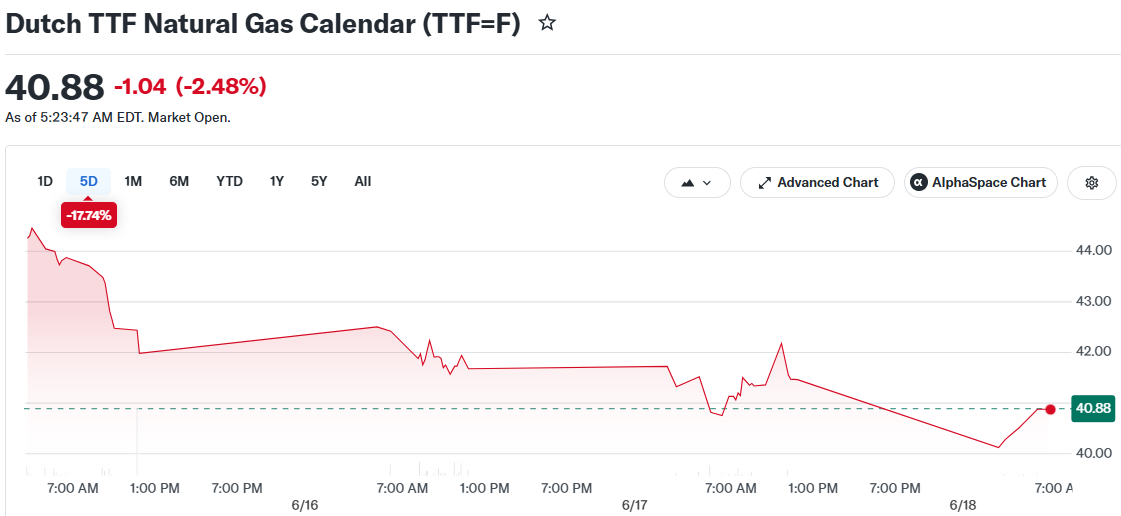
Both contracts are now approaching two-month lows.
The price drop came after the presidents of the United States and Iran signed an interim peace deal. Both leaders signed the memorandum remotely.
Pakistan’s prime minister said the signing means Iran will “instantly reopen” the Strait of Hormuz. The US will also “immediately lift” its naval blockade on all Iranian ports.
War-Risk Premium Unwinds
The Strait of Hormuz is a key chokepoint for global energy supplies. Its closure had kept a war-risk premium baked into European energy prices for months.
With the strait set to reopen, that risk premium has been steadily unwinding. Gas prices have been falling ever since markets got their first signs of a deal being close.

The interim agreement also includes a permanent end to hostilities. It starts a 60-day period for both sides to negotiate a final deal on Iran’s nuclear programme.
Trump, however, made clear the deal has conditions. He warned he would resume military action if Iran failed to comply with the 14-point memorandum of understanding.
Market Scepticism Remains
Despite the price drop, European gas has not returned to pre-war levels. That gap reflects some doubt in the market about whether the deal will hold.
Traders appear to be pricing in the possibility that Trump could walk away from the agreement. His warning about restarting the war has kept some caution in the market.
Still, physical markets are already responding. A number of vessels have started moving back into the Middle East, including tankers from Qatar.
Qatar is the world’s second-largest exporter of liquefied natural gas. Its tankers returning to the region is an early sign that shipping lanes may be opening up again.
European gas prices had been under pressure from the conflict for months. Energy desks had been closely watching any signs of a diplomatic breakthrough.
The current price of around €40.6 per MWh is the lowest since April 20. That marks a clear shift from the elevated levels seen during the peak of the conflict.
Whether prices fall further will depend on whether the Strait of Hormuz fully reopens and whether the 60-day nuclear talks make progress.
Stop guessing and start investing with confidence. KnockoutStocks gives you the AI insights, market intelligence, and stock research you need to spot opportunities, cut through the noise, and make smarter investment decisions — all in one powerful platform.
Sign up today and get 50% OFF full access to our premium stock picks.
Simply use coupon code SPECIAL50 at checkout to claim your exclusive discount.
Get 3 Free Stock Ebooks
Discover top-performing stocks in AI, Crypto, and Technology with expert analysis.
- Top 10 AI Stocks - Leading AI companies
- Top 10 Crypto Stocks - Blockchain leaders
- Top 10 Tech Stocks - Tech giants



