





TLDR
- The U.S. Dollar Index climbed to 101.63, its highest level since May 2025, up about 3.3% in 2026.
- Safe-haven demand surged after a global tech selloff wiped out more than $1.3 trillion in market value.
- The Federal Reserve is expected to raise rates at least twice more this year, with a 60% chance of a September hike.
- The euro hit a one-year low, the yen is near 40-year lows, and several Asian currencies came under pressure.
- A stronger dollar could weigh on S&P 500 earnings, with Magnificent Seven companies earning up to 50% of revenue overseas.
The global tech rout that erased over $1.3 trillion in two sessions pushed investors toward the U.S. dollar on Wednesday, sending the greenback to its highest point in more than a year.
The U.S. Dollar Index hit 101.63 during the session, a 0.2% gain on the day. The index is now up about 3.3% for the year. The high point of 101.69 was reached Tuesday, the strongest reading since May 2025.
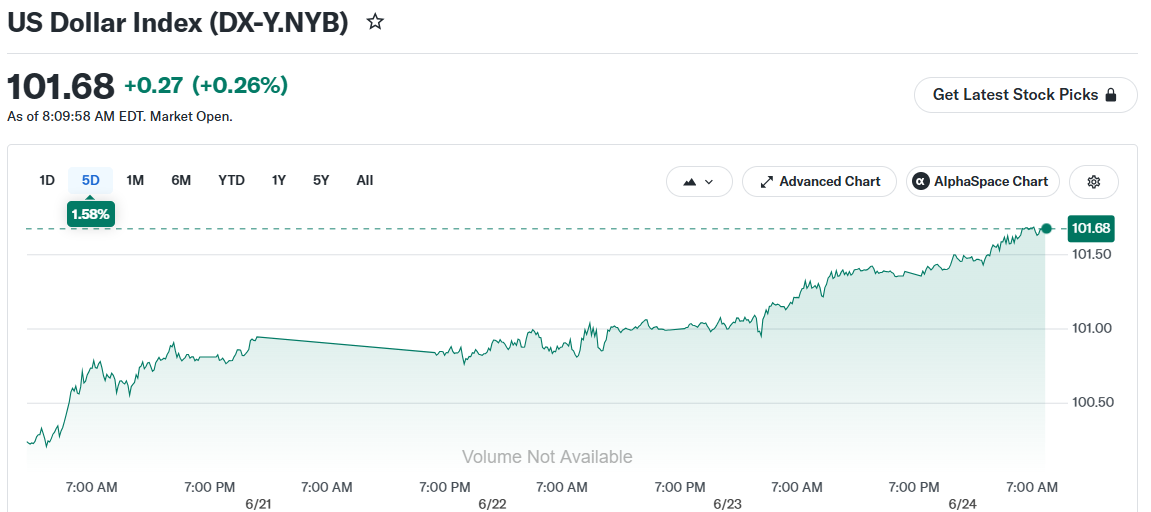
The dollar’s rise came even as U.S. stocks began to recover early Wednesday. That resilience signals the rally has legs beyond just the tech selloff.
Fed Rate Hikes Adding to Dollar Strength
Markets are pricing in at least two more Federal Reserve rate hikes before the end of the year. Futures show a 60% chance of a hike in September and nearly 40% odds of a move as early as July.
Kevin Warsh, the new Fed Chair, has been signaling a hawkish stance. That tone has pushed speculative positions in the dollar to some of the highest levels seen since early last year, according to LPL Financial.
Technical analysts say a sustained break above 100.64 could push the index toward 105. Support sits near the 20-day moving average at around 99.75.
Sticky inflation and strong domestic demand are keeping the rate hike path open, making the dollar attractive to global investors seeking yield.

Global Currencies Feel the Pressure
The euro fell for a third straight session, hitting its lowest level in over a year against the dollar. The European Central Bank is caught between lingering inflation from a recent three-month conflict and signs of slowing economic growth.
The Japanese yen remained near 40-year lows. The dollar-yen pair rose 0.1% to 161.70. Japan’s Ministry of Finance has spent around $72 billion intervening in currency markets. Japan’s finance minister held talks with U.S. Treasury Secretary Scott Bessent this week.
The Bank of Japan raised rates to 1.0% last week, the highest since the mid-1990s, but the yen has not recovered.
China’s yuan also weakened after the People’s Bank of China set its daily midpoint weaker for a fourth straight day. The Australian dollar was flat despite stronger-than-expected inflation data.
What This Means for U.S. Stocks
A stronger dollar is not good news for companies that earn a lot overseas. Around one third of S&P 500 revenues come from foreign markets.
For the Magnificent Seven tech companies, that figure climbs to around 50%. Nvidia earns 53% of its revenue overseas. Meta earns close to two thirds outside the U.S.
When overseas profits are converted back into dollars, a stronger greenback reduces their value. That could put pressure on earnings forecasts, which currently project second-quarter growth of 23% and full-year growth of more than 25%.
Stop guessing and start investing with confidence. KnockoutStocks gives you the AI insights, market intelligence, and stock research you need to spot opportunities, cut through the noise, and make smarter investment decisions — all in one powerful platform.
Sign up today and get 50% OFF full access to our premium stock picks.
Simply use coupon code SPECIAL50 at checkout to claim your exclusive discount.
Get 3 Free Stock Ebooks
Discover top-performing stocks in AI, Crypto, and Technology with expert analysis.
- Top 10 AI Stocks - Leading AI companies
- Top 10 Crypto Stocks - Blockchain leaders
- Top 10 Tech Stocks - Tech giants



