






TLDR
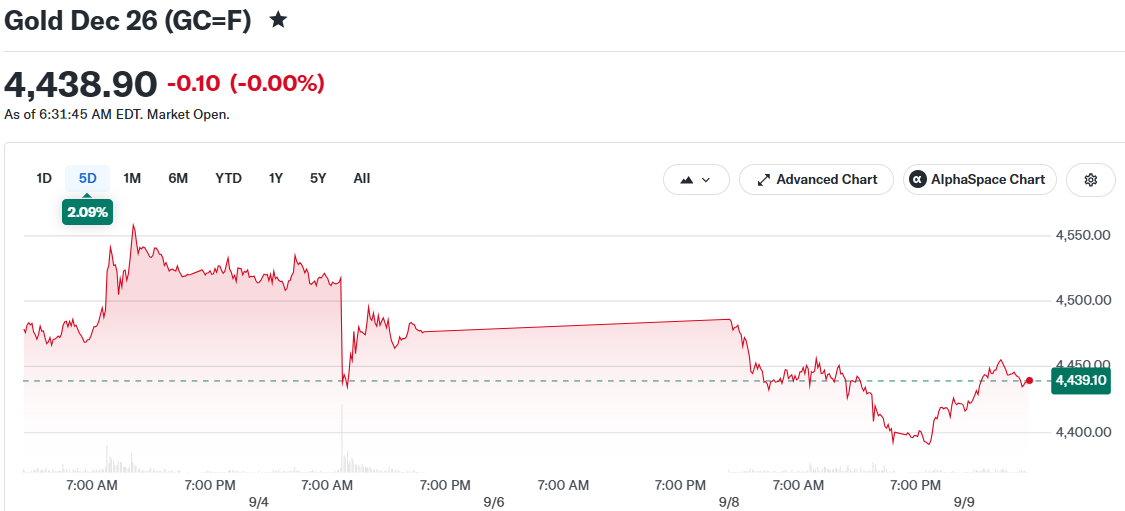
- Spot gold rose 1.0% to $4,397.47 an ounce on Wednesday, with futures up slightly to $4,441.86
- A weaker U.S. dollar is helping support gold prices, partly due to a stronger Japanese yen
- Fresh U.S.-Iran exchanges in the Middle East pushed Brent crude back above $100 a barrel
- Markets now price in a 60% chance the Federal Reserve raises rates by 25 basis points next week
- August CPI and PPI data due this week could shape expectations ahead of the Fed meeting
Gold prices moved higher on Wednesday, lifted by a softer U.S. dollar and rising tensions in the Middle East, even as growing expectations for a Federal Reserve rate hike kept a lid on gains.
Spot gold climbed 1.0% to $4,397.47 an ounce. Gold futures added 0.1% to $4,441.86 an ounce in early trading.
The U.S. dollar index held mostly flat at 98.77. Analysts say recent strength in the Japanese yen has put mild downward pressure on the dollar. A weaker dollar tends to make gold cheaper for buyers using other currencies, which can lift demand.
Middle East Conflict Adds to Market Pressure
The U.S. and Iran exchanged fresh attacks in the Middle East, pushing Brent crude oil back above $100 a barrel. The Strait of Hormuz, a key oil shipping route off Iran’s southern coast, is at the center of supply concerns.
BREAKING: Iran's IRGC announces it carried out the single largest attack in the Strait of Hormuz of the war, striking 10 vessels in retaliation for tonight's US strikes on 5 Iranian oil tankers.
The IRGC says it struck 8 oil tankers attempting to pass through the Strait and the…
— The Hormuz Letter (@HormuzLetter) September 9, 2026
Rising oil prices add to inflation worries. That matters because central banks, including the Fed, are already focused on bringing inflation down.
Markets are now pricing in a 60% chance the Fed raises interest rates by 25 basis points at its meeting next Wednesday. That is up from 40% just one week ago.

Higher rates can hurt gold. The metal pays no yield, so when interest rates rise, other assets like bonds become more attractive by comparison.
“Gold has recently come under increased pressure following a change in expectations around U.S. interest rates,” said Rick Kanda, Managing Director at The Gold Bullion Company.
Inflation Data Could Be the Next Turning Point
Gold surged nearly 10% in August, its best monthly gain since January. That run-up hit a late-August peak of $4,685 an ounce.
Kanda noted that fast-moving rallies can lead to profit-taking, especially when economic data supports the case for higher rates.
He warned that gold could fall toward the low-$4,000s if rate-hike expectations keep rising. But he also left open the possibility of a return toward the August peak.
Naeem Aslam from Zaye Capital Markets said geopolitical disruption can push investors toward gold as a defensive asset. But he added that if conflict drives energy and goods inflation higher, it could also push Treasury yields up and reduce gold’s appeal.
Investors are now watching August CPI and PPI data due later this week. Those inflation readings could prove decisive in shaping what the Fed does next week.
The Fed has signaled it wants to keep fighting inflation. Recent signs of a resilient labor market have strengthened the argument for another rate increase.
Gold is caught between two forces right now: safe-haven demand from a worsening conflict, and rate-hike pressure that makes holding the metal more costly.
Stop guessing and start investing with confidence. KnockoutStocks gives you the AI insights, market intelligence, and stock research you need to spot opportunities, cut through the noise, and make smarter investment decisions — all in one powerful platform.
Sign up today and get 50% OFF full access to our premium stock picks.
Simply use coupon code SPECIAL50 at checkout to claim your exclusive discount.
Get 3 Free Stock Ebooks
Discover top-performing stocks in AI, Crypto, and Technology with expert analysis.
- Top 10 AI Stocks - Leading AI companies
- Top 10 Crypto Stocks - Blockchain leaders
- Top 10 Tech Stocks - Tech giants



