






TLDR
- BofA raised its 2026 Brent crude forecast to $77.50/barrel, up from $61
- Brent was trading at $103 at the time of writing
- Nearly 200 million barrels of crude have been pulled from the global market since traffic through the Strait stopped
- BofA raised price targets for U.S. E&P companies by about 17% on average
- Preferred picks include Diamondback Energy (FANG), Devon Energy (DVN), and Ovintiv (OVV)
Bank of America has lifted its Brent crude price forecast for 2026 after disruptions in the Strait of Hormuz began tightening global oil supply at a pace that caught markets off guard.
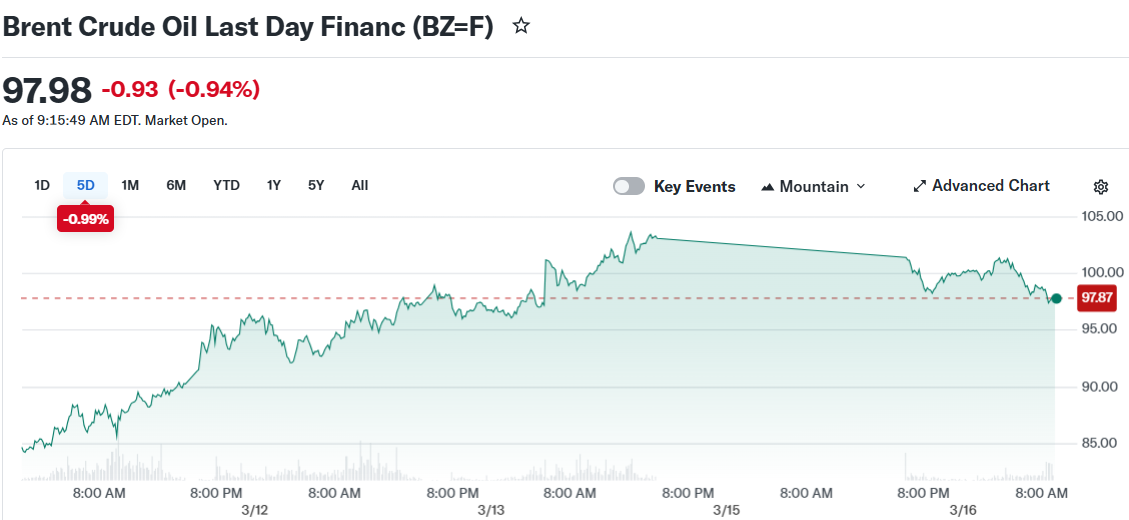
The bank now expects Brent to average $77.50 per barrel in 2026, up sharply from its prior estimate of $61. Brent was trading at $103 at the time of writing.
The revision is driven by a near-total halt in oil traffic through the Strait of Hormuz, one of the world’s most critical energy chokepoints. Around 20 million barrels per day of crude and refined products normally pass through the Strait.
BofA said traffic “stopped dead, almost two weeks ago.” Alternative pipeline routes to the Red Sea have failed to offset the lost volume.
The result has been fast. Nearly 200 million barrels of crude have already been removed from global supply. That’s roughly half of the 400 million-barrel inventory build recorded last year, wiped out in weeks.
BofA’s updated forecast lays out multiple scenarios depending on how the conflict evolves. If oil flows normalize by April, Brent is expected to average around $70 for the year. If the disruption stretches into the second quarter, that average climbs to $85.
A third scenario — considered unlikely by the bank — would see Brent average around $130 per barrel if disruptions persist into the second half of 2026.
What Happens When the War Ends?
BofA expects markets to swing back into surplus once the conflict ends, pulling Brent back toward $65 in 2027. That projection assumes no lasting supply losses.

“With no end to the war in sight, oil stockpiles are draining, and firming the fundamental outlook post-war,” analysts led by Kalei Akamine wrote.
The bank also raised its mid-cycle oil price assumption to $70 Brent from $65, placing it near the middle of its $60–$80 long-term commodity price range.
A separate note from BofA analyst Mensah flagged that the oil price shock could drive a rise in capital expenditure across the energy sector, as companies recalibrate spending plans.
E&P Stocks Get a Boost
The stronger oil price backdrop has fed directly into U.S. exploration and production valuations. BofA raised price targets across oil-levered E&P names by about 17% on average.
Diamondback Energy (FANG) remains BofA’s top pick in the large-cap space.
Devon Energy (DVN) and Ovintiv (OVV) were flagged as mid-cap names with room for a valuation re-rating at current oil prices.
BofA also reiterated its Buy rating on California Resources (CRC), pointing to its capital-efficient 2026 plan and a potential modest production increase in its 2027 maintenance scenario.
Considering a new stock? You may want to see what’s on our watchlist first.
Our team at Knockout Stocks follows top-performing analysts and market-moving trends to spot potential winners early. We’ve identified five stocks gaining quiet attention that could be worth watching now. Create your free account to unlock the full report and get ongoing stock insights.Get 3 Free Stock Ebooks
Discover top-performing stocks in AI, Crypto, and Technology with expert analysis.
- Top 10 AI Stocks - Leading AI companies
- Top 10 Crypto Stocks - Blockchain leaders
- Top 10 Tech Stocks - Tech giants



