






TLDR
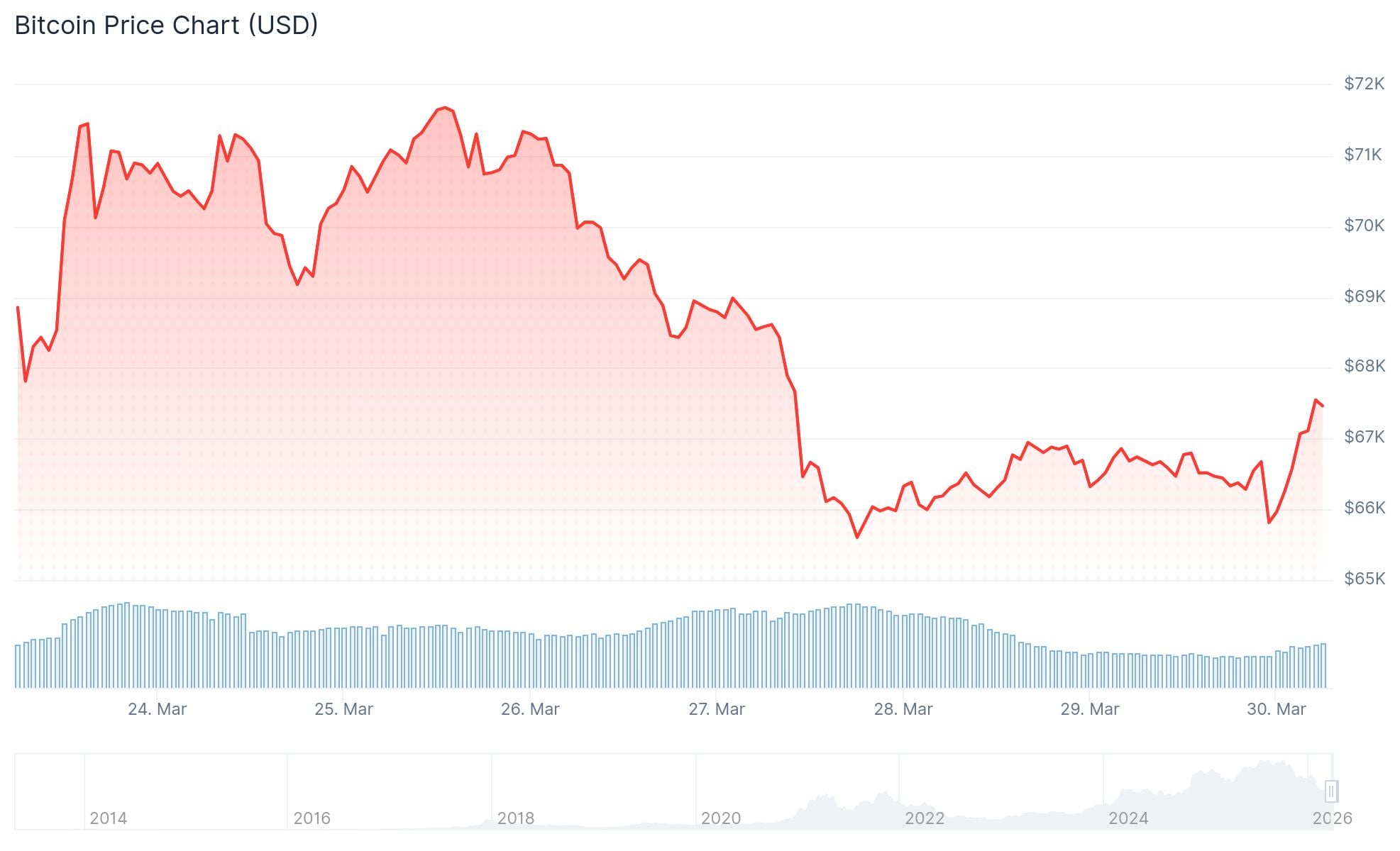
- Bitcoin is trading near $66,500–$67,000, down from $71,000 last week and 47% below its all-time high of $126,080.
- Bullish long positions on Bitfinex have hit a 28-month high — a historically bearish signal.
- The ongoing U.S.-Iran conflict is driving inflation fears, keeping the Federal Reserve from cutting rates.
- Analysts see $60,000 as the next potential support level if conditions worsen.
- Institutional investors continue to accumulate, with U.S. spot Bitcoin ETFs seeing over $1.13 billion in monthly inflows.
Bitcoin has been trading around $66,500 to $67,000 over the past 24 hours. That’s a drop from roughly $71,000 last week, and the price briefly touched $65,000 on Saturday before recovering slightly. At those levels, BTC sits 47% below its all-time high of $126,080, set in October 2025.
The crypto Fear & Greed Index sits at just 9, firmly in “extreme fear” territory.
One closely watched data point is adding to the bearish picture. Bullish long positions on Bitfinex — wagers that bitcoin’s price will rise — have climbed to 79,343, the highest level since November 2023. Historically, that kind of spike in longs has acted as a contrary indicator. In fact, BTC/USD longs on Bitfinex rose 30% in the final quarter of 2025, even as bitcoin’s spot price fell 23% to $87,550.
Bitcoin BTC/USD long positions on Bitfinex have risen to around 79,343, the highest since November 2023. Historically, this metric has acted as a contrarian indicator, with surges in longs often coinciding with price tops or preceding declines. Analysts suggest the latest… pic.twitter.com/xZZsqYKJLe
— Wu Blockchain (@WuBlockchain) March 29, 2026
The pattern is consistent: when Bitfinex longs peak, bitcoin prices tend to fall. When longs decline, prices tend to recover.
Geopolitical Pressure on Prices
The U.S.-Iran conflict continues to weigh on global markets. Iran has launched strikes on Gulf states including Kuwait and Saudi Arabia, while peace talks remain stalled. That has pushed oil prices higher, fueling inflation concerns and reducing the chances of Federal Reserve rate cuts — both of which push down on crypto prices.
BREAKING: President Trump is weighing a military operation to extract nearly 1,000 pounds of uranium from Iran, per WSJ.
Details include:
1. This is considered a "complex and risky" mission that would likely put American forces inside the country for days or longer
2. Trump…
— The Kobeissi Letter (@KobeissiLetter) March 30, 2026

Rachael Lucas, crypto analyst at BTC Markets, described this week’s moves as “a classic risk-off unwind.” Bitcoin touched $72,000 mid-week on hopes of a diplomatic breakthrough, then gave back those gains when talks stalled.
Jeff Mei, COO at BTSE, said oil and gas prices will stay elevated in the near term, dragging on economic growth. “We believe that crypto prices have more room to fall, with bitcoin potentially falling to the $60,000 support level,” he said.
Andri Fauzan Adziima, Research Lead at Bitrue, agreed that the market remains headline-driven. He said any de-escalation in the U.S.-Iran conflict could spark a rally above $70,000.
Institutions Buy While Retail Sits Out
Retail and institutional investors are currently moving in opposite directions. Lucas noted that everyday investors are “hedging or sitting on the sidelines,” while institutional buyers continue to step in. U.S. spot bitcoin ETFs recorded over $1.13 billion in monthly inflows, breaking four straight months of net outflows. Strategy has continued buying, and Morgan Stanley is preparing a low-fee bitcoin ETF launch.
Lucas noted: “When retail fear and institutional accumulation diverge this sharply, history suggests the institutions tend to be right.”
Macro data this week, including initial jobless claims and March non-farm payrolls, could shift sentiment if employment figures disappoint.


