





TLDR
- The Senate Banking Committee advanced the CLARITY Act in a 15-9 vote.
- Democratic Senators Ruben Gallego and Angela Alsobrooks joined Republicans in support.
- The bill aims to divide crypto oversight between the SEC and CFTC.
- Senator Cynthia Lummis said the bill is needed to keep crypto activity in the U.S.
- Gallego said future support depends on stronger ethics rules before a Senate floor vote.
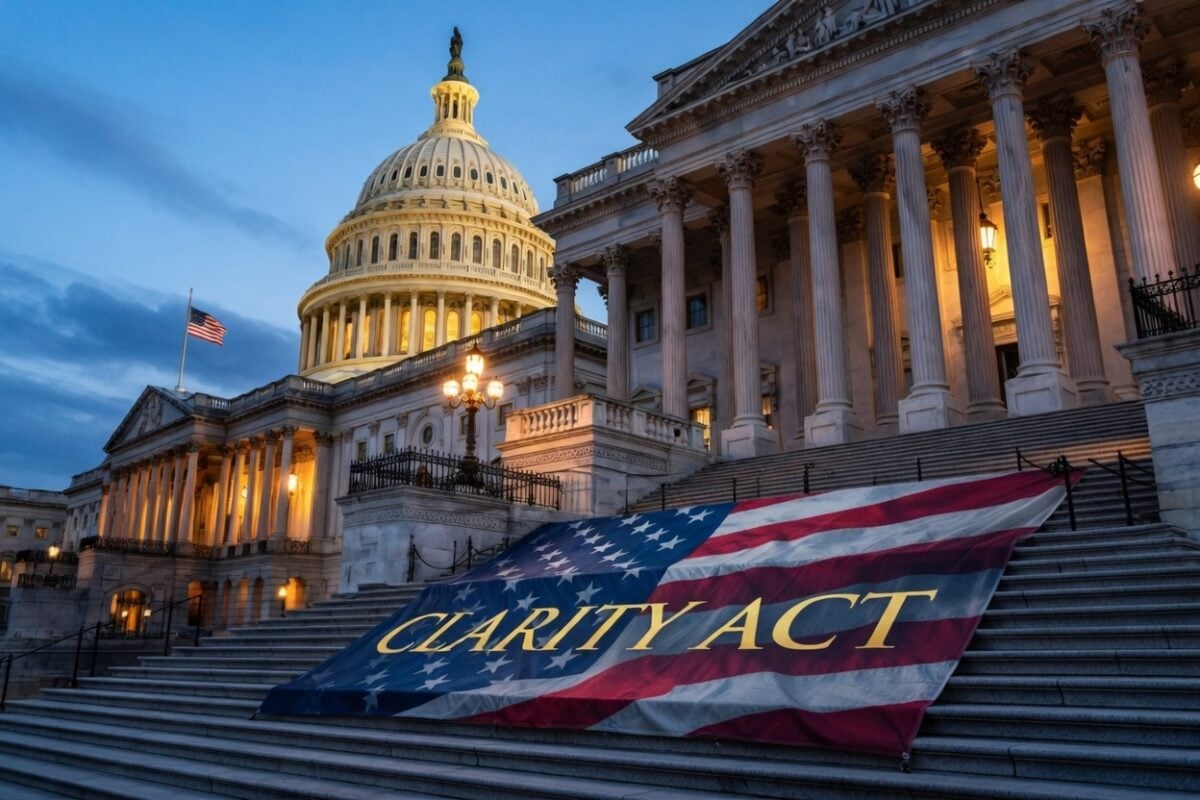
The U.S. Senate Banking Committee has advanced the CLARITY Act on Thursday in a 15-9 vote, moving the crypto market structure bill closer to a full Senate vote after months of negotiations among lawmakers, the White House, crypto firms, banks and policy groups.
The vote drew support from all Republicans on the committee, along with Democratic Senators Ruben Gallego of Arizona and Angela Alsobrooks of Maryland. The bill is designed to create a federal framework for digital asset markets and divide oversight authority between the Securities and Exchange Commission and the Commodity Futures Trading Commission.
The House passed its version of the legislation last year, while the Senate Agriculture Committee advanced a related bill in January. The Senate Banking Committee version had been delayed after earlier disputes over stablecoin rewards, decentralized finance provisions and developer protections.
Senate Banking Committee Chair Tim Scott said the bill was needed because digital asset markets had operated for years in a regulatory gray zone. He said developers, entrepreneurs and investors had faced uncertainty while enforcement actions filled the gap left by Congress.
Cynthia Lummis and Tillis Back Bipartisan Path
Senator Cynthia Lummis, chair of the Senate Banking Subcommittee on Digital Assets and one of the bill’s main advocates, said the CLARITY Act is needed to keep digital asset activity in the United States. She has argued that without clear rules, crypto companies will continue moving to jurisdictions where regulators offer clearer engagement.
Lummis said lawmakers have worked for months to build support for the bill and that most of the measure has broad agreement. She said unresolved issues can still be addressed as the bill moves toward the Senate floor.
Senator Thom Tillis also supported the bill, calling the committee-approved version a strong bipartisan compromise. He said more work remains in the coming weeks to improve the legislation before a final Senate vote.

The White House also supported the effort. Patrick Witt, a senior administration official involved in negotiations, said the bill reflects work by Treasury, the SEC, the CFTC and Senate staff. He said the legislation is meant to keep the United States competitive in global financial markets while adding consumer protection and anti-illicit finance rules.
Gallego Warns Ethics Rules Remain Key
Although Gallego voted to advance the bill, he said his future support depends on further progress on ethics language. He said guardrails preventing conflicts of interest for government officials remain a priority before the bill reaches the Senate floor.
Democrats have raised concerns about President Donald Trump and his family’s crypto ventures. Some have pushed for language that would limit the ability of the president, vice president, lawmakers and other federal officials to own, promote or profit from certain digital assets while in office.
An amendment from Senator Chris Van Hollen aimed to address those concerns, but it failed in a 13-11 vote. Gallego said the issue remains unresolved and could affect how he votes later.
🚨SCOOP: Last minute negotiations between Banking Committee Republicans and Democrats over multiple amendments were brokered this morning in an effort to secure bipartisan support for today’s vote on the Clarity Act, multiple sources tell me.
However, the compromise came at the…
— Eleanor Terrett (@EleanorTerrett) May 14, 2026
Senator Mark Warner, who had worked with Republicans on parts of the bill, did not vote to advance it. During the hearing, he said he still wants to continue negotiations and reach a version that can pass with broader support.
BRCA and DeFi Language Remain Disputed
A major debate during the markup centered on the Blockchain Regulatory Certainty Act provisions. The language is intended to clarify that non-custodial software developers are not money transmitters when they do not control user funds.
Crypto policy groups support that language, saying it protects open-source developers and infrastructure providers. Law enforcement groups have warned that overly broad protections could make it harder to prosecute criminals using decentralized finance tools.
Lawmakers including Senators Chuck Grassley and Catherine Cortez Masto worked on compromise language. The updated text allows criminal charges if a non-custodial developer acts with specific intent to move funds known to be tied to criminal activity.
Cortez Masto still raised concerns that the current bill could make financial crime cases harder to pursue. Some DeFi advocates also criticized a last-minute change to a Lummis amendment that removed language referencing BRCA from Section 301.
The bill now heads toward the full Senate, where more negotiations are expected. It will also need to be aligned with the Senate Agriculture Committee’s version and the House-passed bill before reaching the president’s desk.


