





TLDR
- CME Group CEO Terry Duffy announced the exchange is exploring launching its own digital token that could run on a decentralized network for industry participants
- The company is working with Google on a separate “tokenized cash” solution using blockchain infrastructure, expected to launch later in 2026
- CME did not specify whether the potential token would function as a stablecoin, settlement token, or another type of digital asset
- The exchange plans to launch 24/7 cryptocurrency futures trading in Q2 2026 and will offer new futures contracts for Cardano, Chainlink, and Stellar
- CME’s average daily crypto trading volume reached $12 billion in 2025, with micro-ether and micro-bitcoin futures as top performers
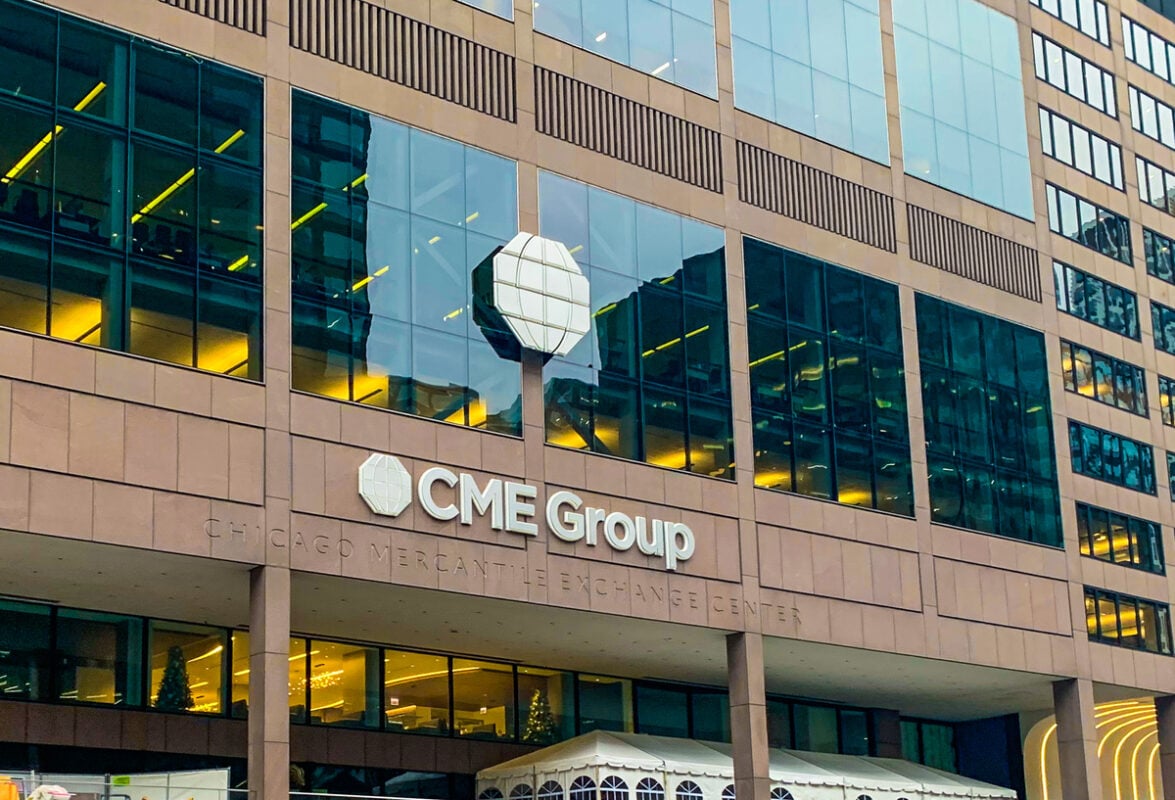
CME Group CEO Terry Duffy revealed the derivatives exchange is considering launching its own cryptocurrency token. The announcement came during the company’s latest earnings call on February 4, 2026.
🚨BREAKING: According to @CMEGroup CEO Terry Duffy, the exchange is exploring launching its own “CME Coin” on a decentralized network. pic.twitter.com/DGZiBiqJWi
— SolanaFloor (@SolanaFloor) February 4, 2026
Duffy told analysts the exchange is exploring “initiatives with our own coin that we could potentially put on a decentralized network.” The comment came in response to a question from Morgan Stanley analyst Michael Cyprys about tokenized collateral.
The Chicago-based exchange did not provide specific details about how the token would function. CME declined to clarify whether the digital asset would operate as a stablecoin, settlement token, or another type of cryptocurrency when asked by media outlets.
This marks the first time CME has explicitly mentioned creating a proprietary digital asset. The company has previously discussed tokenization as an area of interest but never confirmed plans for its own token.
Google Partnership for Tokenized Cash
CME is working on a separate blockchain initiative with Google. The two companies announced a partnership in March 2025 to pilot blockchain-based infrastructure for wholesale payments and asset tokenization.
This “tokenized cash” solution will use Google Cloud’s Universal Ledger. The project is expected to launch later in 2026 and will involve a depository bank facilitating transactions.
Duffy drew a distinction between the Google project and the potential CME token. He suggested the CME-issued token would be available “for other of our industry participants to use” on a decentralized network.

During the earnings call, Duffy emphasized the importance of the token issuer’s credibility. He said a token from a “systemically important financial institution” would offer more comfort to market participants than tokens from smaller banks.
Expanding Crypto Trading Operations
CME Group is expanding its cryptocurrency offerings in 2026. The exchange plans to introduce 24/7 trading for all cryptocurrency futures and options in the second quarter of the year, pending regulatory approval.
The company announced in January it would list futures contracts for Cardano, Chainlink, and Stellar. CME also agreed with Nasdaq to unify crypto index offerings under the Nasdaq-CME Crypto Index.
CME’s crypto business performed strongly in 2025. The exchange’s average daily crypto trading volume hit $12 billion last year.
Micro-ether and micro-bitcoin futures contracts were among the top performers. These products allow traders to gain exposure to cryptocurrencies with smaller contract sizes.
Traditional Finance Moves Into Digital Assets
CME joins other major financial institutions exploring blockchain-based tokens. JPMorgan rolled out its JPM Coin in November 2025, which represents US dollar deposits at the bank.
The JPMorgan token runs on Base, a blockchain developed by Coinbase. Institutional clients can use it to move funds and settle payments on-chain.
Bank of America said in July 2025 it was exploring stablecoins for its payments infrastructure. CEO Brian Moynihan described them as a tool for moving dollar and euro-denominated funds through the bank’s global systems.
Fidelity Investments plans to launch a US dollar-backed stablecoin called the Fidelity Digital Dollar. The asset manager received conditional approval to operate a national trust bank.
The stablecoin market has grown to approximately $305.8 billion in market capitalization. This represents an increase from around $260 billion when the GENIUS Act passed in July 2025, according to DefiLlama data.
Considering a new stock? You may want to see what’s on our watchlist first.
Our team at Knockout Stocks follows top-performing analysts and market-moving trends to spot potential winners early. We’ve identified five stocks gaining quiet attention that could be worth watching now. Create your free account to unlock the full report and get ongoing stock insights.Get 3 Free Stock Ebooks
Discover top-performing stocks in AI, Crypto, and Technology with expert analysis.
- Top 10 AI Stocks - Leading AI companies
- Top 10 Crypto Stocks - Blockchain leaders
- Top 10 Tech Stocks - Tech giants



