





The next wave of crypto market participants may not open apps, check prices, or execute trades at all. Autonomous AI agents are flooding the cryptoverse at a rapid pace. These agents manage wallets and move capital based on preprogrammed logic rather than human judgment. This is what industry experts are referring to as the “agentic economy”: a future where automated systems, not people, direct the flow of money.
That shift is already reshaping who wins and who loses in crypto markets. Automated crypto trading systems are executing faster, processing more data, and reacting to on-chain signals before most retail traders have even opened a chart. The playing field is tilting, and most retail investors have no AI crypto trading tools to fight back with.
That is exactly the gap DeepSnitch AI was built to close. With more than $2.5 million raised and five live AI agents already operational, it is one of the few presale projects where the answer to “but does it work today?” is yes. The presale closes March 31.

The agentic economy is here, and it’s building fast
Binance’s former CEO Changpeng Zhao predicts that AI agents will eventually process 1 million times more payments than humans ever could. Meanwhile, Coinbase CEO Brian Armstrong echoes his view, writing on X that “Very soon, there are going to be more AI agents than humans making transactions”.
The infrastructure buildout is well underway. BNB Chain recently brought on its first dollar-pegged stablecoin with EIP-3009 compatibility, laying the groundwork for AI agent payment rails. Coinbase also took a parallel step with its x402 protocol on the Base network, specifically designed for automated, permissionless payments.
Even legacy payment networks are adapting: both Mastercard and Visa are rolling out support for the Trusted Agent Protocol, a framework that ties a bot’s identity to a verified human owner, enabling institutions to monitor and manage high-frequency autonomous transactions.

Dune Analytics data highlights the magnitude of the shift. Agent-driven transaction volume across chains has already crossed $162 million. Perhaps more telling is the revenue breakdown: on Ethereum and Solana combined, total chain revenue sits at around $865,557, and bots account for 99% of it.
For retail traders, the message is this: crypto trading bots are not “coming.” They’re already here. The question is whether you have anything to compete with them.
DeepSnitch AI is the answer to that question.
DeepSnitch AI: The retail weapon you need in your arsenal
Traders who know what to watch can spot bot-driven capital moving before it shows up in price. A sudden climb in transactions/second or a spike in active wallet counts often signals automated systems deploying capital into a network, before spot prices react. For a long time, these tools have been out of reach for retail traders.
DeepSnitch AI closes that gap. Its five live AI agents give retail traders the kind of on-chain surveillance they need to make smarter decisions. Real-time crowd sentiment, instant contract safety audits, whale movement tracking, and live data feeds, all through Telegram, with zero technical setup.
In a bot-dominated world, the retail traders who survive are the ones with faster, cleaner information.
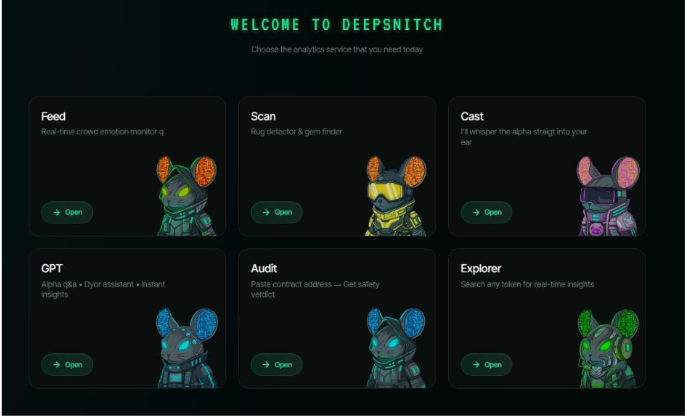
DeepSnitch AI is built to be that information edge, a daily DYOR tool that gets opened before any trade gets made. That sustained retention is what separates a short-term listing pump from a token with lasting price support well into 2027 and beyond. The more traders who adopt it as a daily AI crypto trading tool, the more structural the token demand becomes.
DSNT is priced at $0.04669 in Stage 8 of 15, with more than $2.5 million raised, and community forecasts pointing to 100X – 300X targets post-launch, which could push the price above $10. Potential CEX listings in the weeks following the March 31 Uniswap launch could bring waves of new buyers who missed the presale entirely.
MON price prediction: Monad’s parallel execution thesis faces a reality test
Monad launched its mainnet in late 2025 with an ambitious pitch: up to 10,000 transactions per second with sub-second finality and full EVM compatibility, making it one of the most technically ambitious Layer 1 blockchains in the current cycle.
The agentic economy framing is directly relevant here. A high-throughput, low-latency chain is precisely the kind of infrastructure that automated crypto trading systems and AI payment agents need to operate at scale.
MON was trading around $0.032 on March 25, with a market cap of roughly $2 million.
CoinCodex projects MON will remain in the $ 0.017 and $ 0.049 range in 2026. The bull case for MON is real, but it is almost entirely execution-dependent. If the Monad ecosystem fails to attract meaningful DeFi volume and developer activity, the technical infrastructure thesis remains a whitepaper claim.
For automated crypto trading strategies, Monad is worth watching closely. For return potential in 2026, the gap between its current price and its all-time high represents a roughly 2x recovery trade at best, which is meaningful but narrow compared to what early-stage projects can offer.
ZEC price prediction: Zcash’s privacy thesis is gaining new credibility
Zcash has spent most of the last two years out of fashion. Regulators frowned on privacy coins, some exchanges delisted them, and capital rotated elsewhere. But that narrative is shifting. The Zcash Open Development Lab raised over $25 million from Paradigm and a16z in March 2026 to scale the ecosystem, providing substantial validation for Zcash’s core privacy mission.
The SEC officially closed its investigation into Zcash in January 2026 without recommending enforcement action, removing a major regulatory overhang, while Grayscale has filed to convert its Zcash Trust into a US-listed spot ETF, a move that could unlock institutional capital and mirror the proven catalyst from Bitcoin’s market.
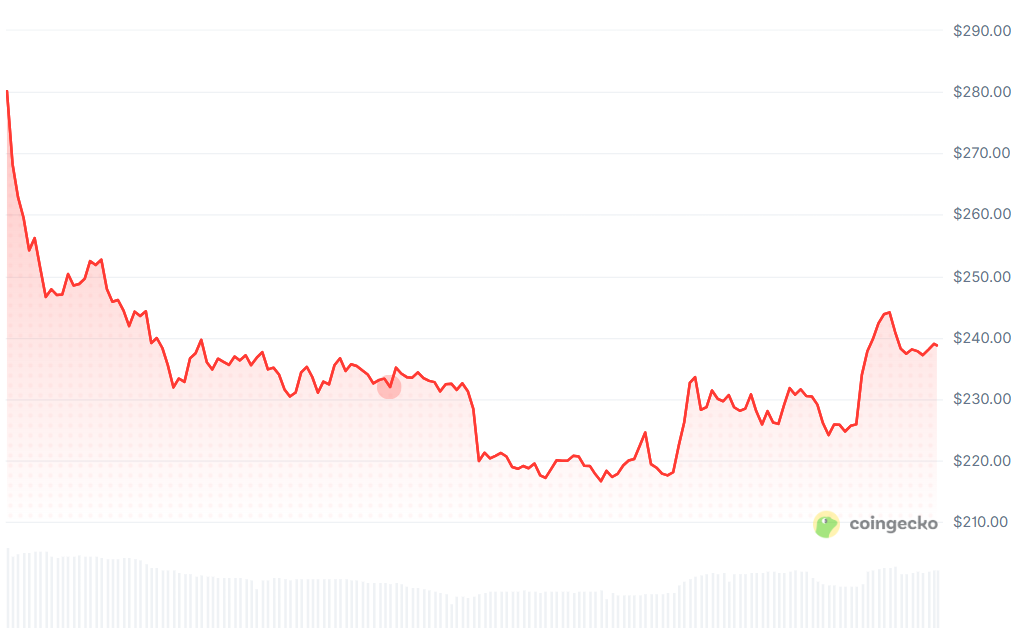
ZEC was trading at around $239 on March 25, down about 15% over the past seven days. Coinpedia’s forecast places ZEC potentially trending toward $850 by the end of 2026 if the current structural recovery evolves into a macro breakout, and the $480 to $850 range represents their base-to-bull scenario for the year.
The case for ZEC is genuine: privacy demand is growing, institutional validation just arrived, and the Grayscale ETF filing could be the kind of structural catalyst that re-rates the asset. ZEC is a legitimate play for traders positioned for an altcoin rotation, but the timeline for a full breakout remains uncertain.
The bots are winning: Here’s how retail fights back
The FXStreet analysis makes it plain: crypto is evolving into an agentic economy, and the participants best equipped with real-time data, instant analysis, and automated signal processing will capture the most value. That has historically meant institutions and automated crypto trading desks. DeepSnitch AI changes the equation for retail.
MON and ZEC both have credible stories for 2026. Monad captures the infrastructure narrative that AI agents need to run on. ZEC captures the privacy narrative that agentic transactions may ultimately require.
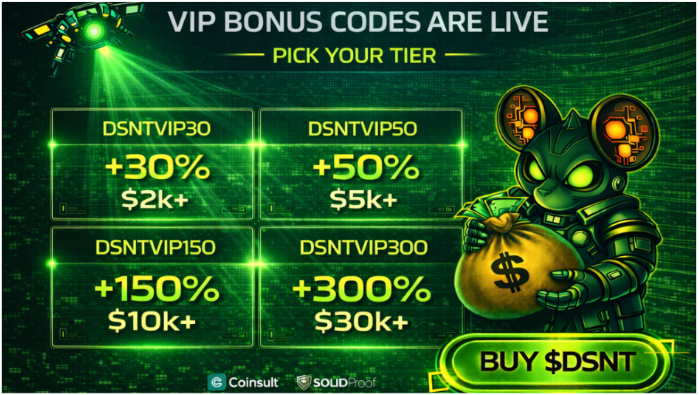
But neither is a presale closing in less than a week, at a price that may never exist again. The Uniswap listing follows immediately after March 31, and potential CEX listings in April and May could bring a wave of buyers to a token that presale holders already own at $0.04669. All VIP codes are still live for bonus tokens on purchases.
Visit the official DeepSnitch AI presale before the window closes.
Frequently asked questions
Why is DeepSnitch AI relevant to the rise of crypto trading bots?
While crypto trading bots dominate institutional-grade execution, DeepSnitch AI brings the same category of intelligence to retail traders through five live agents accessible via Telegram, making it one of the most accessible AI crypto trading tools available at presale pricing.
What are AI crypto trading tools and why do they matter?
AI crypto trading tools use real-time on-chain data and machine learning to give traders faster, smarter signals. As automated crypto trading systems increasingly dominate markets, retail investors without similar tools are at a structural disadvantage.
Is MON a good investment in 2026?
Monad has a strong technical infrastructure suited to the agentic economy, with price range estimates for 2026 between $ 0.017 and $ 0.047. The bull case depends heavily on ecosystem adoption and developer activity following the mainnet launch. But it is unlikely to outperform a presale like DeepSnitch AI, which is about to launch on Uniswap.


