



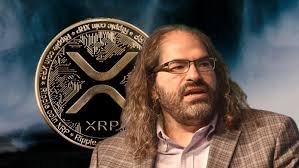


TLDR
- David Schwartz, Ripple’s Emeritus CTO, described Bitcoin as a technological dead end, focusing on adoption over innovation.
- Schwartz emphasized that Bitcoin’s success depends more on network strength than ongoing technical development.
- He defended XRP Ledger’s decentralization, contrasting it with Bitcoin’s history of coordinated rollbacks.
- Schwartz pointed out that Bitcoin required collective action to address past bugs, challenging its supposed decentralization.
- The debate between Schwartz and Bitcoin advocate Bram Kanstein intensified over the decentralization of XRP Ledger.
David Schwartz, Ripple’s Emeritus Chief Technology Officer, has stirred debate within the crypto community by labeling Bitcoin as a “technological dead end.” His remarks, posted on social platform X, came during a heated exchange over the decentralization of the XRP Ledger (XRPL). Schwartz emphasized that Bitcoin’s success no longer depends on technical innovation, but rather on adoption and network strength.
David Schwartz Critiques Bitcoin’s Technological Innovation
In a response to a question about contributing to Bitcoin development again, David Schwartz stated, “Not really,” which led to further discussion about Bitcoin’s technical evolution. Schwartz argued that Bitcoin is a “technological dead end” and compared it to the U.S. dollar, saying both rely more on adoption and network strength than on continuous technical improvement. Schwartz’s comments suggest that Bitcoin’s blockchain layer innovation has reached its peak, and future success lies in its widespread use rather than its technical advancements.
Not really. I think bitcoin is largely a technological dead end for the same reason the dollar is. The technology just doesn't seem to matter all that much to its success, at least not at the blockchain layer.
— David 'JoelKatz' Schwartz (@JoelKatz) February 12, 2026
Schwartz’s remarks reflect a broader sentiment in the crypto world about Bitcoin’s stagnation in terms of innovation. He believes that Bitcoin’s status as a digital currency relies less on technical breakthroughs and more on its established position in the market. His statements challenge the idea that the blockchain space must continually innovate at the protocol level to maintain relevance.
The Debate Over XRPL’s Decentralization
Schwartz’s comments come amid ongoing tensions with Bitcoin advocate Bram Kanstein over the decentralization of the XRP Ledger. Kanstein has argued that XRPL’s history effectively starts at Ledger 32,570, citing a bug in the network’s early software that led to the loss of the first 32,569 ledgers. Kanstein sees this as evidence of centralized control in the XRPL network.
David Schwartz defended the XRP Ledger, calling the incident a technical glitch from the early days of the network. He emphasized that no coordinated rollback took place after the bug was discovered, asserting that this decision was a demonstration of true decentralization. According to Schwartz, the community’s choice to continue without intervention reflects the strength of XRPL’s decentralized governance.
Bitcoin’s History of Governance Challenges
In defending XRPL’s decentralization, Schwartz also pointed to historical incidents in Bitcoin’s own development. He referred to the 2010 bug, which required a coordinated rollback of the Bitcoin blockchain, and the 2013 value overflow incident, which similarly needed collective action. Schwartz highlighted that these events show that even Bitcoin, which is often seen as the epitome of decentralization, has faced moments where coordinated intervention was necessary to correct flaws.

Schwartz’s comparison underscores the complexities of blockchain governance and the challenges that arise in maintaining true decentralization. Despite Bitcoin’s widespread adoption, its history includes moments of centralized control, such as the need for coordinated interventions.
Considering a new stock? You may want to see what’s on our watchlist first.
Our team at Knockout Stocks follows top-performing analysts and market-moving trends to spot potential winners early. We’ve identified five stocks gaining quiet attention that could be worth watching now. Create your free account to unlock the full report and get ongoing stock insights.Get 3 Free Stock Ebooks
Discover top-performing stocks in AI, Crypto, and Technology with expert analysis.
- Top 10 AI Stocks - Leading AI companies
- Top 10 Crypto Stocks - Blockchain leaders
- Top 10 Tech Stocks - Tech giants



