





TLDR
- Gas prices jumped nearly $0.50 last week to a national average of $3.48 per gallon
- Oil crossed $110 per barrel as tanker traffic through the Strait of Hormuz nearly stopped
- GasBuddy analyst gives 80% odds gas hits $4/gallon within a month
- Diesel already at $4.66/gallon — up from $3.77 just one week ago
- Wall Street is raising stagflation concerns as energy prices spike and labor data weakens
Gas prices in the United States have jumped sharply over the past week as the war in the Middle East disrupts global oil supply. The national average hit $3.48 per gallon on Monday, up from $2.99 just one week ago.
That’s a rise of nearly 17% since U.S.-Israeli attacks on Iran began on February 28.
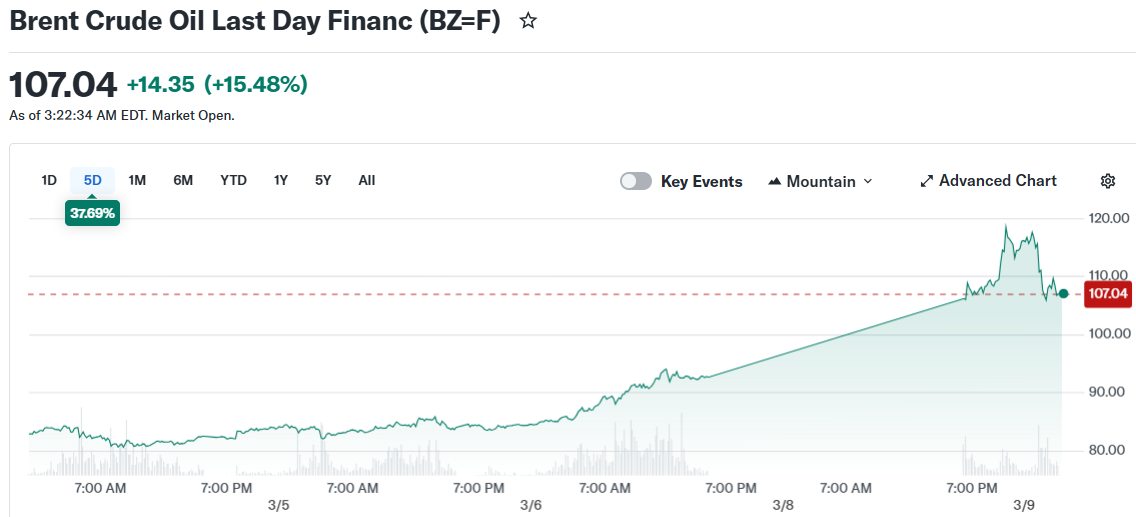
Oil prices crossed $110 per barrel on Sunday evening. The jump came after tanker traffic through the Strait of Hormuz ground to a near-halt. That waterway normally carries about one-fifth of the world’s oil supply.
Iran said it was firing more missiles toward Israel in response to what it described as expanding U.S.-Israeli attacks. The conflict is now in its tenth day.
GasBuddy analyst Patrick De Haan said on Sunday that he believes there is roughly an 80% chance the national average reaches $4 per gallon within the next month. He added that prices could climb to between $3.75 and $3.95 this week alone.
The last time Americans paid $4 per gallon was August 2022.
For every $10 rise in crude oil prices, Americans pay about $0.25 more at the pump. With oil now above $100, that math is adding up fast.

Collectively, Americans are now spending around $187 million more per day on gas than they were a week ago.
Diesel Costs Climbing Even Faster
Diesel is rising faster than regular gasoline. The national average for diesel stood at $4.66 per gallon on Monday, up from $3.77 the week before.
De Haan put the odds of diesel hitting $5 per gallon nationally at 85%, possibly this week. That would be the first time since December 7, 2022.
Higher diesel prices matter beyond drivers. Most goods in the U.S. are transported by freight trucks. When diesel costs more, shipping costs rise, and those costs get passed to consumers in the form of higher prices at the store.
That means groceries, clothing, and construction materials could all get more expensive.
Stagflation Fears Grow on Wall Street
Rising energy costs are fueling broader economic concerns. JPMorgan analysts wrote in a note to clients on Monday that “concerns about stagflation are rising in the U.S.”
Stagflation refers to a combination of high inflation and slow economic growth. Nigel Green, CEO of deVere Group, called this a “toxic combination” and a “very real possibility.”
Green wrote that when energy prices surge this fast, inflation accelerates broadly. Businesses face higher costs, households pay more bills, and economic growth slows at the same time.
Prices vary by state. California drivers were paying $5.20 per gallon as of Saturday, the highest in the country. Kansas drivers paid $2.92, the lowest.
Considering a new stock? You may want to see what’s on our watchlist first.
Our team at Knockout Stocks follows top-performing analysts and market-moving trends to spot potential winners early. We’ve identified five stocks gaining quiet attention that could be worth watching now. Create your free account to unlock the full report and get ongoing stock insights.Get 3 Free Stock Ebooks
Discover top-performing stocks in AI, Crypto, and Technology with expert analysis.
- Top 10 AI Stocks - Leading AI companies
- Top 10 Crypto Stocks - Blockchain leaders
- Top 10 Tech Stocks - Tech giants



