





TLDR
- Trump agreed to a two-week ceasefire with Iran, triggering a broad market rally
- The U.S. Dollar Index fell to its lowest point since March 11, dropping around 1%
- The euro, yen, pound, Australian dollar, and New Zealand dollar all gained against the greenback
- Bitcoin rose 3.2% to $71,514 and Ethereum climbed 5.7% to $2,235
- Prospects of the Strait of Hormuz reopening pushed oil prices down, easing inflation fears
The U.S. dollar dropped sharply on Wednesday after President Donald Trump announced a two-week ceasefire with Iran. The news sent global currencies and cryptocurrencies higher as investors moved away from safe-haven assets.
Trump had previously threatened widespread attacks on Iran’s civilian infrastructure. He warned that “a whole civilization will die tonight” if his demands were not met, drawing international condemnation.
The ceasefire was announced less than two hours before Trump’s deadline for Iran to reopen the Strait of Hormuz. That announcement quickly shifted market sentiment toward risk-on trading.
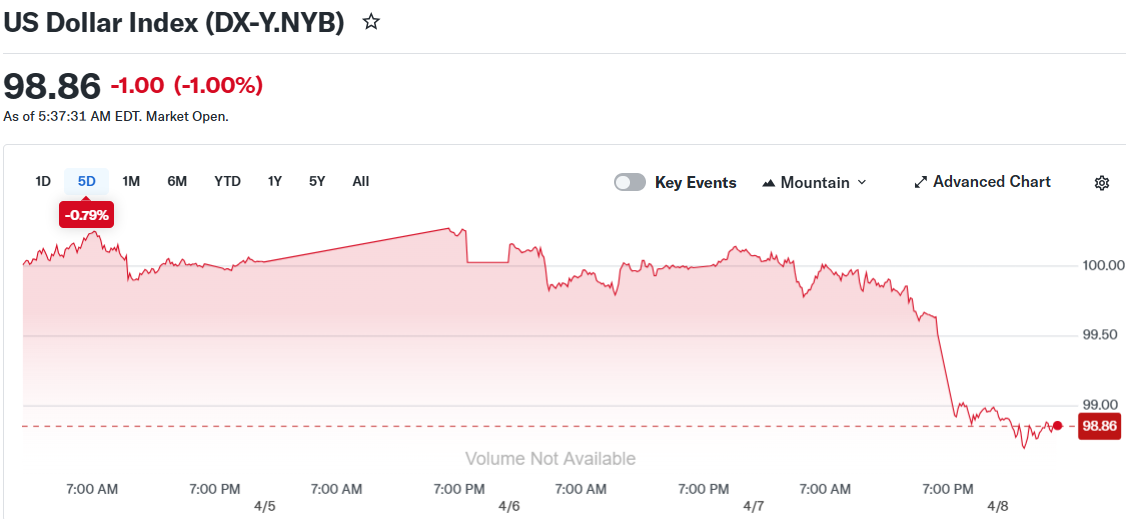
The U.S. Dollar Index, which tracks the greenback against six major currencies, fell around 1% to 98.943. That is its lowest level since March 11 and puts it on pace for its biggest single-day drop since April 21, 2025.
The dollar tends to attract investors during geopolitical uncertainty. With that tension easing, demand for the dollar as a safe haven fell.
The euro rose 0.7% to $1.1677. The British pound gained 0.8% to reach $1.3403. The Japanese yen strengthened 0.7% against the dollar, trading at 158.50 per dollar.
The Australian dollar climbed 1.2% to $0.7063. The New Zealand dollar jumped 1.1% to $0.5795. Both currencies are seen as risk-sensitive, meaning they tend to rise when investor confidence improves.
Crypto Joins the Rally
Bitcoin advanced 3.2% to $71,514.03. Ethereum climbed 5.7% to $2,235.35. The gains came alongside broader market moves into assets seen as higher risk.

Crypto markets have increasingly moved in step with global risk sentiment, and Wednesday’s session reflected that pattern.
Oil Prices and Inflation Outlook
The prospect of the Strait of Hormuz reopening also weighed on oil prices. The Strait is a critical shipping lane for global oil supply.
Lower oil prices ease fears about inflation. When inflation fears drop, the case for central banks to raise interest rates weakens. Lower interest rates tend to push the dollar down, because overseas bonds become more attractive to foreign investors seeking higher yields.
Ray Attrill, head of FX strategy at National Australia Bank in Sydney, said the ceasefire could support the risk-on rally if the Strait reopens. But he added that currencies remain vulnerable to reversals during the 14-day ceasefire window.
“Markets still need to proceed with a degree of scepticism,” Attrill said.
The Dollar Index has now weakened for three straight days. The ceasefire has given markets a short-term boost, but analysts say much depends on what happens over the next two weeks.
Considering a new stock? You may want to see what’s on our watchlist first.
Our team at Knockout Stocks follows top-performing analysts and market-moving trends to spot potential winners early. We’ve identified five stocks gaining quiet attention that could be worth watching now. Create your free account to unlock the full report and get ongoing stock insights.Get 3 Free Stock Ebooks
Discover top-performing stocks in AI, Crypto, and Technology with expert analysis.
- Top 10 AI Stocks - Leading AI companies
- Top 10 Crypto Stocks - Blockchain leaders
- Top 10 Tech Stocks - Tech giants



