






TLDR
- Spot ETH ETFs recorded 10 consecutive days of net inflows totaling $633 million
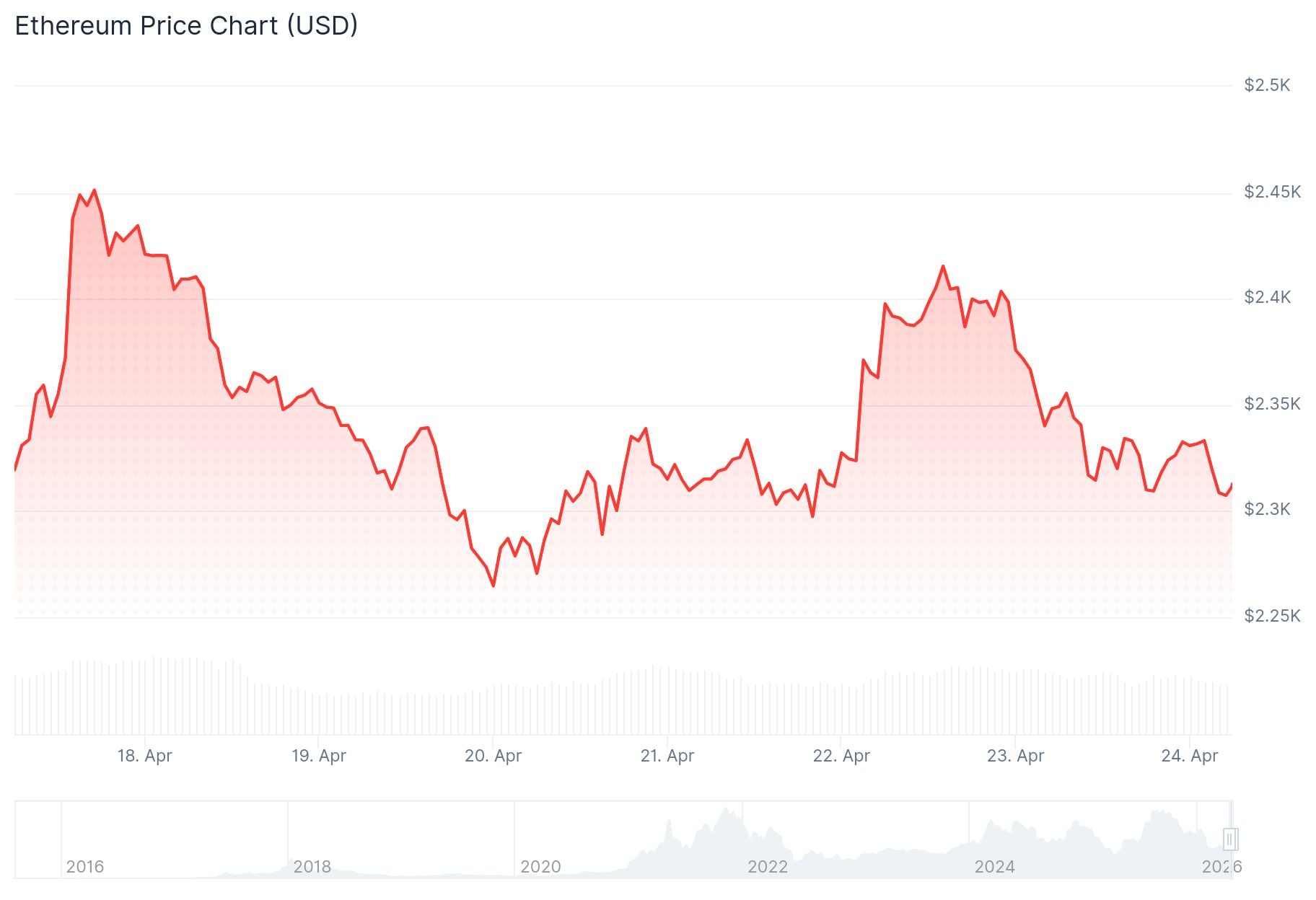
- ETH is struggling to trade above $2,400 and is down 22% year-to-date in 2026
- GSR Markets launched the BESO ETF on Nasdaq, the first multi-asset crypto fund with staking yields
- Weekly DApp revenue on Ethereum dropped to $13 million, nearly 50% lower than six months ago
- Analysts point to $2,250 as the next key support level if $2,400 resistance holds
Ether (ETH) is trading around $2,340 and has repeatedly failed to close above $2,400. The price rallied alongside Bitcoin’s recovery toward $79,000, but momentum has not been enough to break through key resistance.
Spot Ethereum ETFs logged 10 straight days of net inflows as of Wednesday, totaling $633 million. Cumulative ETF inflows are now approaching $12 billion. For the week, three trading days produced $206 million in net inflows, the strongest weekly figure since launch.
GSR Markets launched the BESO ETF on Nasdaq this week, the first US-listed fund to actively manage a basket of BTC, ETH, and SOL with built-in staking yields. The fund charges a 1% annual fee, rebalances weekly, and passes through ETH staking yields of 3.3–4.0% APY directly to shareholders.
NEW: @GSR_io is launching their first ETF! Ticker is $BESO. Its actively managed and will invest across Bitcoin, Ethereum & Solana. Fee is 1%. pic.twitter.com/Gr1n8KAVpq
— James Seyffart (@JSeyff) April 22, 2026
BESO enters a market alongside BlackRock’s IBIT, which holds $54 billion in AUM, and Bitwise’s BAVA, which offers AVAX exposure at 5.4% staking APY.
ETH network transactions surged 41% week-over-week as ETF activity picked up. Exchange supply is also dropping as staking pulls assets off the open market.
DApp Revenue Decline Weighs on ETH
Weekly DApp revenue on Ethereum fell to $13 million in April, down nearly 50% from six months ago. The broader DApp sector has also weakened, with aggregate weekly blockchain DApp revenue falling to $73 million from $130 million in October 2025.

Solana, BNB Chain, and Hyperliquid all saw similar declines, suggesting this is a market-wide trend rather than an Ethereum-specific problem.
ETH is down 22% year-to-date while the broader crypto market is down 14%. Despite this, Ethereum remains the leader in total value locked (TVL), and its layer-2 solutions have gained market share in DEX volumes.
The annualized ETH futures premium dropped to 1%, well below the 4% neutral threshold. This points to low demand for leveraged long positions, at the lowest level in four months.
Analyst Views on Key Price Levels
Analyst Ali Charts posted that ETH is testing its Realized Price at $2,340, the average cost basis for all on-chain investors. He noted that when this level holds as support historically, ETH has entered expansion phases.
Ethereum $ETH is testing a critical level that has historically separated bear markets from macro expansions.
ETH is trading around its Realized Price at $2,340. This level represents the average cost basis for all on-chain investors.
Historically, during recovery phases, the… pic.twitter.com/wTUrL1DpxA
— Ali Charts (@alicharts) April 23, 2026
Analyst Ted Pillows warned that ETH failed to reclaim $2,400 and identified $2,250 as the next key support zone. He added that ETH is looking weak relative to Bitcoin.
$ETH tried to reclaim the $2,400 level but failed.
The next key support for Ethereum is around the $2,250 zone, which could get retested.
For now, ETH is looking weak compared to Bitcoin, so any small correction in BTC would be bad for Ethereum. pic.twitter.com/MqyYeExgQ4
— Ted (@TedPillows) April 23, 2026
TD Cowen has a $3,650 price target on ETH, and Standard Chartered holds a $7,500 institutional-flow thesis for the longer term.
The Fear & Greed Index currently sits at 33, indicating fear, with 30-day volatility at 5%.


