





TLDR
-
European natural gas prices jumped sharply as conflict involving Iran disrupted LNG supply routes through the Strait of Hormuz.
-
QatarEnergy halted production after drone attacks, tightening global LNG supply and driving price volatility.
-
Dutch TTF gas futures surged as much as 49% during trading as supply fears intensified.
-
Europe remains highly reliant on LNG imports after shifting away from Russian energy following the 2022 crisis.
-
Analysts warn a prolonged disruption could push European gas prices sharply higher and tighten global energy markets.
European natural gas prices climbed sharply as conflict in the Middle East disrupted key energy supply routes. Markets reacted quickly to growing risks around liquefied natural gas shipments.
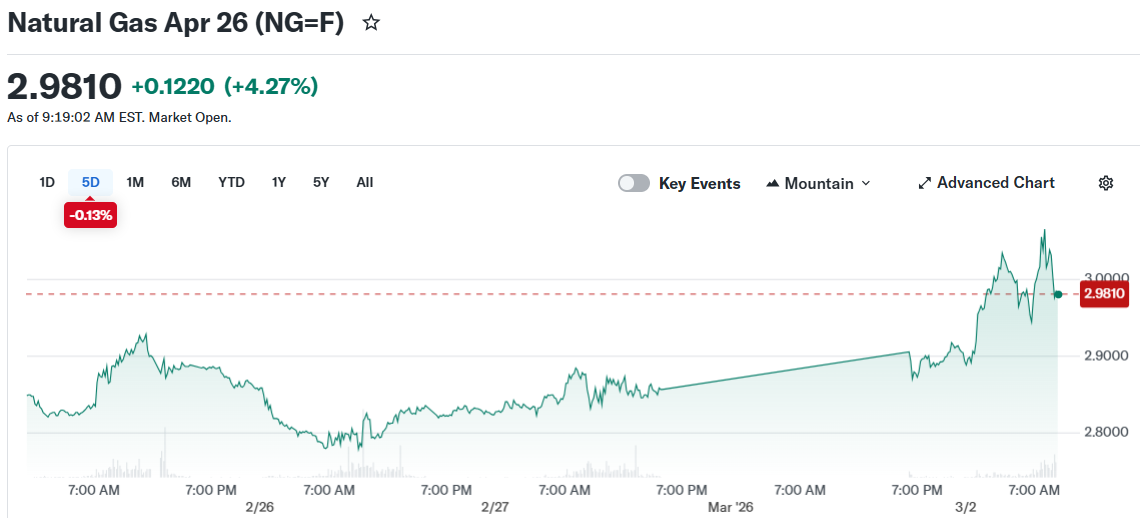
Gas prices in Europe surged roughly 25% early in the session. Dutch TTF futures later extended gains, rising as much as 49% during trading.
The rally followed escalating military activity in the region. Iran-related disruptions have affected shipping through the Strait of Hormuz, a key energy transit route.
The Strait handles a large share of global LNG shipments. Tanker traffic has slowed sharply as security concerns intensified.
QatarEnergy halted natural gas production after drone attacks targeted facilities. The state-owned producer accounts for close to one-fifth of global LNG exports.
Europe’s Supply Exposure
Europe remains heavily exposed to LNG supply disruptions. The region shifted away from Russian pipeline gas after the 2022 energy crisis.
A large portion of Europe’s LNG now arrives from Qatar. Many shipments pass through the Strait of Hormuz before reaching European terminals.

Gas inventories typically fall during winter heating months. This forces European countries to import more LNG to rebuild reserves.
Analysts said the current situation echoes conditions seen during the 2022 crisis. That period saw factory shutdowns and rising inflation across the region.
Goldman Sachs warned that a one-month halt in LNG shipments through the Strait could cause European gas prices to more than double. Prices could approach €74 per megawatt hour under that scenario.
A disruption lasting more than two months could push prices above €100 per megawatt hour. Such levels previously triggered large demand reductions across Europe.
Global Energy Market Reaction
Energy markets responded quickly to supply concerns. Oil prices also climbed as traders priced in disruption risks across the region.
The Strait of Hormuz handles about 80 million tonnes of LNG each year. That represents roughly 19% of global supply.
Oil shipments through the Strait are also critical to global energy flows. Around one-fifth of global oil production passes through the waterway.
Three oil tankers were reported damaged in the region over the weekend. Shipping delays have added to market volatility.
Freight rates for crude tankers have surged in recent weeks. Some routes from the Gulf to Asia have seen rates triple over the past month.
Asian LNG prices also face potential increases. Global gas markets remain closely linked, with supply shifts affecting multiple regions.
U.S. natural gas prices have shown limited movement so far. Export capacity remains near full, limiting the ability to increase shipments quickly.
European markets remain focused on LNG supply stability. Traders are watching whether shipping through the Strait of Hormuz returns to normal levels in the coming weeks.
Stop guessing and start investing with confidence. KnockoutStocks gives you the AI insights, market intelligence, and stock research you need to spot opportunities, cut through the noise, and make smarter investment decisions — all in one powerful platform.
Sign up today and get 50% OFF full access to our premium stock picks.
Simply use coupon code SPECIAL50 at checkout to claim your exclusive discount.
Get 3 Free Stock Ebooks
Discover top-performing stocks in AI, Crypto, and Technology with expert analysis.
- Top 10 AI Stocks - Leading AI companies
- Top 10 Crypto Stocks - Blockchain leaders
- Top 10 Tech Stocks - Tech giants



