






TLDR
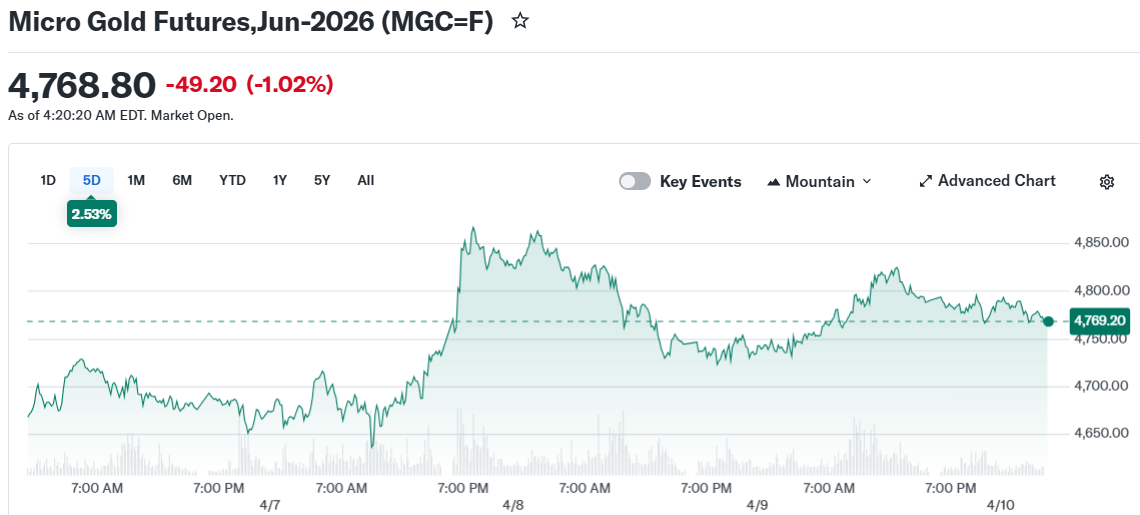
- Gold held near $4,765/oz, on track for a third straight weekly gain of nearly 2%
- A fragile US-Iran ceasefire and weekend talks in Islamabad are keeping markets cautious
- Central banks, including Poland and China, continue buying gold steadily
- A weaker dollar this week made gold cheaper for overseas buyers, supporting prices
- US CPI data released Friday could shift expectations on Federal Reserve rate decisions
Gold prices held steady near $4,765 an ounce on Friday, putting the metal on course for its third weekly gain in a row. The weekly rise of nearly 2% comes as traders watch a fragile ceasefire between the US and Iran closely.
The ceasefire, announced earlier this week, helped calm markets. But cracks appeared quickly. Military activity continued in Lebanon, and Iran denied that its delegation had arrived in Islamabad for weekend talks with the US.
President Trump said he was “optimistic” about a peace deal. He also threatened Iran over fees being charged for ships passing through the Strait of Hormuz, a key route for global oil supplies that remains largely closed.
PRESIDENT TRUMP:
“There are reports that Iran is charging fees to tankers going through the Hormuz Strait — They better not be and, if they are, they better stop now!” pic.twitter.com/AE18nX5M7i
— The Kobeissi Letter (@KobeissiLetter) April 9, 2026
Despite the weekly gain, gold has lost nearly 10% since the conflict began at the end of February. Some investors sold gold to cover losses in other markets, dulling its appeal as a safe haven.
Oil was heading for its biggest weekly loss since June. Stocks recovered during the week, and the US Dollar Index fell more than 1%, making gold cheaper for buyers outside the United States.
Central Banks Keep Buying
Central bank buying has been a steady source of support for gold. Poland said it is keeping its target to hold 700 tons of gold reserves. China added around 5 tons in March, its largest monthly purchase in over a year.

ANZ Banking Group expects central bank buying to reach around 850 tons for 2026, with recent price dips likely encouraging more purchases.
Elevated oil prices from the conflict have pushed up inflation expectations. That has led traders to bet that central banks may delay interest rate cuts or even raise rates, which is a headwind for gold since it pays no interest.
CPI Data in Focus
US consumer spending barely rose in February, even before the war started, according to the Bureau of Economic Analysis. Friday’s March consumer price index report was expected to show the largest monthly increase since June 2022.
A higher inflation reading could push rate expectations higher, adding pressure on gold. But a long conflict could slow economic growth and eventually force rate cuts, which would benefit the metal.
Spot gold was at $4,766.30 an ounce as of Friday afternoon Singapore time. Silver rose 0.9% to $76.03 an ounce. Platinum fell 1.5%, while palladium gained. Copper futures edged up slightly on both the London Metal Exchange and US markets.
Iran’s denial that talks were underway in Islamabad added fresh uncertainty to the outlook heading into the weekend.
🚨 Our April Stock Picks Are Live!
A new month means new opportunities. Our analysts have just released their top stock picks for April, highlighting companies with strong momentum that rank highly on our KO Score algorithm. We’re also now sharing trade ideas for both long-term and short-term investors, giving you more ways to spot potential opportunities in the market.
Sign up to Knockout Stocks today and get 50% off to unlock the full list and see which stocks made the cut.
Use coupon code Special50 for your exclusive discount!
Get 3 Free Stock Ebooks
Discover top-performing stocks in AI, Crypto, and Technology with expert analysis.
- Top 10 AI Stocks - Leading AI companies
- Top 10 Crypto Stocks - Blockchain leaders
- Top 10 Tech Stocks - Tech giants



