






TLDR
- Goldman Sachs maintains its $5,400 per troy ounce gold target for end-2026
- Gold has dropped around 13–15% this month, its steepest monthly fall in 17 years
- The selloff is linked to the Middle East conflict and inflation fears pricing out Fed rate cuts
- Central bank buying is expected to resume and support prices
- Downside risk scenario could push gold as low as $3,800 if conditions worsen
Goldman Sachs is sticking with its forecast that gold will reach $5,400 per troy ounce by the end of 2026. The bank made the call in a note dated Monday, March 31, 2026.
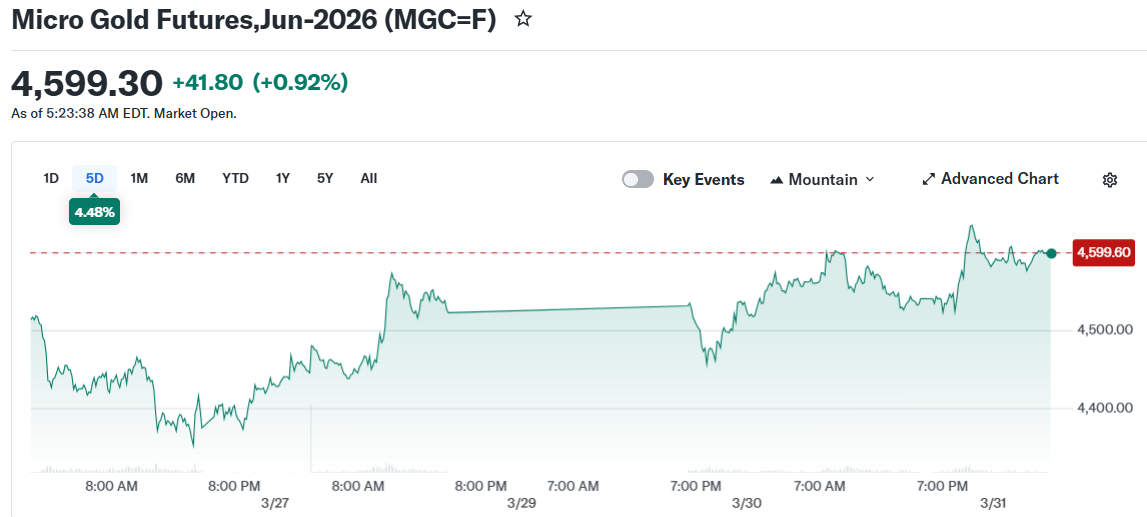
Gold has had a rough month. Prices are down around 13% in March, trading near $4,500 on Tuesday. That makes it the steepest monthly drop for the metal in 17 years. Gold hit a record high of around $5,500 on January 29 before the pullback began.
The war in the Middle East is the main driver of the selloff. The conflict has disrupted energy supplies and raised inflation fears, leading markets to price out any Federal Reserve rate cuts for 2026.
Goldman analysts Lina Thomas and Daan Struyven say gold’s current fair value sits at around $4,550, given the current macro environment. That assumes earlier policy hedges remain in place.
The analysts say gold has not failed as a safe-haven asset. They argue that gold behaves differently depending on the type of inflation. Supply-driven inflation, like what is happening now, tends to favor commodities. Gold performs better when inflation fears come from doubts about central bank credibility.
“Like in 2022, gold typically underperforms initially in supply disruption episodes,” the analysts wrote. Higher yields raise the opportunity cost of holding gold, and equity selloffs can force margin-related liquidations.
What’s Driving Goldman’s $5,400 Target
Goldman’s forecast rests on three main factors. First, a return to normal speculative positioning on the Comex futures market, which they estimate is worth around $195 per troy ounce.
Second, the bank’s economists still expect two Fed rate cuts in 2026, which Goldman says would add around $120 per ounce to gold prices.

Third, a re-acceleration in central bank gold buying, back to around 60 tonnes per month. Goldman estimates this alone could add $535 per troy ounce.
Net speculative positioning on Comex has now fallen to the 39th percentile. Goldman says the market is in “cleaner” shape and at a “more attractive entry point.”
Risks to the Downside
Goldman does flag downside risks. A prolonged disruption to the Strait of Hormuz, combined with further equity market weakness, could push gold as low as $3,800 in a severe scenario.
The bank dismissed concerns about Gulf central banks selling gold reserves. Gulf nations hold smaller gold shares than Turkey, which sold around 52 tonnes. They manage currencies through dollar-pegged systems, making U.S. Treasury sales more likely than gold sales.
Over the medium term, Goldman sees upside risk beyond $5,400. Geopolitical shocks and concerns over Western fiscal sustainability could push gold to $5,700, or even $6,100 with further hedge accumulation.
The war with Iran has now lasted one month with no clear resolution. President Trump has warned the U.S. would target Iran’s energy infrastructure if the Strait of Hormuz remains blocked.
Considering a new stock? You may want to see what’s on our watchlist first.
Our team at Knockout Stocks follows top-performing analysts and market-moving trends to spot potential winners early. We’ve identified five stocks gaining quiet attention that could be worth watching now. Create your free account to unlock the full report and get ongoing stock insights.Get 3 Free Stock Ebooks
Discover top-performing stocks in AI, Crypto, and Technology with expert analysis.
- Top 10 AI Stocks - Leading AI companies
- Top 10 Crypto Stocks - Blockchain leaders
- Top 10 Tech Stocks - Tech giants



