





TLDR
- Gold reversed early losses after reports of US-Iran ceasefire discussions
- A potential 45-day ceasefire framework is being discussed by the US, Iran, and regional mediators
- Trump set a Tuesday 8 p.m. ET deadline for Iran to reopen the Strait of Hormuz
- Strong US jobs data reduced expectations for rate cuts, pressuring gold prices
- Gold has fallen around 12% since the Iran conflict began in late February
Gold prices steadied on Monday after early losses, as reports emerged that the US, Iran, and regional mediators are discussing a potential 45-day ceasefire deal.
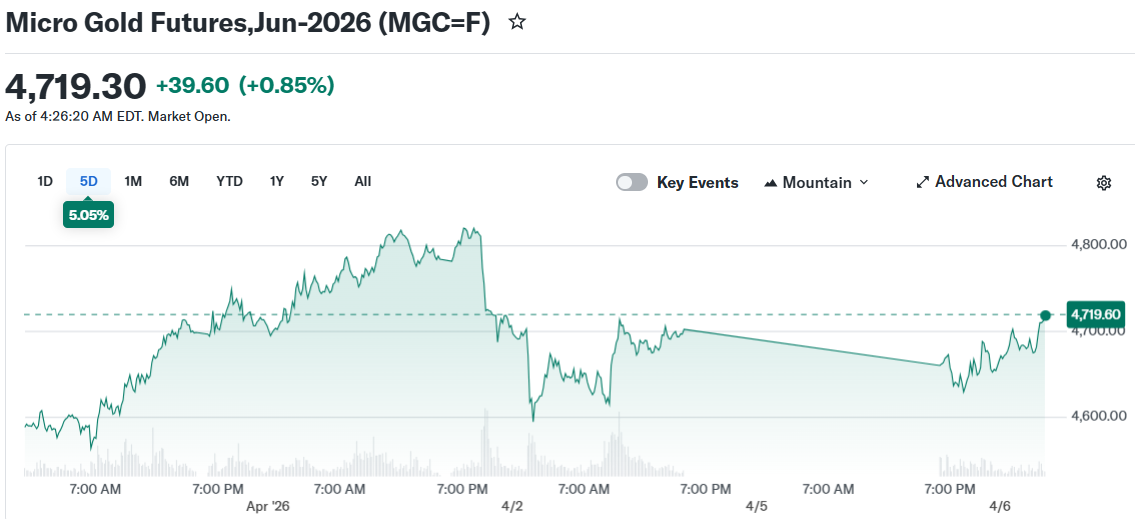
Spot gold was last trading near $4,655 an ounce, after dropping as much as 1.6% earlier in the session. Gold futures rose 0.6% to $4,709 an ounce.
The ceasefire report came from Axios, which cited sources familiar with the talks. The deal could potentially reopen the Strait of Hormuz, the waterway that carries roughly one-fifth of global oil shipments.
The Strait has been largely closed since the Iran war began in late February. That closure has pushed oil prices sharply higher, more than doubling this year.
Over the weekend, President Trump posted on Truth Social threatening to target Iranian civilian infrastructure, including power plants and bridges, if tanker traffic was not restored by Tuesday evening.
🚨 President Trump: "Tuesday will be power plant day"
US futures -0.54%$SPY $QQQ #Iran pic.twitter.com/ylWFfvAp6c
— Crypto Seth (@seth_fin) April 5, 2026
Trump had previously given Iran a 10-day deadline on March 26 to reopen Hormuz. That deadline was set to expire Monday evening.

Despite the ceasefire report softening the mood, gold still faced pressure from other directions.
Strong Jobs Data Weighs on Rate Cut Hopes
US nonfarm payrolls for March came in stronger than expected, hitting the highest level since late 2024. That data reduced the urgency for the Federal Reserve to cut interest rates.
Gold typically benefits from lower interest rates, since it pays no yield. With rate cuts looking less likely, the metal faces a tougher environment.
Economists are forecasting a 1% jump in the consumer price index for March, which would be the biggest one-month rise since 2022. Higher oil prices from the Hormuz disruption are a key driver of that expected increase.
Gold has fallen roughly 12% since the conflict began, as inflation fears pushed back expectations for rate cuts.
Gold’s Volatile Run Since the Conflict Began
Bullion gained more than 4% last week before giving back some of those gains on Thursday, breaking a four-day winning streak.
“People are taking chips off the table to protect their assets,” said Robert Gottlieb, a former precious metals trader at JPMorgan Chase.
Charu Chanana, chief investment strategist at Saxo Markets, noted that the 200-day moving average had held, and that the late-month recovery suggested the sell-off may be easing.
She added that the picture was “not yet fully clear,” with inflation risks and broader market pressures still hanging over gold.
Silver fell 1.1% to $72.19 an ounce. Platinum declined, while palladium rose. The US Dollar Index was roughly flat on the day.
Spot gold last traded at $4,682 per ounce as of early Monday trading in the US.
Considering a new stock? You may want to see what’s on our watchlist first.
Our team at Knockout Stocks follows top-performing analysts and market-moving trends to spot potential winners early. We’ve identified five stocks gaining quiet attention that could be worth watching now. Create your free account to unlock the full report and get ongoing stock insights.Get 3 Free Stock Ebooks
Discover top-performing stocks in AI, Crypto, and Technology with expert analysis.
- Top 10 AI Stocks - Leading AI companies
- Top 10 Crypto Stocks - Blockchain leaders
- Top 10 Tech Stocks - Tech giants



