





TLDR
- Spot gold dipped 0.1% to around $5,187 per ounce on Wednesday, staying well above $5,000
- Rising oil prices, driven by the U.S.-Israel war with Iran, are reigniting inflation fears
- The Strait of Hormuz has been effectively shut, threatening a fifth of global oil and gas supply
- U.S. CPI for February came in at 2.4% year-on-year, matching forecasts, but predates the Iran conflict
- Markets expect the Fed to hold rates steady at its March 18 meeting
Gold prices held mostly flat on Wednesday as conflicting forces kept the market in a tight range. Spot gold fell just 0.1% to around $5,187 per ounce, while April gold futures dropped 0.9% to about $5,194.
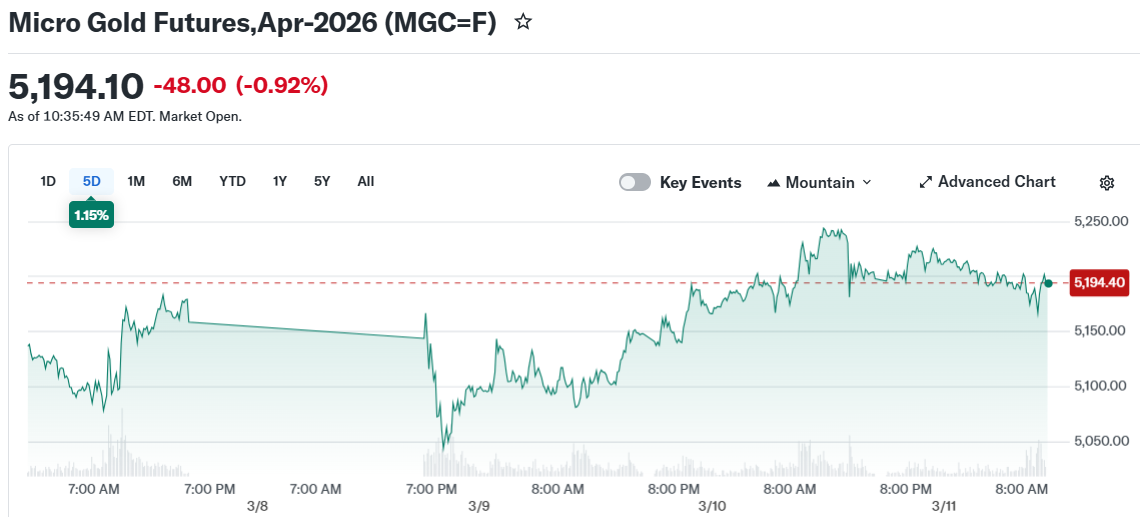
The metal has been volatile since hitting a near-record high of close to $5,600 per ounce in late January. It has since pulled back but stayed well above $5,000.
The U.S.-Israel war with Iran entered its twelfth day on Wednesday, with air strikes continuing between all three sides. President Trump said late Monday that the war was close to ending, but military activity showed few signs of slowing.
The conflict has effectively shut the Strait of Hormuz, a key shipping lane that carries roughly one-fifth of the world’s oil and liquefied natural gas.
Oil prices rebounded Wednesday after markets questioned whether the International Energy Agency’s plan to release record oil reserves could fully offset potential supply disruptions from the Middle East.
Higher oil prices are pushing up inflation expectations. That is pressuring gold because it reduces the chances of rate cuts from the Federal Reserve. Gold earns no interest, so it becomes less attractive when rates are high or rising.
A rising U.S. dollar and higher Treasury yields are adding more pressure on gold. A stronger dollar makes gold more expensive for buyers outside the United States.

U.S. Inflation Data Comes In as Expected
The Labor Department reported Wednesday that U.S. consumer prices rose 2.4% in the twelve months to February, matching both the prior month and analyst forecasts.
Month-on-month, prices rose 0.3%, up from 0.2% in January. Energy and food costs increased. Core CPI, which strips out food and energy, came in at 2.5% year-on-year, matching January’s reading.
However, the February data largely covers a period before the Iran conflict began in late February. Analysts expect March figures to show a sharper increase in inflation.
Fed Decision and PCE Data Ahead
Investors are now watching two key upcoming data points. The Personal Consumption Expenditures index for January will be released Friday, with analysts forecasting an annual rate of 3.1%.
The PCE is the Fed’s preferred inflation measure and has been running hotter than CPI in recent months.
The Fed’s two-day meeting concludes on March 18. Markets widely expect policymakers to hold rates steady.
Swissquote analyst Carlo Alberto De Casa said investors appear to be increasing their exposure to gold as a safe-haven asset given the ongoing conflict.
Spot gold was trading at $5,187 per ounce as of Wednesday morning in European trade.
Considering a new stock? You may want to see what’s on our watchlist first.
Our team at Knockout Stocks follows top-performing analysts and market-moving trends to spot potential winners early. We’ve identified five stocks gaining quiet attention that could be worth watching now. Create your free account to unlock the full report and get ongoing stock insights.Get 3 Free Stock Ebooks
Discover top-performing stocks in AI, Crypto, and Technology with expert analysis.
- Top 10 AI Stocks - Leading AI companies
- Top 10 Crypto Stocks - Blockchain leaders
- Top 10 Tech Stocks - Tech giants



