






TLDR
- Gold futures fell 0.4% to $4,666.70 per troy ounce as traders await Trump’s Iran deadline
- Trump gave Iran until 8 p.m. ET Tuesday to reopen the Strait of Hormuz or face military strikes
- Iran controls roughly one-fifth of global oil flow through the waterway
- China’s central bank bought gold for a 17th straight month, holding 74.38 million troy ounces
- The U.S. dollar index sits at 100.03, up about 0.8% over the past month, pressuring gold prices
Gold prices moved in different directions on Tuesday depending on the market. Futures in New York dropped 0.4% to $4,666.70 a troy ounce, while spot gold edged up 0.8% to $4,685.54 per ounce by early morning. Gold futures for June delivery also ticked up 0.6% to $4,710.84 per ounce.
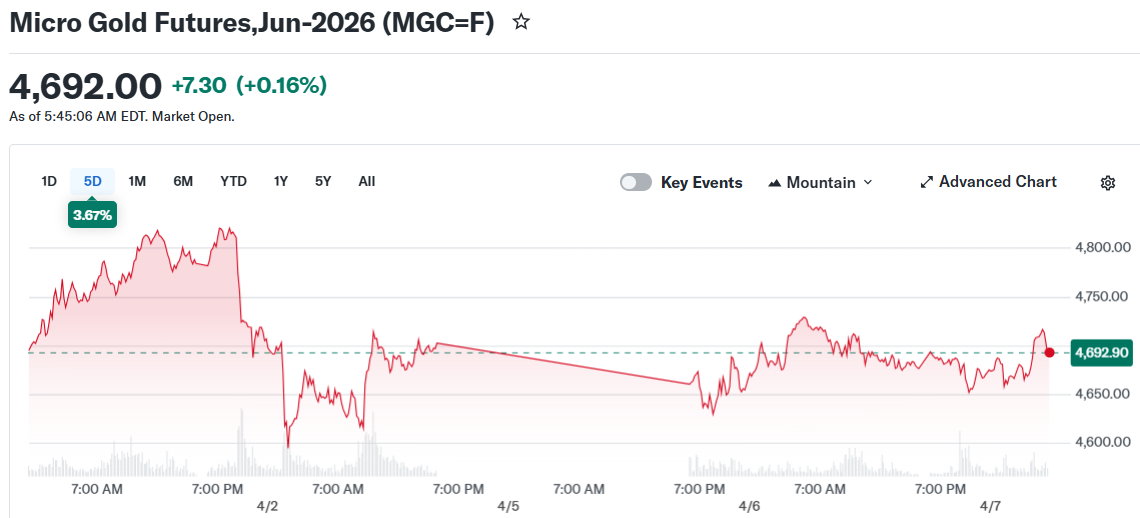
The mixed moves come as traders watch a deadline set by President Donald Trump for Iran to reopen the Strait of Hormuz. Trump gave Iran until 8 p.m. ET on Tuesday to agree to a deal or face military strikes on its energy infrastructure.
Trump said he would destroy “every bridge” and “power plant” in Iran if the deadline passes without a deal. He also warned it would take Iran “100 years to rebuild” if the U.S. launched fresh attacks.
BREAKING: President Trump says he will strike "every power plant and every bridge" in Iran if they do not make a deal by "Tuesday evening," per WSJ.
— The Kobeissi Letter (@KobeissiLetter) April 5, 2026
The Strait of Hormuz is one of the world’s most important oil routes. About one-fifth of global oil supply passes through the waterway off Iran’s southern coast.
Iran has asked for a permanent deal that includes sanctions relief, security guarantees, and compensation for damages. Reports suggest the White House is unlikely to accept these terms.
Trump did leave room for a diplomatic outcome, saying a resolution to the conflict was still possible. The war began with joint U.S. and Israeli strikes on Iran in late February.

Oil Prices and the Dollar Add Pressure
Brent crude held above $110 a barrel as the deadline approached. Higher oil prices raise inflation fears, which could push central banks to keep interest rates elevated for longer.
That matters for gold. The metal pays no interest, so it tends to fall out of favor when rates are expected to stay high. Analysts at ANZ said Trump’s threats “impacted risk appetite” and pushed the U.S. dollar higher along with Treasury yields.
The U.S. dollar index was trading at 100.03, though it dipped 0.2% on Tuesday. Over the past month, the dollar is up roughly 0.8%. During that same period, spot gold has dropped more than 8%.
A stronger dollar makes gold more expensive for buyers using other currencies, which can reduce demand.
China Keeps Buying Gold
One piece of support for gold came from China. The People’s Bank of China added to its gold reserves for the 17th month in a row. Its holdings reached 74.38 million fine troy ounces at the end of March, up from 74.22 million in February.
Continued central bank buying is seen as a steady source of demand for the metal.
As of Tuesday morning, markets remained on edge waiting for the 8 p.m. ET deadline and any response from Iran.
Considering a new stock? You may want to see what’s on our watchlist first.
Our team at Knockout Stocks follows top-performing analysts and market-moving trends to spot potential winners early. We’ve identified five stocks gaining quiet attention that could be worth watching now. Create your free account to unlock the full report and get ongoing stock insights.Get 3 Free Stock Ebooks
Discover top-performing stocks in AI, Crypto, and Technology with expert analysis.
- Top 10 AI Stocks - Leading AI companies
- Top 10 Crypto Stocks - Blockchain leaders
- Top 10 Tech Stocks - Tech giants



