






TLDR
- Gold rose on safe-haven demand after Israel launched new strikes on Tehran, but gains were capped by a stronger U.S. dollar
- Spot gold traded around $5,121–$5,156 per ounce on Thursday, up nearly 20% year-to-date
- Gold hit a record high of $5,594.82 in January 2026, then jumped above $5,400 when the U.S.-Israeli air war against Iran began
- The Federal Reserve’s next rate decision is expected March 18, with markets predicting rates will hold steady
- President Trump nominated former Fed Governor Kevin Warsh as the next Fed chair on Wednesday
Gold prices moved in both directions Thursday as two forces pulled against each other: war in the Middle East pushing investors toward safe assets, and a stronger U.S. dollar making gold more expensive for foreign buyers.
Spot gold was trading around $5,121 to $5,156 per ounce during the session. At one point earlier in the day, prices climbed above $5,200 before pulling back.
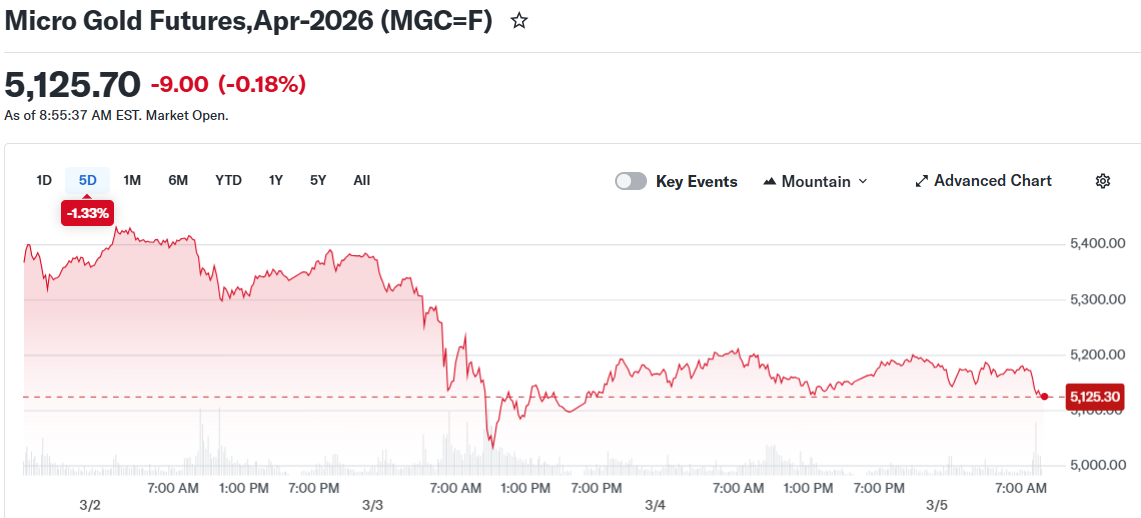
Gold has gained nearly 20% so far in 2026. The metal hit a record high of $5,594.82 in January.
When the U.S.-Israeli air war against Iran launched earlier this week, gold jumped above $5,400 on Monday. That was driven by investors looking for safety as conflict escalated.
Israel launched another large wave of strikes on Tehran on Thursday. It said the strikes targeted infrastructure belonging to Iranian authorities.
The attack came after Iranian missiles sent millions of Israelis into bomb shelters.
Safe-Haven Demand vs. Dollar Strength
The U.S. dollar rose about 0.2% on Thursday, pulling back briefly from three-month highs. A stronger dollar often limits gold’s upside because it makes the metal pricier in other currencies.

Hamad Hussain, a climate and commodities economist at Capital Economics, said the conflict creates competing forces for gold. Safe-haven demand pushes prices up, but higher energy prices could stoke inflation and reduce the chance of rate cuts — which would weigh on gold.
Gold does not pay interest, so it tends to perform better when rates are low.
Fed Policy in Focus
President Trump officially nominated former Federal Reserve Governor Kevin Warsh to be the next Fed chair on Wednesday.
The Fed released its latest Beige Book on Wednesday. It showed U.S. economic activity grew slightly, prices kept rising, and employment stayed stable.
Markets currently expect the Fed to hold rates steady at its March 18 meeting, according to CME Group’s FedWatch tool.
Investors are also watching weekly jobless claims data due Thursday and the February jobs report on Friday. Both reports could give more clues on where rates are headed.
Concerns about rising energy prices are adding to inflation fears across global markets.
Silver rose 0.8% to $84.10 per ounce on Thursday. Platinum gained nearly 1% to $2,168.05, while palladium fell 0.9% to $1,659.35.
Considering a new stock? You may want to see what’s on our watchlist first.
Our team at Knockout Stocks follows top-performing analysts and market-moving trends to spot potential winners early. We’ve identified five stocks gaining quiet attention that could be worth watching now. Create your free account to unlock the full report and get ongoing stock insights.Get 3 Free Stock Ebooks
Discover top-performing stocks in AI, Crypto, and Technology with expert analysis.
- Top 10 AI Stocks - Leading AI companies
- Top 10 Crypto Stocks - Blockchain leaders
- Top 10 Tech Stocks - Tech giants



