





TLDR
- Gold fell as much as 2.2%, dipping below $4,650 an ounce on Monday
- US-Iran ceasefire talks in Pakistan ended without a deal over the weekend
- Trump ordered a naval blockade of the Strait of Hormuz starting 10 a.m. ET
- US CPI rose 3.3% year-on-year in March, driven largely by energy prices
- Rate cut bets have been pushed back at least 12 months, pressuring gold
Gold prices dropped sharply on Monday after US-Iran peace talks collapsed and the United States announced a naval blockade of the Strait of Hormuz.
Spot gold fell as much as 2.2%, briefly dipping below $4,650 an ounce. It later recovered slightly, trading at $4,729.02 an ounce as of early afternoon in Singapore.
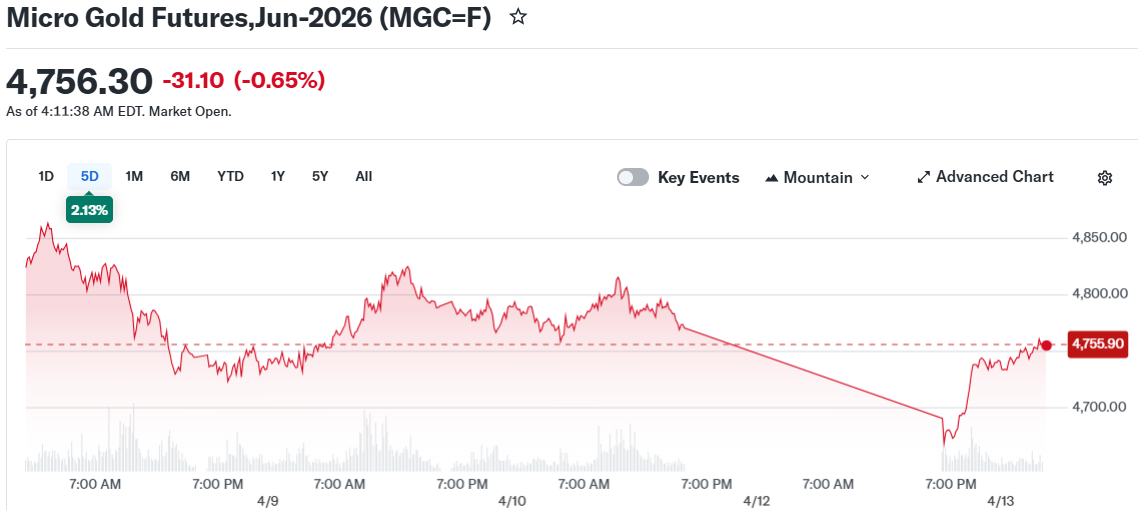
Gold futures also declined, falling 0.9% to $4,743.20 per ounce.
Weekend negotiations held in Pakistan between Washington and Tehran ended without progress. The two sides clashed over Iran’s nuclear activities, control of the Strait of Hormuz, and Iran’s backing of militant groups in the region.
President Donald Trump then ordered a naval blockade of the strait, set to begin at 10 a.m. Eastern Time on Monday. Trump also said the US would intercept any vessel that had paid Iran a toll for safe passage through the waterway.
BREAKING: President Trump is looking at resuming "limited military strikes" in Iran in addition to the US blockade of the Strait of Hormuz, per WSJ.
Details include:
1. Trump could also resume a full-fledged bombing campaign, though officials said that was less likely
2. Trump…
— The Kobeissi Letter (@KobeissiLetter) April 12, 2026
Before the war, roughly one-fifth of the world’s crude oil and liquefied natural gas passed through the Strait of Hormuz.

Why Inflation Is Hurting Gold
Oil and natural gas prices surged following the blockade announcement. That pushed inflation expectations higher, reducing the chances of near-term interest rate cuts by the Federal Reserve.
Gold does not pay interest, so it tends to perform better when borrowing costs are low. Rising rate expectations make it less attractive to investors.
US CPI data released Friday added to the pressure. Inflation rose 3.3% year-on-year in March, up sharply from 2.4% in February. A record jump in gasoline prices made up nearly three-quarters of the monthly increase, according to the Bureau of Labor Statistics.
CME FedWatch data showed traders have now pushed back rate cut expectations by at least 12 months.
The dollar index rose around 0.4% on Monday, also weighing on gold. Since gold is priced in dollars, a stronger dollar makes it more expensive for overseas buyers.
Silver fell nearly 2% to $74.39 an ounce. Platinum was little changed, and palladium edged higher.
Gold’s Performance Since the War Began
Gold has fallen about 10% since the Middle East conflict began at the end of February. In the early weeks, a liquidity squeeze pushed investors to sell gold to cover losses in other markets.
More recently, gold clawed back some ground as concerns about slower economic growth provided some support.
Analysts at ANZ Banking Group said gold could test the recent low of $4,650 but may hold at those levels. Swiss private bank Union Bancaire Privée cut its gold exposure from around 10% to 3%, but said it is now gradually adding bullion back to client portfolios.
US producer price index data is due later this week.
🚨 Our April Stock Picks Are Live!
A new month means new opportunities. Our analysts have just released their top stock picks for April, highlighting companies with strong momentum that rank highly on our KO Score algorithm. We’re also now sharing trade ideas for both long-term and short-term investors, giving you more ways to spot potential opportunities in the market.
Sign up to Knockout Stocks today and get 50% off to unlock the full list and see which stocks made the cut.
Use coupon code Special50 for your exclusive discount!
Get 3 Free Stock Ebooks
Discover top-performing stocks in AI, Crypto, and Technology with expert analysis.
- Top 10 AI Stocks - Leading AI companies
- Top 10 Crypto Stocks - Blockchain leaders
- Top 10 Tech Stocks - Tech giants



