





TLDR
- OpenAI president Greg Brockman testified that Elon Musk pushed for full control of OpenAI in 2017
- Musk allegedly needed $80 billion to fund a Mars city and saw OpenAI as a way to raise it
- Brockman said he feared Musk would physically attack him during a heated meeting
- Musk stormed out and threatened to withhold funding after his equity demands were rejected
- OpenAI is eyeing a potential $1 trillion IPO in 2026; SpaceX aims for a June listing
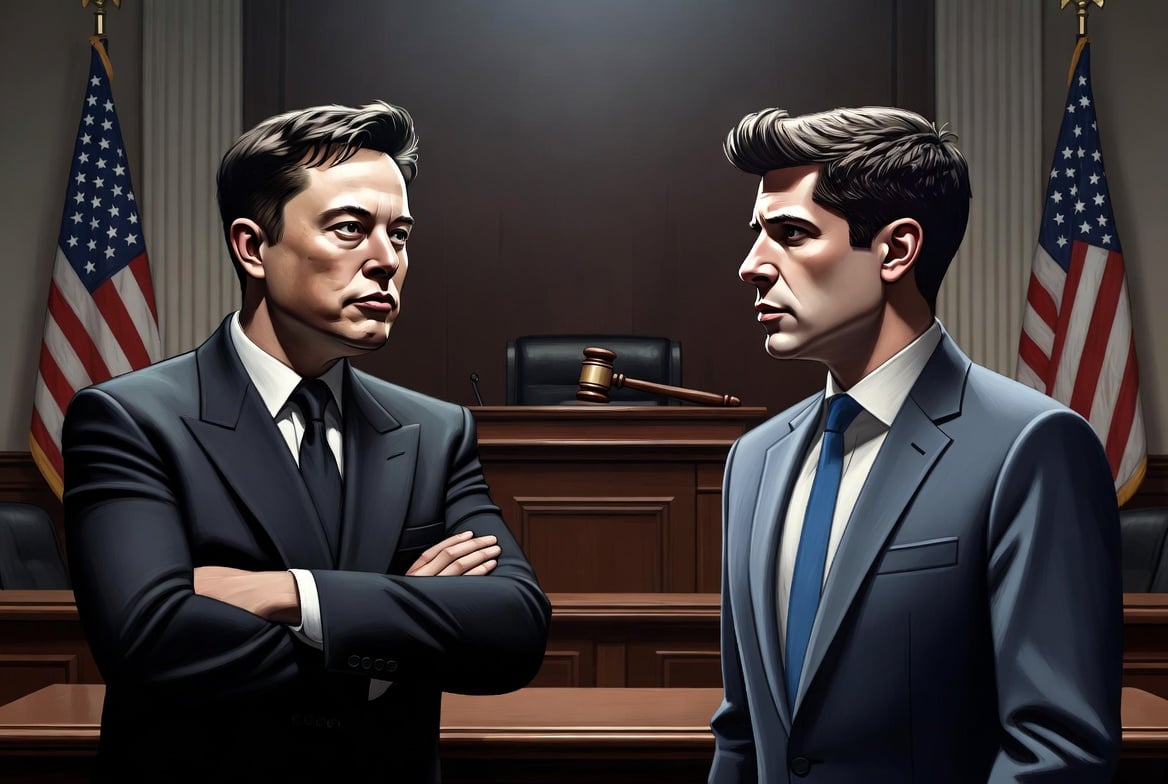
Greg Brockman, president and co-founder of OpenAI, took the stand this week in a federal courthouse in Oakland, California, giving some of the most detailed testimony yet in the ongoing legal battle between Elon Musk and OpenAI.
OpenAI President Greg Brockman told a federal court today that Elon Musk's apparent lack of knowledge about AI made OpenAI's early leadership leery about giving him control of the company
“Look, he knows rockets, he knows electric cars”
“He did not—and I believe does not—know… pic.twitter.com/MiFG7AyE69
— Evan (@StockMKTNewz) May 5, 2026
Brockman said that during a meeting in August 2017, Musk argued he deserved a majority stake in OpenAI based on his business track record. Musk also made clear he wanted to lead the company, with Brockman saying Sam Altman was the only other candidate considered at the time.
When the group discussed an equity structure that Musk did not agree with, his mood changed fast. Brockman told the jury: “I actually thought he was going to hit me.” Musk said “I decline,” then stormed out.
After leaving the meeting, Musk said he would stop funding OpenAI until the issue was resolved. At the time, Musk had been one of the company’s main financial backers since its founding in 2015.
Brockman also testified that Musk pushed for OpenAI to shift to a for-profit structure that same year. Musk’s stated reason was that a nonprofit could not raise the scale of money needed to build advanced AI.
The Mars Connection
The more striking claim came when Brockman linked Musk’s push for control directly to his Mars ambitions. According to Brockman, Musk said he needed roughly $80 billion to build a city on Mars and saw controlling OpenAI as a way to raise that money.
This testimony lines up with a real SpaceX board decision made in January 2026. The board approved giving Musk 200 million super-voting shares if SpaceX’s market cap hits $7.5 trillion and he builds a Mars colony of at least one million people.

Musk ultimately left OpenAI’s board in February 2018, before the company launched ChatGPT and became one of the most valuable tech companies in the world.
OpenAI now claims Musk is pursuing the lawsuit partly out of bitterness over missing out on that success. The company also alleges the case is designed to benefit his own AI firm, xAI, which merged with SpaceX in February 2026.
What Comes Next for OpenAI and SpaceX
Brockman’s testimony is expected to be followed by former OpenAI board member Shivon Zilis, who has four children with Musk. Zilis left the board in March 2023 as Musk was launching xAI.
OpenAI is currently in informal talks with Wall Street banks about a potential $1 trillion IPO, possibly in late 2026. Rival AI company Anthropic is also targeting a similar timeline.
SpaceX has already filed confidentially with U.S. regulators and is aiming for a June 2026 public listing.
Stop guessing and start investing with confidence. KnockoutStocks gives you the AI insights, market intelligence, and stock research you need to spot opportunities, cut through the noise, and make smarter investment decisions — all in one powerful platform.
Sign up today and get 50% OFF full access to our premium stock picks.
Simply use coupon code SPECIAL50 at checkout to claim your exclusive discount.
Get 3 Free Stock Ebooks
Discover top-performing stocks in AI, Crypto, and Technology with expert analysis.
- Top 10 AI Stocks - Leading AI companies
- Top 10 Crypto Stocks - Blockchain leaders
- Top 10 Tech Stocks - Tech giants



