




TLDR
- Michael Saylor says quantum computing won’t threaten Bitcoin for over a decade
- He calls current quantum fears “FUD,” comparing them to past failed Bitcoin criticisms
- Ethereum’s Vitalik Buterin is more cautious, warning elliptic curve cryptography could fail before 2028
- Bitcoin dropped below $65,000, blamed on Trump tariff fears, not quantum risk
- Strategy now holds 717,722 BTC worth ~$54.56 billion after its 100th Bitcoin purchase
Michael Saylor, executive chairman of Strategy, says quantum computing does not pose a threat to Bitcoin right now. Speaking on Natalie Brunell’s Coin Stories podcast, he said the cybersecurity community broadly agrees any real quantum threat is more than a decade away.
Saylor called the current quantum narrative “FUD.” He compared it to past criticisms of Bitcoin, including block size wars, Chinese mining bans, and energy arguments, none of which brought the network down.
He said that if a quantum breakthrough did happen, the whole digital world would face the same risk. Banks, internet infrastructure, AI systems, and crypto would all need to upgrade at the same time.
“You’ll see it coming. We’ll all see it coming,” Saylor said. He added that Bitcoin’s software is built to adapt, with nodes, hardware, and wallets all capable of upgrading.
Saylor also said the crypto community would likely be the first to spot and respond to any quantum threat, pointing to the strong security standards already used to protect digital assets.
Not Everyone Agrees
Ethereum co-founder Vitalik Buterin takes a different view. He has cited forecasts suggesting a 20% chance that quantum computers capable of breaking current cryptography could appear before 2030.
Buterin warned that elliptic curve cryptography, which secures both Ethereum and Bitcoin, could fail before the 2028 US presidential election. He urged a shift to quantum-resistant systems within four years.
The Ethereum Foundation has already acted. It added post-quantum preparedness to its 2026 security roadmap and formed a dedicated Post-Quantum team in January.
CryptoQuant CEO Ki Young Ju has also warned that quantum computing could compromise millions of Bitcoin. He said the scale of the risk needs early discussion, even if it isn’t immediate.

On-chain analyst Willy Woo added that quantum risk could erode Bitcoin’s edge over gold and said markets should start pricing in the possibility of “Q Day.”
Bitcoin Price Falls on Tariff Fears
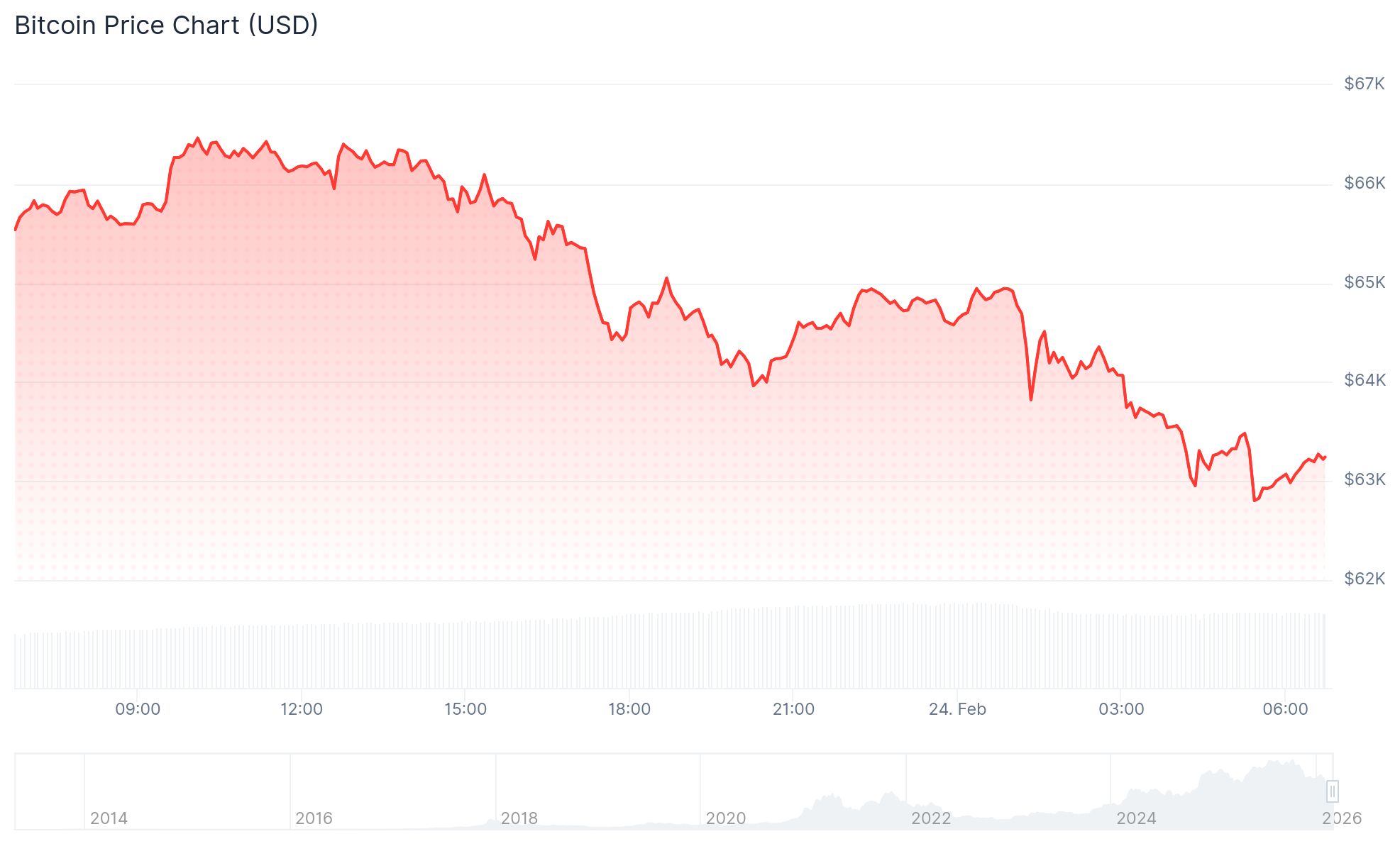
Bitcoin fell below $65,000, dropping nearly 5% in 24 hours, its lowest level since early February. The drop came after President Trump announced new tariff measures, pushing the fear and greed index into extreme fear territory.
Saylor linked Bitcoin’s price ceiling to a different issue: lack of bank credit access. He said most Bitcoin holders can’t borrow against their holdings through regulated banks, unlike equity investors.
He said rehypothecation in crypto lending markets could add selling pressure, and that moving derivatives trading to regulated markets has helped reduce extreme price swings.
Strategy completed its 100th Bitcoin purchase last week, buying 592 BTC for about $39.8 million. The company now holds 717,722 BTC, acquired for roughly $54.56 billion at an average price of $67,286 per coin.


