





TLDR
- Needham raised its Micron price target to $450 from $380, maintaining a Buy rating, citing tightening memory markets and rising AI demand.
- Deutsche Bank lifted its target even higher to $500, up from $300, also keeping a Buy rating, pointing to tightening DRAM supply that could persist into 2028.
- Morgan Stanley reiterated a Buy rating with a $450 price target on February 16.
- Micron posted Q1 FY2026 revenue of $13.6 billion, up 57% year over year, with record free cash flow of $3.9 billion and gross margins of 56.8%.
- UBS projects DRAM contract prices to rise 62% and NAND prices to increase 40% in Q1 2026, though analysts warn the memory cycle could eventually turn.
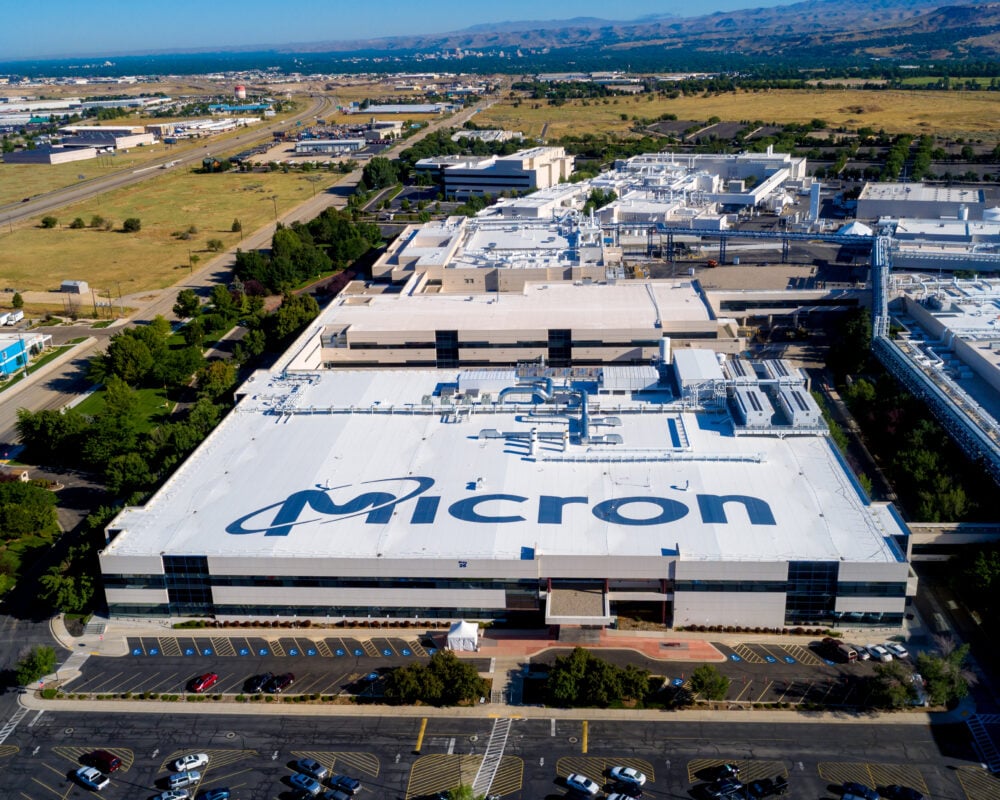
Micron Technology (MU) has been picking up analyst upgrades like frequent flyer miles lately, with multiple Wall Street firms raising their price targets as the memory chip market tightens and AI demand accelerates.
On February 17, Needham analyst N. Quinn Bolton raised his price target on MU from $380 to $450, keeping a Buy rating. Bolton pointed to sustained tightening in the memory market, driving prices higher. He also flagged the massive capital spending by hyperscalers and the industry’s shift toward larger AI reasoning models with expanded context windows as key demand drivers.
Just a day earlier, Morgan Stanley’s Joseph Moore reiterated his Buy rating and held his price target at $450.
Deutsche Bank went further. On February 10, the firm lifted its target from $300 to $500, also maintaining a Buy rating. Deutsche Bank cited tightening DRAM supply conditions and elevated memory pricing, and projected that industry shortages could stretch through 2027 and into 2028.
That supply squeeze is showing up in Micron’s numbers.
Record Results Across the Board
Micron reported Q1 FY2026 revenue of $13.6 billion, up 21% sequentially and 57% year over year. It was the company’s third straight quarterly revenue record.

Gross margin hit 56.8%, an 11-percentage-point improvement from the prior quarter. Free cash flow came in at a record $3.9 billion.
Every business unit hit record revenue. Cloud Memory reached $5.3 billion. Core Data Center brought in $2.4 billion. Mobile and Client generated $4.3 billion. Automotive and Embedded added $1.7 billion.
Micron’s AI memory products are fully booked for 2026, and the company’s EVP of Operations, Manish Bhatia, described the memory chip shortage as “unprecedented” in January.
UBS expects contract pricing for a common DRAM type to rise 62% in Q1 2026 versus the prior quarter, with NAND prices up around 40%. TrendForce projects the total memory market will reach $551.6 billion in 2026, growing to $842.7 billion in 2027.
Supply Constraints Expected to Last
New production capacity is not expected to come online quickly. Micron has pledged roughly $200 billion to expand its U.S. facilities, but clean-room construction takes time. Wafer output from its $50 billion Idaho expansion is not expected until mid-2027. A $100 billion New York project is slated for 2030.
SK Hynix’s Yongin cluster is expected to reach volume production in late 2027, with Samsung also ramping capex from a higher baseline.
Analysts broadly expect supply constraints among the three main players — Micron, SK Hynix, and Samsung — to last at least 12 to 18 months.
Micron’s February-quarter earnings report, due next month, is expected to show revenue more than doubling year over year, with earnings forecast to grow more than fivefold from the same period a year ago.
🚨 Our April Stock Picks Are Live!
A new month means new opportunities. Our analysts have just released their top stock picks for April, highlighting companies with strong momentum that rank highly on our KO Score algorithm. We’re also now sharing trade ideas for both long-term and short-term investors, giving you more ways to spot potential opportunities in the market.
Sign up to Knockout Stocks today and get 50% off to unlock the full list and see which stocks made the cut.
Use coupon code Special50 for your exclusive discount!
Get 3 Free Stock Ebooks
Discover top-performing stocks in AI, Crypto, and Technology with expert analysis.
- Top 10 AI Stocks - Leading AI companies
- Top 10 Crypto Stocks - Blockchain leaders
- Top 10 Tech Stocks - Tech giants



