





TLDRs;
- Nvidia shares remained steady as CEO Jensen Huang joined Trump’s China delegation amid rising chip export tensions.
- U.S. export controls continue tightening, limiting Nvidia’s advanced AI chip access to the Chinese market.
- Huang advocates continued China engagement, warning restrictions may strengthen domestic rivals like Huawei.
- Markets remain cautious as Trump–Xi talks could reshape global semiconductor trade rules and AI competition.
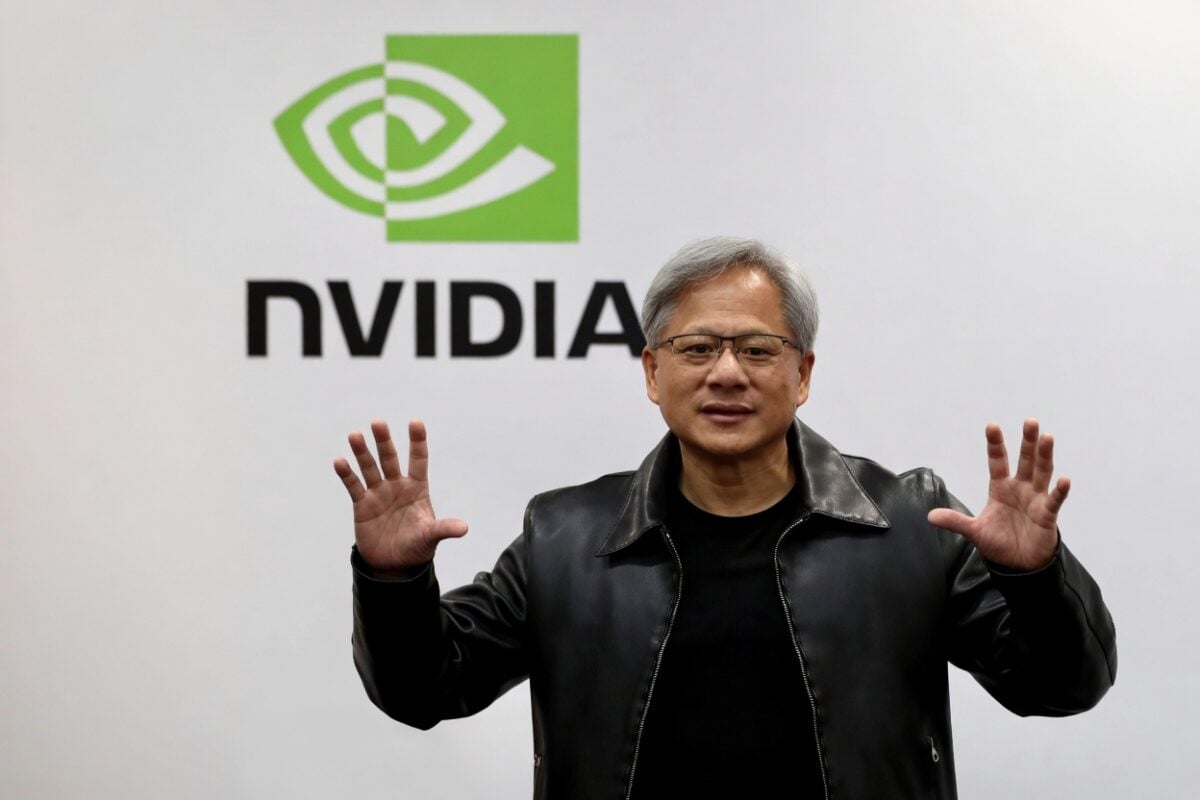
Nvidia (NASDAQ: NVDA) shares held steady in early trading as investors reacted to CEO Jensen Huang joining U.S. President Donald Trump’s delegation to China, marking a significant moment in escalating tech diplomacy between Washington and Beijing.
Huang reportedly flew to Alaska to board Air Force One alongside more than a dozen top U.S. executives, traveling to Beijing ahead of scheduled high-level talks between Trump and Chinese President Xi Jinping on May 14 and 15. Nvidia confirmed Huang’s participation, underscoring the company’s direct involvement in discussions that could shape the future of global AI chip trade.
The visit comes at a time when Nvidia is navigating increasingly strict U.S. export controls on advanced semiconductors destined for China, its historically critical growth market.
Chip Export Curbs Intensify Pressure
The backdrop to Huang’s trip is a tightening regulatory environment that has reshaped Nvidia’s China strategy. The U.S. government has steadily increased restrictions on advanced AI chip exports, forcing Nvidia to adjust product availability and revenue expectations in one of its most important overseas markets.
According to recent disclosures, Nvidia previously noted that even government-approved versions of certain chips had not yet been cleared for sale in China. The uncertainty has already had financial consequences, including multi-billion-dollar charges tied to restricted inventory and purchase commitments.
China’s share of Nvidia’s revenue has also dropped sharply over recent years, falling from nearly 95% at its peak to roughly half that level, reflecting both geopolitical pressures and rising domestic competition.

Huang Pushes for Market Access
Jensen Huang has been outspoken about the impact of U.S. export restrictions, previously arguing that strict controls may unintentionally accelerate Chinese innovation by pushing local firms to develop alternatives.
Nvidia CEO Jensen Huang will join US President Donald Trump on his visit to China as a last-minute addition to the trip, and was seen boarding Air Force One on a stopover in Alaska. https://t.co/U5qt4tc4lm
— Bloomberg (@business) May 13, 2026
He has consistently advocated for maintaining Nvidia’s presence in China, which still represents a significant portion of global AI demand. In fiscal 2025, China accounted for an estimated 14% of Nvidia’s total revenue, or about $17.1 billion.
However, regulatory shifts have complicated this strategy. Recent policy adjustments tightened limits on Nvidia’s H20 chip, while discussions reportedly considered allowing restricted versions of higher-end products under strict conditions. These shifting rules have created uncertainty not only for Nvidia, but for the broader semiconductor industry.
Trade Talks Add Market Uncertainty
The Trump–Xi discussions in Beijing are expected to touch on broader trade and technology tensions, including semiconductor access and export policy frameworks. For U.S. chipmakers, the talks represent a delicate balance between commercial expansion and national security priorities.
Some policy proposals under consideration have sparked debate, including ideas to impose revenue-sharing structures on approved chip exports. At the same time, advisers within Washington have reportedly taken a hard stance against allowing exports of Nvidia’s most advanced AI chips, such as its Blackwell architecture, to China.
Nvidia has warned that overly strict controls could ultimately reshape global competition in ways that disadvantage U.S. firms, even as policymakers aim to protect national security interests.For now, Nvidia sits at the center of a global technology standoff, one where AI chips are no longer just commercial products, but strategic assets in an intensifying geopolitical competition.
Stop guessing and start investing with confidence. KnockoutStocks gives you the AI insights, market intelligence, and stock research you need to spot opportunities, cut through the noise, and make smarter investment decisions — all in one powerful platform.
Sign up today and get 50% OFF full access to our premium stock picks.
Simply use coupon code SPECIAL50 at checkout to claim your exclusive discount.
Get 3 Free Stock Ebooks
Discover top-performing stocks in AI, Crypto, and Technology with expert analysis.
- Top 10 AI Stocks - Leading AI companies
- Top 10 Crypto Stocks - Blockchain leaders
- Top 10 Tech Stocks - Tech giants



