






TLDR
- Brent crude rose over 4% to near $106 a barrel after Trump rejected Iran’s peace proposal
- Trump called Iran’s response “TOTALLY UNACCEPTABLE,” prolonging the Strait of Hormuz closure
- Iran offered to transfer enriched uranium to a third country but refused to dismantle nuclear facilities
- Saudi Aramco CEO says the oil market is losing 100 million barrels every week
- Trump is set to meet China’s Xi Jinping this week, with Iran expected to be on the agenda
Oil prices climbed sharply on Monday after U.S. President DonaldTrump rejected Iran’s latest response to a U.S. peace proposal, pushing Brent crude close to $106 a barrel.
Trump posted on social media that Tehran’s response was “TOTALLY UNACCEPTABLE,” dashing hopes that a deal was close. The two countries have been at war for around 10 weeks.
"I have just read the response from Iran’s so-called 'Representatives.' I don’t like it — TOTALLY UNACCEPTABLE! Thank you for your attention to this matter." -President DONALD J. TRUMP pic.twitter.com/MIQDS9Ujjy
— The White House (@WhiteHouse) May 10, 2026
Brent crude futures rose as much as 4.6% to near $106 a barrel before pulling back slightly. West Texas Intermediate traded near $98 a barrel.
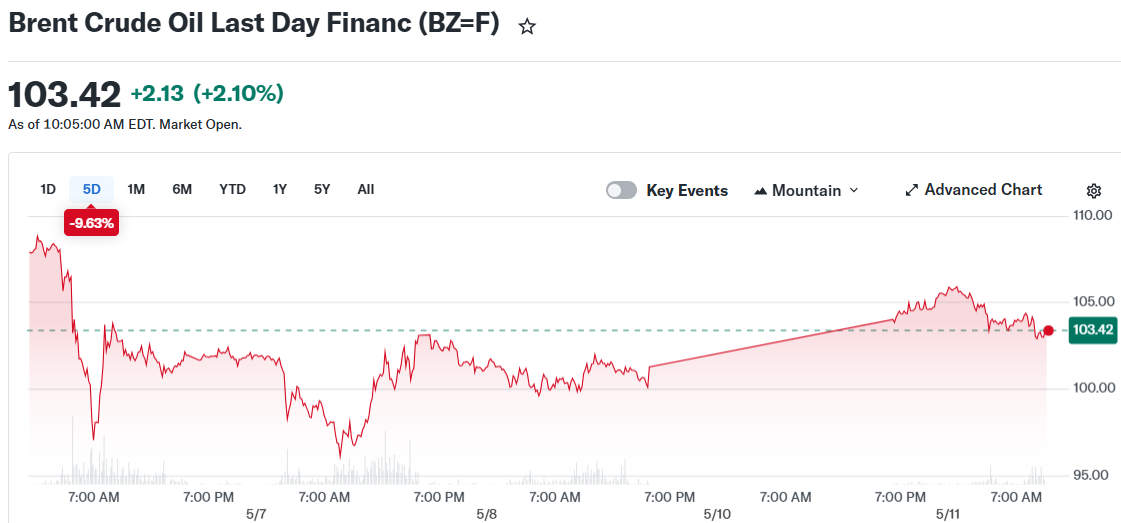
Both contracts had dropped more than 6% last week after signs that Washington and Tehran were moving toward a temporary agreement to reopen Gulf shipping lanes.
The original U.S. proposal reportedly asked Iran to halt uranium enrichment for 20 years, remove enriched uranium stockpiles, and dismantle key nuclear facilities, in exchange for sanctions relief and an end to military action.
Iran’s response, passed through Pakistani mediators, called for sanctions to be lifted, the U.S. naval presence near the Strait of Hormuz to end, and recognition of Iran’s right to continue some nuclear activity.

The Wall Street Journal reported Iran offered to dilute some of its highly enriched uranium and transfer the rest to a third country. Iran disputed part of that report.
The Cost of a Closed Strait
The Strait of Hormuz carries roughly one-fifth of the world’s oil. It has remained largely closed during the conflict, cutting off crude, gas, and fuel shipments to global buyers.
Saudi Aramco CEO Amin Nasser said the oil market is losing 100 million barrels every week. He warned that if the disruption continues into June, the market may not return to normal until next year.
A Goldman Sachs survey found that a majority of respondents expect flows through the strait to remain disrupted beyond the end of June.
A drone strike on Sunday set a cargo vessel briefly on fire near Qatar. The UAE and Kuwait also reported intercepting hostile drones, showing shipping in the region remains dangerous.
Emily Ashford of Standard Chartered said the situation remains a “stalemate,” with more barrels being lost every day.
Trump-Xi Talks Could Shift the Outlook
Trump is scheduled to meet Chinese President Xi Jinping this week. U.S. officials say Trump plans to press Xi on China’s ties with Iran, including revenue Beijing provides to Tehran and potential weapons exports.
ING analysts said there is a “glimmer of hope” that the Trump-Xi meeting could push Iran closer to a deal, given China’s economic influence over Tehran.
Israeli Prime Minister Benjamin Netanyahu said on CBS’s 60 Minutes on Sunday that the war with Iran is “not over” and that more work is needed to dismantle Iran’s nuclear capability.
China’s crude oil imports for April fell 20% year-on-year to the lowest level since July 2022, the latest trade data showed.
Stop guessing and start investing with confidence. KnockoutStocks gives you the AI insights, market intelligence, and stock research you need to spot opportunities, cut through the noise, and make smarter investment decisions — all in one powerful platform.
Sign up today and get 50% OFF full access to our premium stock picks.
Simply use coupon code SPECIAL50 at checkout to claim your exclusive discount.
Get 3 Free Stock Ebooks
Discover top-performing stocks in AI, Crypto, and Technology with expert analysis.
- Top 10 AI Stocks - Leading AI companies
- Top 10 Crypto Stocks - Blockchain leaders
- Top 10 Tech Stocks - Tech giants



