





TLDR
- Fed Chair Powell said the Fed will hold rates steady despite rising oil prices
- Rate hike odds dropped from 25% to 5% after Powell’s Harvard speech
- WTI crude rose 5.3% to nearly $105 per barrel, closing above $100 for the first time since 2022
- Nasdaq fell 0.75% and S&P 500 dropped 0.4% despite early gains
- Bitcoin retreated to around $66,500, roughly flat over 24 hours
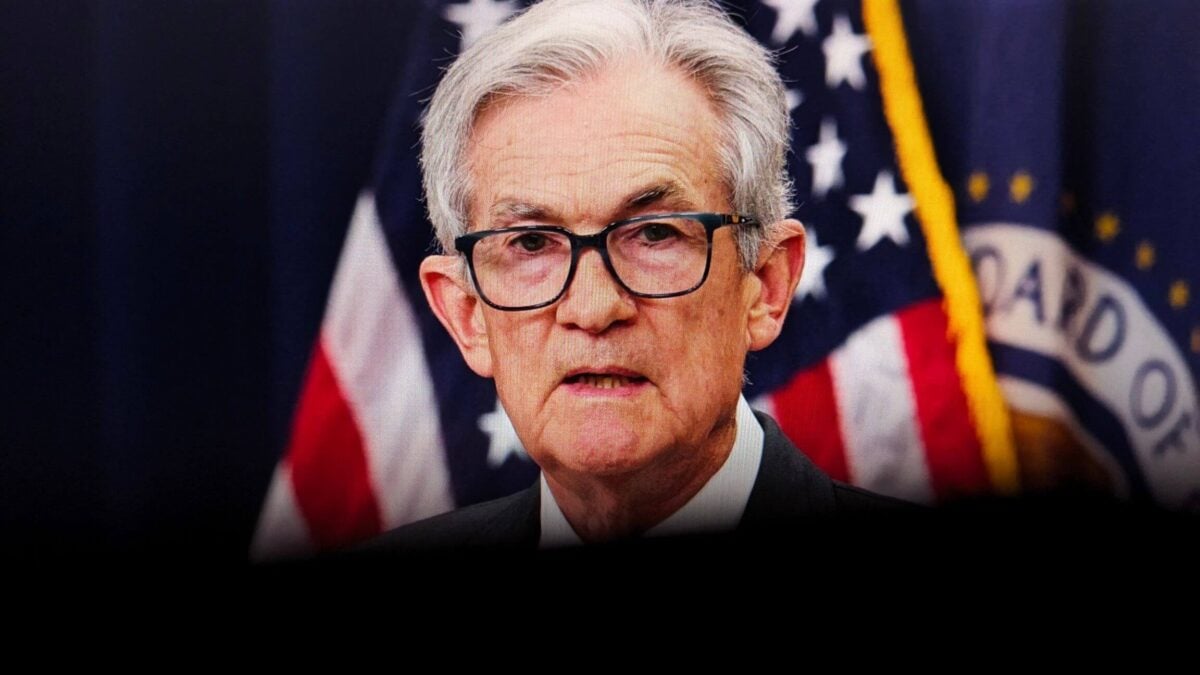
Federal Reserve Chair Jerome Powell spoke at Harvard University on Monday and said the Fed plans to hold interest rates steady for now, even as oil prices continue to climb due to the ongoing war in Iran.
🚨BREAKING: Jerome Powell speaking at Harvard admits the Fed is trapped between two bad choices.
"There's downside risk to the labor market, which suggests keep rates low”
“But there's upside risk to inflation, which suggests maybe don't keep rates low."
Meanwhile Trump is… pic.twitter.com/iykNoPVo5b
— Coin Bureau (@coinbureau) March 30, 2026
Powell said inflation expectations remain “well anchored” beyond the short term. He acknowledged the Fed may eventually need to act, but said it’s too early to know the full economic impact of the conflict.
His comments gave bond markets some relief. The 10-year Treasury yield dropped nine basis points to 4.35%, and the 2-year yield fell eight basis points to 3.83%.
The odds of a Fed rate hike in 2026 fell sharply. According to CME FedWatch, the probability dropped from 25% on Friday to just 5% on Monday.
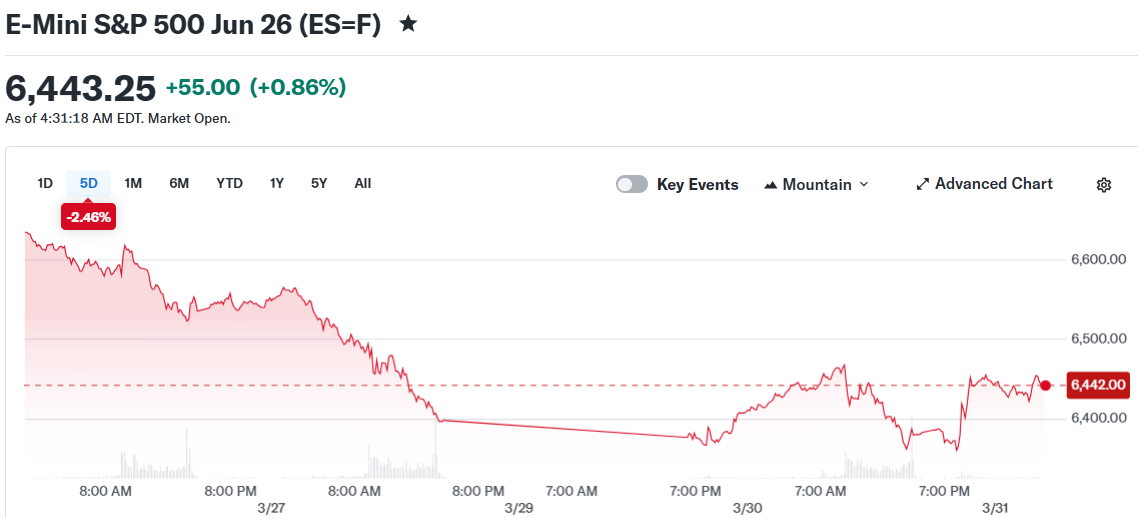
Despite that good news, stocks couldn’t hold their early gains. The Nasdaq ended the day down 0.75% and the S&P 500 fell 0.4%. A selloff in chipmakers weighed on the broader market.
Bitcoin also gave back its early gains and settled near $66,500, roughly unchanged over the past 24 hours.

Oil Prices Keep Rising
The main drag on markets was oil. WTI crude rose 5.3% on Monday to just under $105 per barrel. It was the first time WTI closed above $100 since 2022.
Oil has been trading above $100 since the Iran war began, but Monday’s close marked a new milestone. The conflict has disrupted a key energy supply route, pushing prices higher.
President Trump posted on social media Monday warning that if Iran doesn’t reopen the Strait of Hormuz, the U.S. would strike electricity plants, oil facilities, and possibly desalination infrastructure.
Analysts say the market is still being driven by daily headlines from the conflict. Krishna Guha at Evercore said the focus has shifted toward growth risks from sustained high oil prices.
“The probability of one or more cuts is much higher than the probability of a hike,” Guha said.
Markets Stay on Edge
Chris Senyek at Wolfe Research said his firm is maintaining a defensive position. He noted the Trump administration has sent mixed signals on both escalation and de-escalation of the war.
Chris Larkin at E*Trade from Morgan Stanley said markets will struggle to look past current volatility without a clear end to the conflict.
The bond market is on track for its worst monthly performance since 2024. Stocks are heading toward their worst month since 2022.
The White House has threatened further strikes on Iranian infrastructure as the fifth week of war shows no sign of ending.
Powell said Monday: “We will eventually maybe face the question of what to do here. We’re not really facing it yet.”


