





TLDR
- Elon Musk announced “Terafab,” a chip manufacturing complex in Austin, Texas, involving Tesla, SpaceX, and xAI
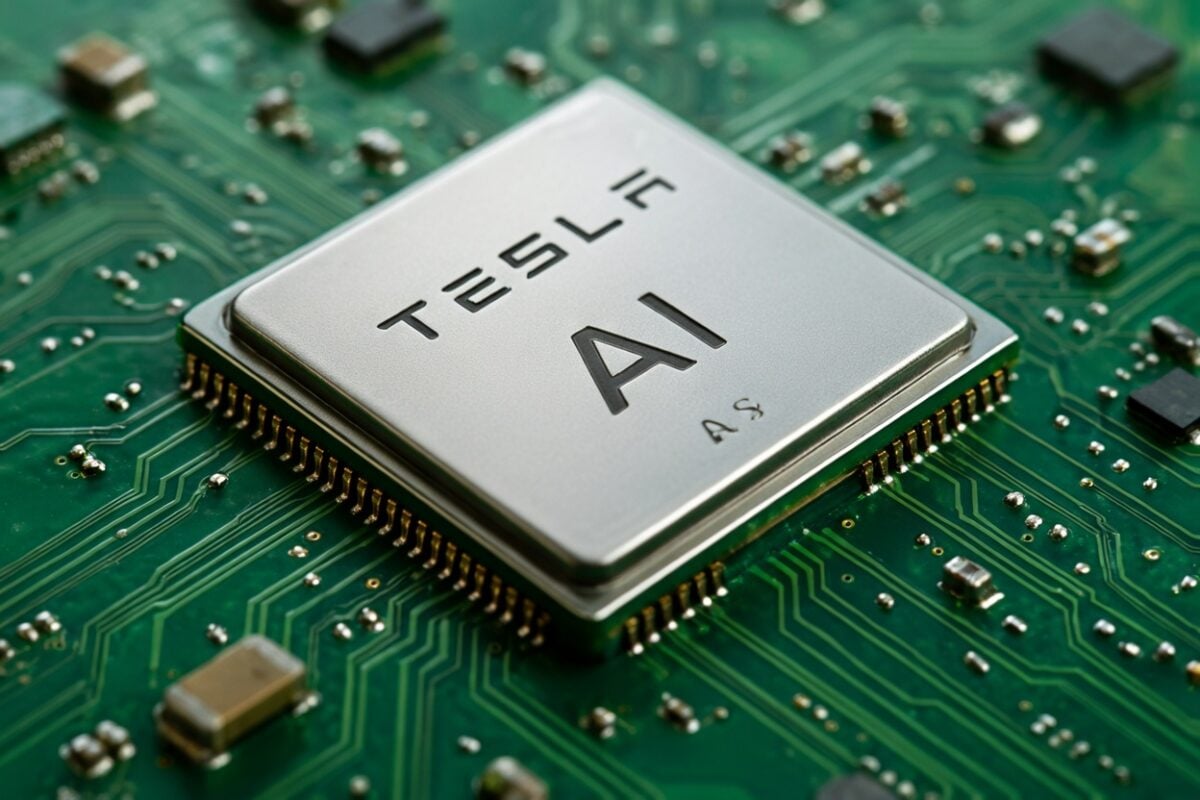
- The facility will produce two chips — one for Tesla vehicles and Optimus robots, one for AI satellites in space
- Musk says current global chip output meets just 3% of his companies’ future needs
- Initial production is targeted for late 2027, with volume production in 2028
- Tesla stock fell around 2–3% in premarket trading following the announcement
Elon Musk unveiled plans for a major chip manufacturing complex called “Terafab” on Saturday night, announcing it will be a joint venture between Tesla, SpaceX, and xAI. The news sent Tesla stock lower in Monday premarket trading.
Announcing TERAFAB: the next step towards becoming a galactic civilization https://t.co/xTA70LOU0e
— SpaceX (@SpaceX) March 22, 2026
Musk made the announcement at a defunct power plant in Austin, Texas. He described Terafab as two separate fabrication facilities, each producing a single chip design.
One chip will be built for use in Tesla vehicles and the Optimus humanoid robot. The other will be engineered for AI computing in space, designed to operate in harsher conditions and higher temperatures.
Musk said existing global chip output would meet only about 3% of his companies’ long-term needs. He named Samsung, TSMC, and Micron as current suppliers, but said demand would eventually outstrip total worldwide production.
The name “Terafab” refers to Musk’s goal of producing chips that require one terawatt of electricity to run — roughly equivalent to one billion Nvidia Blackwell chips per year.

SpaceX’s involvement was not previously disclosed. The company, which recently merged with xAI, is preparing for a public listing that could value it at around $1.75 trillion.
Costs and Timeline
The initial phases of the project will run into the tens of billions of dollars. Tesla already plans to spend about $20 billion on new equipment in 2026, up from less than $9 billion in 2025. Terafab spending sits outside that existing forecast.
Musk is targeting first chip production in late 2027, with full-scale output by 2028. By comparison, semiconductor facilities typically take around three years from breaking ground to producing chips at volume.
Musk said Terafab would eventually produce one terawatt of computing capacity per year. For context, the entire United States currently generates about half that amount.
Space AI the Bigger Driver
One of the more surprising details: Musk believes 80% of Terafab’s output will go toward space-based AI computing. SpaceX plans to handle in orbit what hyperscalers currently do in data centers on the ground.
The Terafab will focus on two-nanometer chip nodes, which are currently the most advanced in the industry.
Tesla stock dropped around 3.2% on Monday. It entered the week down 18% year to date, though still up 48% over the past 12 months.
The stock trades at roughly 190 times estimated 2026 earnings, with investors pricing in future AI-related revenue streams including robo-taxis and robotics.
Tesla launched its robo-taxi service in Austin in June and has not yet expanded it to other cities. The company is also working on a third version of the Optimus robot.
Musk did not provide a specific groundbreaking date for Terafab.
Considering a new stock? You may want to see what’s on our watchlist first.
Our team at Knockout Stocks follows top-performing analysts and market-moving trends to spot potential winners early. We’ve identified five stocks gaining quiet attention that could be worth watching now. Create your free account to unlock the full report and get ongoing stock insights.Get 3 Free Stock Ebooks
Discover top-performing stocks in AI, Crypto, and Technology with expert analysis.
- Top 10 AI Stocks - Leading AI companies
- Top 10 Crypto Stocks - Blockchain leaders
- Top 10 Tech Stocks - Tech giants



