





TLDR
- Tesla CEO Elon Musk announced the company is ending production of Model S and Model X vehicles to focus on autonomous vehicles and humanoid robots
- The company revealed it has 1.1 million paying subscribers for Full Self-Driving software, growing 38% year-over-year
- Tesla currently operates around 500 robotaxis in Austin and San Francisco and plans to add seven new operating areas in 2026
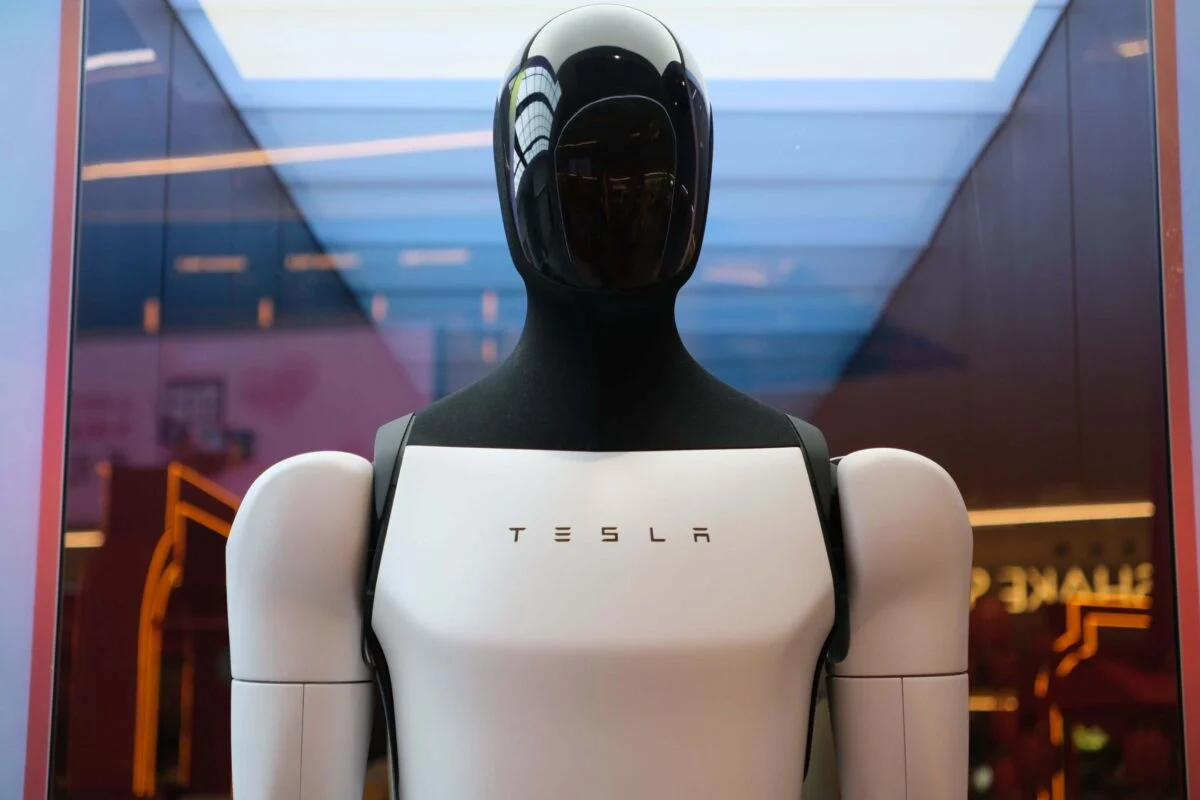
- The company plans to produce Optimus Gen 3 humanoid robots before the end of 2026 with eventual capacity of 1 million units per year
- Tesla’s forward price-to-earnings ratio of 196 times reflects its positioning as a tech company rather than a traditional automaker
Tesla dropped a bombshell during its Q4 earnings call. The electric vehicle maker is ditching two of its most iconic cars to bet everything on autonomous driving and robots.
CEO Elon Musk made it official: The Model S and Model X are being retired. “It’s time to basically bring the Model S and X programs to an end with an honorable discharge,” Musk said.
The Model S launched in 2012 and put Tesla on the map as a serious automaker. Now it’s heading into retirement.
Why? Tesla needs the factory space for new production lines. The company plans to build Cybercab robotaxis and Optimus humanoid robots instead.
“We’re really moving into a future that is based on autonomy,” Musk explained during the call. This isn’t just a product shift. It’s a complete transformation of what Tesla actually is.
The company shared some numbers that tell the story. Tesla now has 1.1 million paying subscribers for its Full Self-Driving software. That’s 38% growth year-over-year.
Compare that to Tesla’s vehicle delivery growth of 22%. The software business is growing faster than car sales.
Lars Moravy, Tesla’s vice president of vehicle engineering, put it simply. “You have to start thinking about us as moving to providing transportation as a service more than the total addressable market for the purchased vehicles alone.”
Tesla already has around 500 robotaxis operating in Austin and the San Francisco Bay Area. The company plans to add seven new operating areas this year.

Musk outlined aggressive expansion plans. Tesla wants to double its robotaxi fleet every month.
William Blair analyst Jed Dorsheimer predicts Tesla will surpass Waymo’s 2,000 vehicle fleet by April. That would make Tesla the largest robotaxi operator in the country.
The Robotaxi Network Takes Shape
The company isn’t just talking about robotaxis. It’s building the infrastructure to support them at scale.
“We are the only company capable of scaling at the rate that is needed for the tsunami of autonomy that is coming,” Moravy said. Strong words, but Tesla is backing them up with production capacity.
Even the Cybertruck is getting repurposed. Musk said Tesla will transition the Cybertruck line to fully autonomous vehicles for local cargo delivery within cities.
That’s a far cry from the personal vehicle Musk unveiled back in 2019. But it fits the new vision.
Optimus Becomes the Main Event
The real bet is on humanoid robots. Tesla plans to reveal the Optimus Gen 3 model this quarter.
Production is scheduled to start before the end of 2026. Tesla is targeting capacity of 1 million robots per year.
The math tells you why Tesla is making this trade. The Model S and X brought in about $3 billion in revenue.
Dorsheimer calculated that if Tesla makes 500,000 Optimus robots at a $50,000 selling price, that’s $25 billion. “It’s clear to us why the company is making this trade,” he wrote.
Canaccord Genuity analyst George Gianarikas called it a “burn-the-ships inflection point.” Barclays analyst Dan Levy said ending the Model S and X marks “the symbolic baton pass for Tesla from Automotive and into Physical AI.”
The stock market seems to like the pivot. Tesla’s forward price-to-earnings ratio sits at 196 times. That’s tech company territory, not automaker multiples.
General Motors and Ford trade at single-digit P/E ratios. Tesla is being valued like a software and AI company, not a car manufacturer.
Wedbush analyst Dan Ives thinks Tesla could hit a $2 trillion market cap in early 2026 and $3 trillion by year-end in a bull case scenario. Tesla currently operates around 500 robotaxis across Austin and San Francisco with plans to expand to seven new cities in 2026.
🚨 Our April Stock Picks Are Live!
A new month means new opportunities. Our analysts have just released their top stock picks for April, highlighting companies with strong momentum that rank highly on our KO Score algorithm. We’re also now sharing trade ideas for both long-term and short-term investors, giving you more ways to spot potential opportunities in the market.
Sign up to Knockout Stocks today and get 50% off to unlock the full list and see which stocks made the cut.
Use coupon code Special50 for your exclusive discount!
Get 3 Free Stock Ebooks
Discover top-performing stocks in AI, Crypto, and Technology with expert analysis.
- Top 10 AI Stocks - Leading AI companies
- Top 10 Crypto Stocks - Blockchain leaders
- Top 10 Tech Stocks - Tech giants



