






TLDR
- March CPI and February PCE reports due this week, first inflation reads since Iran war began
- US added 178,000 jobs in March, beating expectations of 65,000
- Oil prices up over 50% since the war began, gas crossed $4 per gallon nationally
- Delta Air Lines reports Wednesday, a key read on jet fuel cost impact on airlines
- All three major indexes ended five-week losing streaks, finishing up at least 3%
Markets are heading into a busy week with inflation data, corporate earnings, and ongoing developments in the Iran war all in focus.
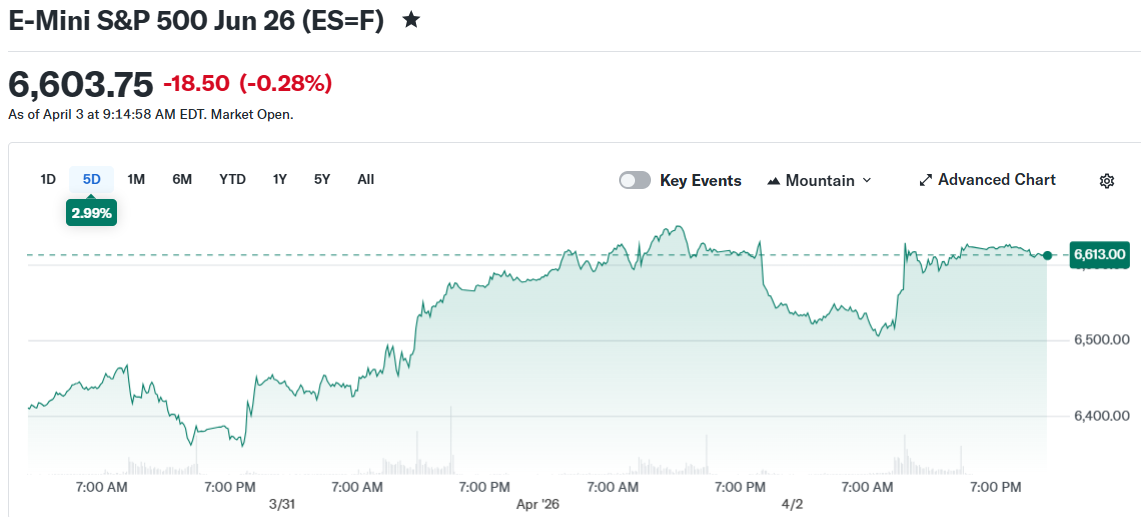
The S&P 500 finished last week up 1.6% for the week, the Dow gained 1.2%, and the Nasdaq rose 2.2%. All three indexes broke five-week losing streaks. The S&P 500 and Dow remain down 3.8% and 3.2%, respectively, for the year.
Friday’s March jobs report came in well above expectations. The economy added 178,000 nonfarm payrolls, compared to the 65,000 economists had forecast. That followed a loss of 92,000 jobs in February.
“The takeaway is balance,” said Gina Bolvin, president of Bolvin Wealth Management Group. “Stronger hiring reduces the urgency for rate cuts, but it doesn’t change the broader cooling trend.”
JPMorgan Chase chief US economist Michael Feroli said the report gave “a little more confidence that economic growth can weather the ongoing energy price shock without too much enduring damage.”
Inflation Data Takes Center Stage
Thursday brings the February Personal Consumption Expenditures report, a key inflation measure watched closely by the Federal Reserve. Economists expect a 0.4% month-on-month rise and a 2.8% year-over-year increase.
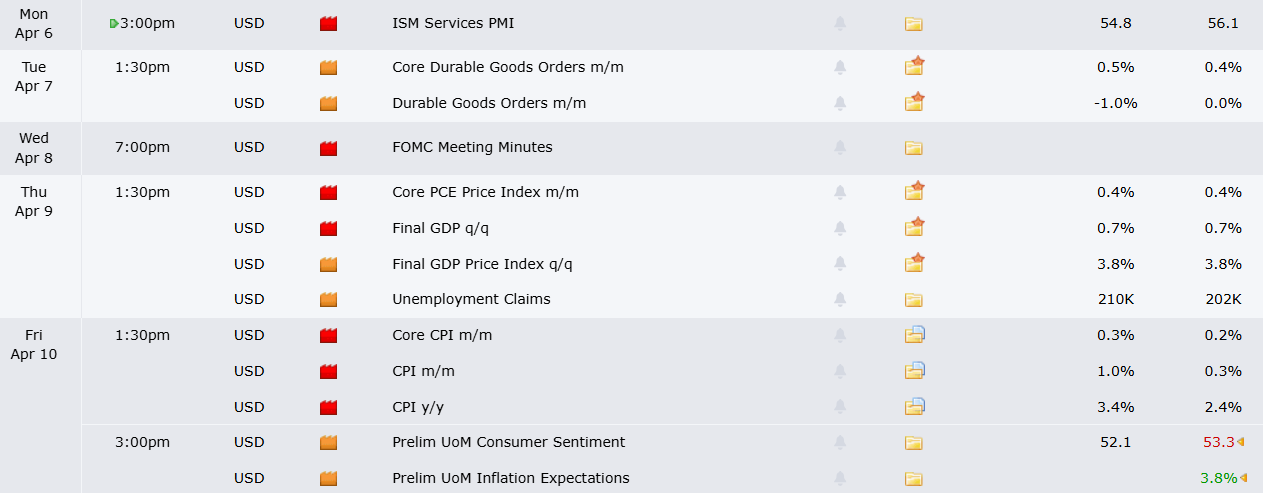
Friday brings the bigger read: the March Consumer Price Index. Economists expect prices rose 0.9% from February and 3.4% year-over-year. February’s CPI came in at 2.4% year-over-year. This report will be the first to capture the effects of the Iran war on prices.
US gas prices crossed $4 per gallon nationally last week, according to AAA. Goldman Sachs analyst Ben Shumway said rising prices are “helping push consumer confidence further downwards from already low levels.”
BNP Paribas senior US economist Andy Schneider wrote that “disruption in the Strait of Hormuz has landed with tariff pass-through still in motion,” adding that “the first stage of oil price pass-through will have arrived in March.”
Goldman economist Manuel Abecasis said the current supply shock is “less concerning than prior episodes that caused inflation problems,” citing its limited size and breadth.
Earnings and the Iran War
Delta Air Lines reports Wednesday before the opening bell. The airline’s results are expected to show how the jump in jet fuel costs is affecting the industry. Constellation Brands and Levi Strauss also report this week.

#earnings for the week of April 6, 2026 https://t.co/hLn2sKQhEY $APLD $STZ $AEHR $DAL $BB $SMPL $GBX $LEVI $NEOG $KRUS $SKIL $WDFC $RELL $ERGP $LOT $XELB $RPM $SLP $CLIR $EVO $IQST $BYRN $PXED pic.twitter.com/aKqX72tj9u
— Earnings Whispers (@eWhispers) April 2, 2026
Wall Street analysts project earnings growth of more than 13% for the S&P 500 as a whole, according to FactSet.
Oil prices have risen more than 50% since the war started five weeks ago. Traffic through the Strait of Hormuz remains near zero. Trump held a press conference Monday with military officials, as a self-imposed deadline to reopen the strait approaches.
Capital.com analyst Daniela Hathorn wrote that “markets are no longer trading the hope of de-escalation, they are trading the probability of escalation.”
Rystad Energy chief oil analyst Paola Rodriguez-Masiu said the temporary buffer that kept prices contained from pre-war oil supplies is now ending.
The Federal Reserve’s March meeting minutes are also due Wednesday at 2 p.m. ET. Traders widely expect the Fed to hold rates steady at its meeting later this month.
Considering a new stock? You may want to see what’s on our watchlist first.
Our team at Knockout Stocks follows top-performing analysts and market-moving trends to spot potential winners early. We’ve identified five stocks gaining quiet attention that could be worth watching now. Create your free account to unlock the full report and get ongoing stock insights.Get 3 Free Stock Ebooks
Discover top-performing stocks in AI, Crypto, and Technology with expert analysis.
- Top 10 AI Stocks - Leading AI companies
- Top 10 Crypto Stocks - Blockchain leaders
- Top 10 Tech Stocks - Tech giants



