





TLDR
- Oil prices surged over 36% in a week, hitting above $91, after the Iran war disrupted Strait of Hormuz shipping
- The S&P 500 is now down 1.5% for the year; the Nasdaq has lost 3.7% since January
- The US economy lost 92,000 jobs in February, well below forecasts of 55,000 added
- Oracle reports earnings Tuesday; Adobe and Hewlett Packard Enterprise also report this week
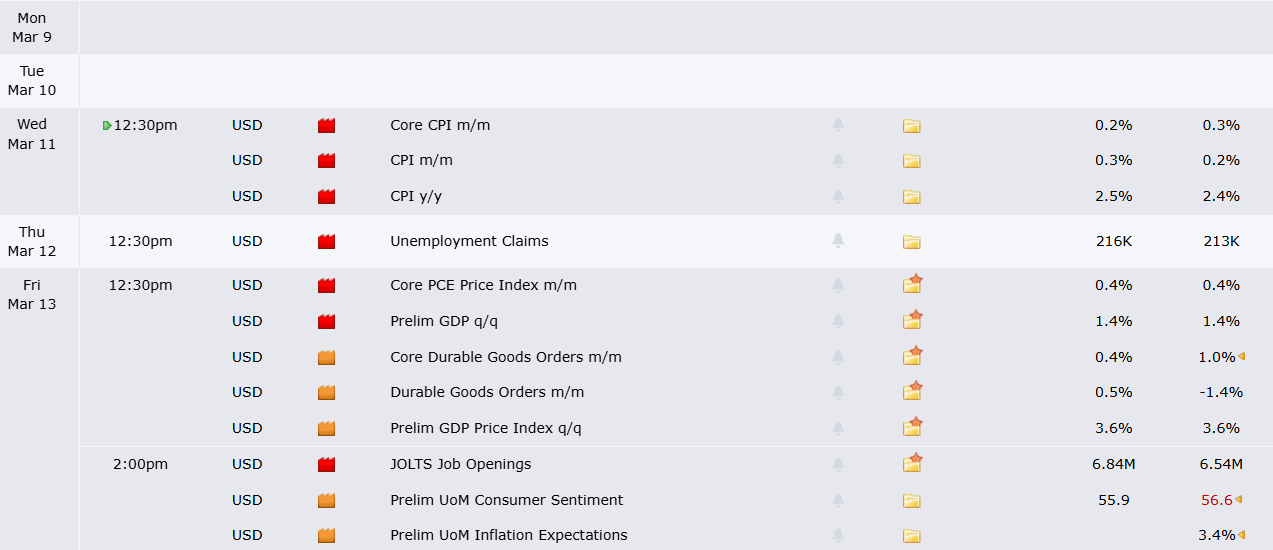
- CPI data drops Wednesday and PCE index Friday, ahead of next week’s Fed rate decision
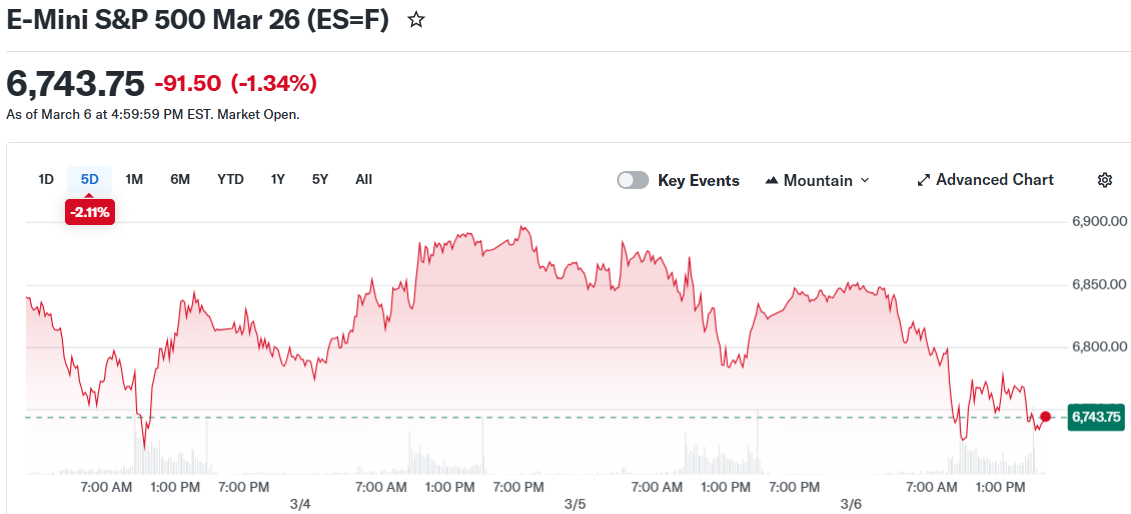
US markets closed Friday deep in the red, capping one of the worst weeks of 2026. The S&P 500 fell 1.3% on Friday alone, putting it down 1.5% for the year. The Nasdaq dropped 1.6% Friday and is now off 3.7% since January 1. The Dow shed around 450 points on the day.
The driver behind most of the market pain is the ongoing war in Iran, which has choked off oil flows through the Strait of Hormuz. The Strait handles roughly one-fifth of the world’s seaborne oil in normal times.
With that transit now halted, around 16 million barrels are stranded with nowhere to go, according to data from Vortexa. Storage is full. Producers are cutting back. Oil prices have surged more than 36% in a single week, hitting above $91 per barrel — the biggest weekly gain since at least 1985.
Vikas Dwivedi, global energy strategist at Macquarie, warned that “a few weeks of Hormuz closure will create a domino effect of events that could push crude to $150 or higher.” Some analysts are now openly talking about that level as a real possibility.
Inflation and the Fed
The oil price spike is landing at the worst possible time for the Federal Reserve. San Francisco Fed president Mary Daly told CNBC on Friday that “the oil price shock, depending on how long it lasts, is a real thing.”
Goldman Sachs estimates that if oil stays elevated for several months, year-over-year headline inflation could climb back toward 3%. The Fed’s target is 2%.
Ten-year Treasury yields have climbed back above 4.14%. Expectations for rate cuts have pulled back as traders weigh the risk that rising crude prices could slow inflation progress. Fed officials including Neel Kashkari and John Williams said it is too early to assess the full impact.
Wednesday’s Consumer Price Index for February and Friday’s Personal Consumption Expenditures index for January will give the clearest read yet on prices ahead of next week’s Fed meeting.
Jobs Miss Adds to Concern
The February jobs report added more pressure. The US economy lost 92,000 jobs, missing forecasts of 55,000 added. Unemployment rose to 4.4%, up from 4.3% in January.

BREAKING: The US economy unexpectedly LOSES -92,000 jobs in February, below expectations of a +58,000 gain.
The unemployment rate was 4.4%, above expectations of 4.3%.
This marks just the 2nd monthly job loss since the 2020 pandemic.
The US labor market is clearly weakening.
— The Kobeissi Letter (@KobeissiLetter) March 6, 2026
Some economists pointed to one-off factors, including a Kaiser Permanente labor strike that removed 37,000 jobs from the count. BNP Paribas economist Andrew Husby called the result a product of “special factors.”
Others disagreed. Gina Bolvin of Bolvin Wealth Management described “a bifurcated market — slower macro growth paired with accelerating technological transformation.” Jack Dorsey’s Block cut 4,000 jobs in February, with its CFO attributing the layoffs directly to artificial intelligence.
#earnings for the week of March 9, 2026 https://t.co/hLn2sKQhEY $ORCL $ADBE $NIO $PATH $RBRK $S $KSS $AVAV $CASY $HPE $ZIM $VOYG $NKTR $DDD $BETA $ZVRA $SERV $FCEL $CPB $ULTA $NSK $CXM $TTAN $ACCO $MTN $YEXT $AUNA $DKS $KFY $SFIX $GNS $NYAX $KRO $LFMD $UMAC $SPRY $STXS $SBET… pic.twitter.com/No54dcR5hZ
— Earnings Whispers (@eWhispers) March 6, 2026
Oracle reports earnings Tuesday. Its stock has lost more than half its value since September highs. The company recently announced plans to raise $50 billion for AI data center construction. Adobe and Hewlett Packard Enterprise also report this week, alongside Dollar General, Li Auto, and Nio.
Considering a new stock? You may want to see what’s on our watchlist first.
Our team at Knockout Stocks follows top-performing analysts and market-moving trends to spot potential winners early. We’ve identified five stocks gaining quiet attention that could be worth watching now. Create your free account to unlock the full report and get ongoing stock insights.Get 3 Free Stock Ebooks
Discover top-performing stocks in AI, Crypto, and Technology with expert analysis.
- Top 10 AI Stocks - Leading AI companies
- Top 10 Crypto Stocks - Blockchain leaders
- Top 10 Tech Stocks - Tech giants



