





TLDR
- All three major U.S. indexes fell last week, with the Nasdaq down 10% year-to-date
- The Strait of Hormuz remains closed, pushing oil prices up over 45% in a month
- March jobs report expected to show just 50,000–56,000 new payrolls on Friday
- Consumer sentiment hit its lowest level since December amid war-driven economic anxiety
- Traders are now pricing a 22% chance of a Fed rate hike by end of 2026
Wall Street is heading into a shortened holiday week with falling stock prices, surging oil, and a jobs report that could set the tone for markets going forward.
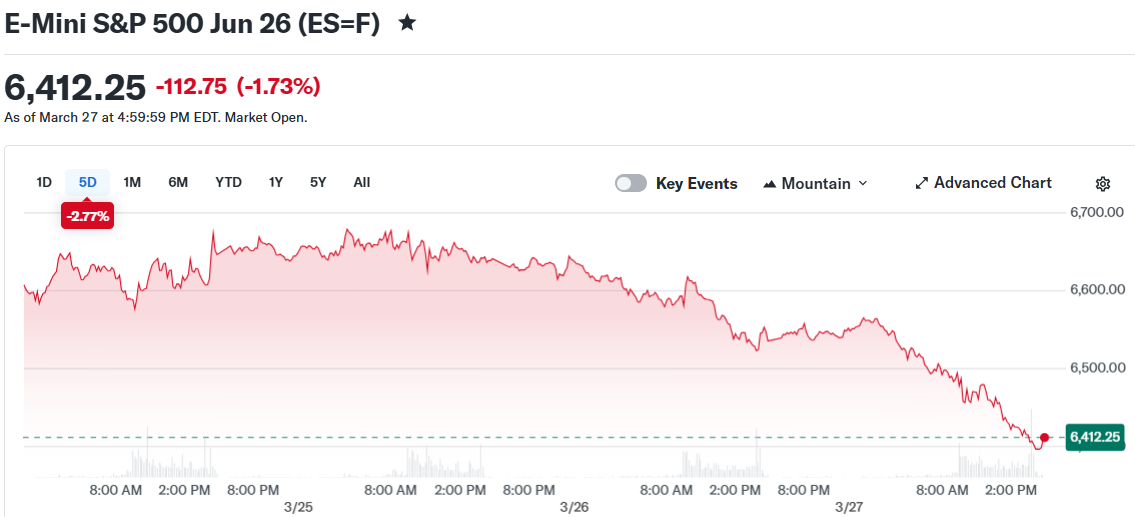
The S&P 500 fell 2.12% last week to close at 6,368.85. The Dow dropped 1.73%, shedding around 800 points on Friday alone. The Nasdaq lost 2.2% on Friday and is now down roughly 10% for the year. All three indexes have now closed below their 52-week moving averages, a technical signal that trend support has broken.
The root cause is the ongoing U.S.-Israeli conflict with Iran, now in its fifth week. The Strait of Hormuz remains effectively closed, cutting off 15 to 16 million barrels of oil per day from global markets. Brent crude is up more than 45% and WTI crude is up over 50% in the past month alone.
BP chief economist Gareth Ramsay called the Strait of Hormuz closure “every analyst’s study piece, or worst nightmare that we thought could never happen.” Iranian parliamentary speaker Mohammad Baqer Qalibaf said the strait “cannot be the same as before.”
Jobs Data in Focus
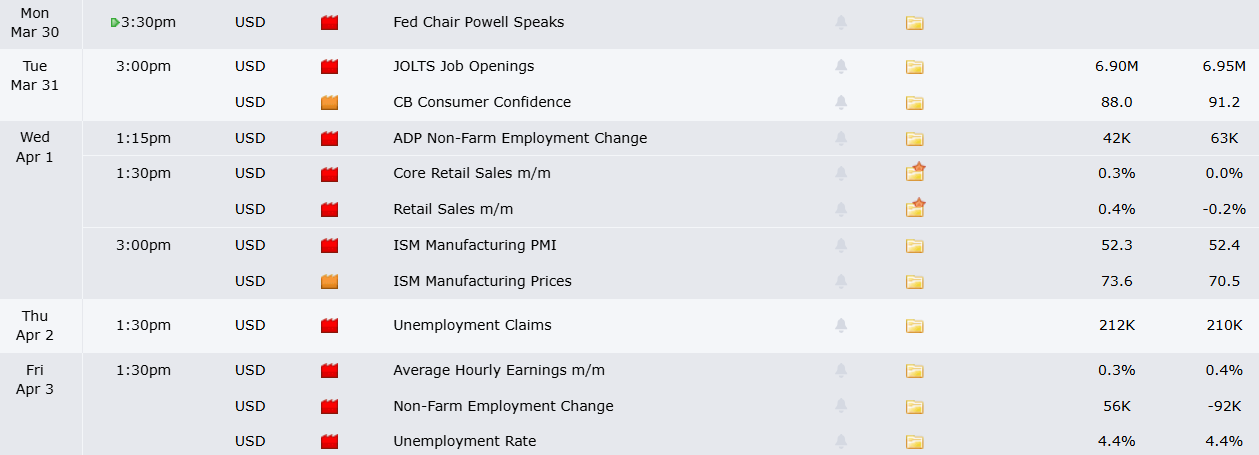
Friday’s nonfarm payrolls report is the most watched event of the week. Economists expect around 50,000 to 56,000 jobs added in March, after a sharp loss of 92,000 jobs in February. The unemployment rate is forecast to hold steady at 4.4%.
Goldman Sachs economist Pierfrancesco Mei estimates higher oil prices will reduce payroll growth by around 10,000 jobs per month through year-end. BNP Paribas economist Andrew Husby said a more severe energy shock would be needed to break the current low-hire, low-layoff trend in the labor market.
Before Friday, investors will also watch consumer confidence data on Tuesday, JOLTS job openings, ADP employment figures on Wednesday, and initial jobless claims on Thursday.
Fed Policy Under Pressure
Bond markets are starting to price in a more hawkish Federal Reserve. The 10-year Treasury yield climbed as high as 4.48%, its highest since July. Two-year yields rose to 4%, gaining over 30 basis points since the Fed’s last meeting.

BofA Global Research economist Aditya Bhave said markets appear to be “anticipating a more hawkish Fed reaction function.” Traders are now pricing a 22% chance of a quarter-point rate hike by the end of 2026.
Headline CPI is expected to move toward 3.5% year-over-year in coming months as gasoline prices near $4 per gallon nationally.
#earnings for the week of March 30, 2026 https://t.co/hLn2sKQhEY $BYND $NKE $RZLV $LW $PAVM $NCNO $BNZI $BTBT $FRMI $MKC $NG $PRGS $DMAC $AAUC $RH $SPWH $ALTI $FTHM $BLNE $PENG $TE $CAG $PRPL $SGMO $TLRY $ARKO $UNF $PROP $REKR $PDSB $INV $NAMM $NMRA $VNRX $SPCE $CBAT $DUOT… pic.twitter.com/Zn7lJywr3J
— Earnings Whispers (@eWhispers) March 27, 2026
On the earnings front, Nike reports Tuesday, with its outlook on China demand closely watched. ConAgra, Lamb Weston, and Cal-Maine Foods report Wednesday. Tesla is also set to release monthly delivery data this week.
Federal Reserve Chair Jerome Powell speaks on Monday, and markets will watch closely for any signals on the policy path ahead.
Considering a new stock? You may want to see what’s on our watchlist first.
Our team at Knockout Stocks follows top-performing analysts and market-moving trends to spot potential winners early. We’ve identified five stocks gaining quiet attention that could be worth watching now. Create your free account to unlock the full report and get ongoing stock insights.Get 3 Free Stock Ebooks
Discover top-performing stocks in AI, Crypto, and Technology with expert analysis.
- Top 10 AI Stocks - Leading AI companies
- Top 10 Crypto Stocks - Blockchain leaders
- Top 10 Tech Stocks - Tech giants



