





TLDR
- The DXY dollar index rose as high as 1% to 99.34, its highest level since January 2026.
- The dollar gained roughly 1% against both the euro and yen since the Iran conflict began.
- The U.S. benefits from energy independence, making the dollar less vulnerable to oil price shocks.
- Europe faces pressure from soaring natural gas prices, pushing EUR/USD down about 1%.
- Analysts at ING say DXY could target the 99.50–100.00 range while energy prices stay elevated.
The U.S. dollar has climbed to its highest level since January 2026 as conflict in the Middle East expanded, pushing investors back into the greenback as their preferred safe-haven asset.
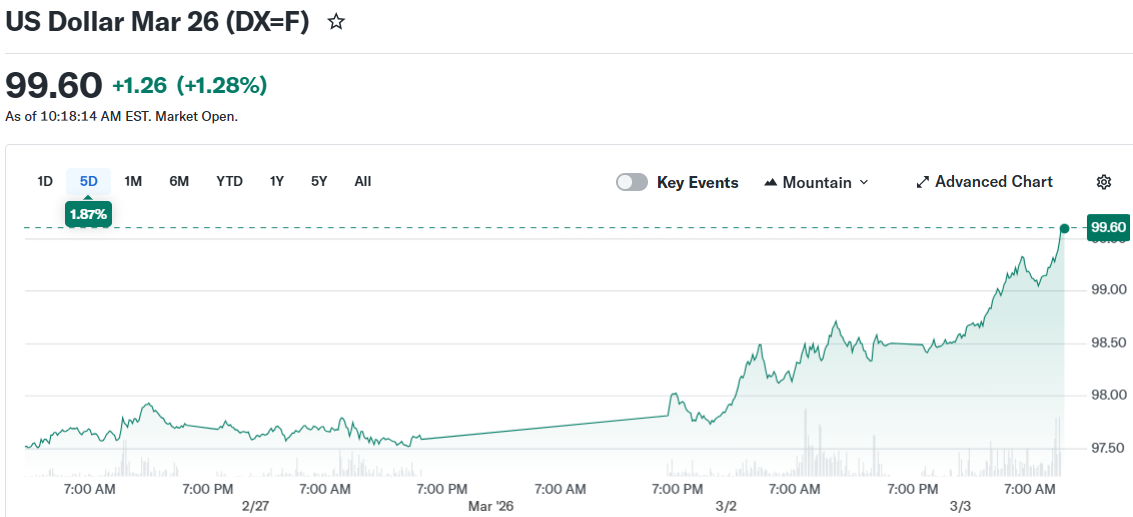
The DXY dollar index, which measures the dollar against a basket of six major currencies, rose around 1% on Tuesday to 99.34. That extends a gain of nearly 1% from Monday.
The dollar strengthened against both the euro and the Japanese yen by around 1% since the start of the Iran conflict. Both currencies had been seen by some investors as alternatives to the dollar over recent months.
The conflict began mainly between the U.S. and Iran but has since spread to neighboring countries. Reports said the U.S. embassy in Riyadh came under missile attack. Amazon data centers in the UAE and Bahrain were also reportedly struck as part of Iranian retaliatory strikes.
The U.S. State Department ordered the departure of non-emergency government personnel and family members from Bahrain, Iraq, and Jordan on Tuesday. Israel said it was targeting both Iran and Lebanon at the same time, after Hezbollah attacked Tel Aviv with missiles and drones.
Why the Dollar Is Benefiting
Analysts point to U.S. energy independence as a key reason the dollar is outperforming. The U.S. has large domestic energy reserves, making it less exposed to rising oil prices than Europe or Asia.
“The dollar looks the best currency to take advantage of this energy shock,” ING analyst Chris Turner wrote. Countries like Australia and Norway, which are also large energy exporters, have also seen their currencies hold up.
The current rally follows months of doubt about the dollar’s safe-haven appeal. The currency failed to rally during last year’s tariff-driven market selloff, which led some to question whether de-dollarization was accelerating.

David Morrison, senior market analyst at Trade Nation, said the move was “a strong indication that the U.S. dollar remains the go-to safe-haven currency” and that those calling for further weakness “may be a bit early.”
Euro Under Pressure from Energy Costs
EUR/USD fell around 1% to 1.1581 on Tuesday. Europe imports most of its energy, and natural gas prices have surged because of the conflict.
ING said large long positions in the euro mean few traders are likely to buy the dip unless there are clear signs of de-escalation. The Eurozone flash inflation figure for February was due later Tuesday, with the annual rate expected at 1.7%. ING said any upside surprise on inflation could give the euro limited support by making the European Central Bank more cautious about rate cuts.
Despite the recent rally, the dollar is still down about 6.5% over the past 12 months on the DXY index. ING analysts said the DXY looks likely to stay supported in the near term, with 99.50 to 100.00 as the near-term target while energy prices remain elevated.
Considering a new stock? You may want to see what’s on our watchlist first.
Our team at Knockout Stocks follows top-performing analysts and market-moving trends to spot potential winners early. We’ve identified five stocks gaining quiet attention that could be worth watching now. Create your free account to unlock the full report and get ongoing stock insights.Get 3 Free Stock Ebooks
Discover top-performing stocks in AI, Crypto, and Technology with expert analysis.
- Top 10 AI Stocks - Leading AI companies
- Top 10 Crypto Stocks - Blockchain leaders
- Top 10 Tech Stocks - Tech giants



