





TLDR
- The U.S. economy lost 92,000 jobs in February, far below the expected gain of 55,000–60,000
- Unemployment rose to 4.4%, above the forecast of 4.3%
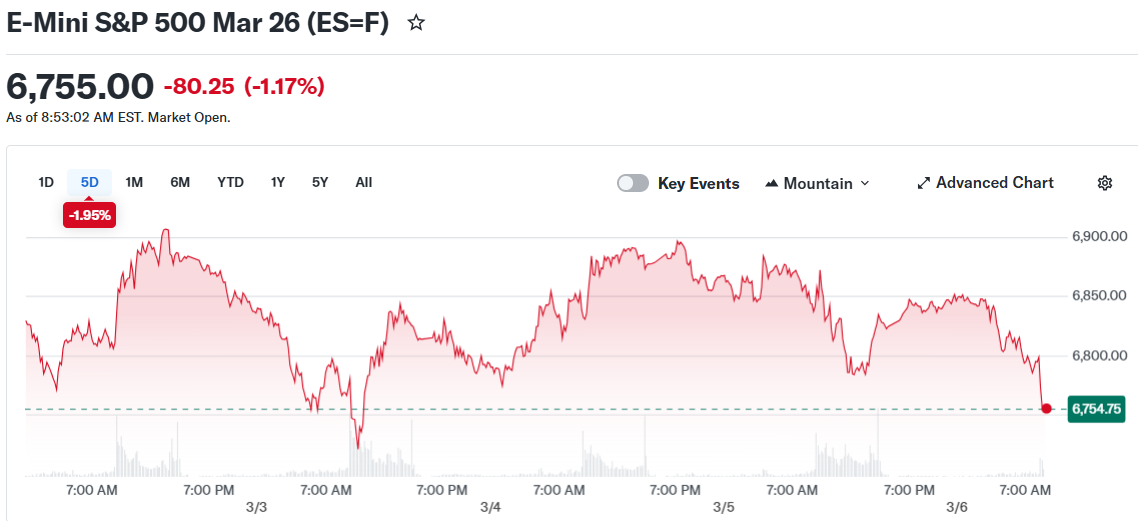
- Dow, S&P 500, and Nasdaq futures all fell sharply on Friday morning
- Oil prices surged over 6%, with WTI topping $86 a barrel on fears of Gulf supply cuts
- The Dow has now fallen over 2% for the week and is in negative territory for 2026
U.S. stock futures dropped sharply on Friday morning after two separate events rattled investors: a weak jobs report and rising oil prices tied to the conflict in the Middle East.
The February jobs report showed the U.S. economy shed 92,000 nonfarm payroll jobs. Analysts had expected a gain of between 55,000 and 60,000 jobs.
The unemployment rate ticked up to 4.4%, slightly above the expected 4.3%. The Bureau of Labor Statistics released the data Friday morning.
BREAKING: The US economy unexpectedly LOSES -92,000 jobs in February, below expectations of a +58,000 gain.
The unemployment rate was 4.4%, above expectations of 4.3%.
This marks just the 2nd monthly job loss since the 2020 pandemic.
The US labor market is clearly weakening.
— The Kobeissi Letter (@KobeissiLetter) March 6, 2026
Dow Jones futures fell around 0.7% to 0.8% following the report. S&P 500 futures dropped roughly 0.8%, and Nasdaq 100 futures slid about 1%.
All three indexes were already trading lower before the jobs data came out but fell further after the release.
Treasury yields moved lower after the report. The 2-year yield dropped to around 3.57%, while the 10-year yield fell to 4.13%. Lower yields often signal that investors are pricing in a higher chance of interest rate cuts.

Oil Jumps on Middle East Supply Fears
Oil prices surged on Friday. West Texas Intermediate futures rose more than 6%, pushing past $86 a barrel. Brent crude futures climbed nearly 5%, trading above $89.
Qatar’s energy minister warned the conflict involving Iran could force Gulf exporters to halt production within days. He also said prices could reach $150 a barrel if the situation escalates.
Tanker traffic in the Strait of Hormuz is near a standstill, adding pressure to global supply concerns. Both WTI and Brent are on track for their biggest weekly gain in four years.
U.S. gas prices at the pump have hit their most expensive level since 2024. The Trump administration awarded India a temporary waiver to purchase Russian crude in an effort to cool the rally.
What the Jobs Miss Could Mean for Rate Cuts
A weak jobs number typically increases pressure on the Federal Reserve to cut interest rates. However, analysts say the odds still favor no rate cuts in the first half of the year.
The data will be watched closely ahead of the Fed’s next meetings. Any move on rates depends on how the broader economy holds up.
The Dow has now fallen more than 2% for the week and has turned negative for 2026. The S&P 500 is also on track for a weekly loss.
The Nasdaq Composite may end the week with a small gain, bucking the broader trend.
As of Friday morning, the 30-year Treasury yield stood at 4.74%, reflecting the shifting rate outlook after the jobs miss.
Considering a new stock? You may want to see what’s on our watchlist first.
Our team at Knockout Stocks follows top-performing analysts and market-moving trends to spot potential winners early. We’ve identified five stocks gaining quiet attention that could be worth watching now. Create your free account to unlock the full report and get ongoing stock insights.Get 3 Free Stock Ebooks
Discover top-performing stocks in AI, Crypto, and Technology with expert analysis.
- Top 10 AI Stocks - Leading AI companies
- Top 10 Crypto Stocks - Blockchain leaders
- Top 10 Tech Stocks - Tech giants



