






TLDR
- The Dow, S&P 500, and Nasdaq all fell on Friday, with the Nasdaq down 1% and deeper in correction territory
- Oil prices surged over 2%, with Brent crude above $103 a barrel, as Middle East conflict continued
- Trump extended his Iran strike deadline by 10 days to April 6, but markets did not respond positively
- The S&P 500 is on track for its fifth straight weekly decline, the longest losing streak since spring 2022
- The VIX fear gauge spiked to around 30, signaling traders expect more volatility ahead
US stocks dropped again on Friday as oil prices climbed and investors showed little confidence that the Iran conflict would end soon.
The Nasdaq Composite fell 1%, pushing further into correction territory. The Dow Jones Industrial Average dropped around 500 points, or 1.1%. The S&P 500 fell close to 1%.
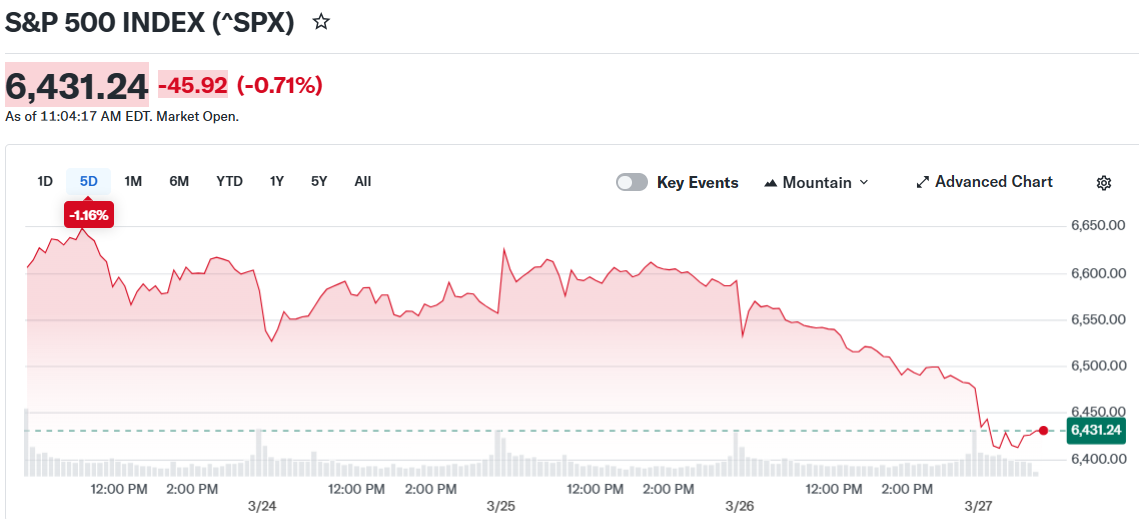
The S&P 500 is now on pace for its fifth straight weekly decline. That would be its longest losing streak since spring 2022.
Oil was a major driver of the selloff. Brent crude climbed above $103 a barrel. West Texas Intermediate topped $97. Both benchmarks were up more than 2% on the day.
The rise in oil came despite President Trump extending his deadline for Iran. He had previously said the US would strike Iran’s energy infrastructure if a deal was not reached by Friday. Late Thursday, he pushed that deadline to April 6 at Iran’s request.
Trump sets a new Iran deadline: April 6 pic.twitter.com/SOVLyGGZ5j
— Annmarie Hordern (@annmarie) March 26, 2026
Markets did not treat the extension as good news. Traders remained worried that the pause simply gives higher oil prices more time to weigh on the global economy.

“It’s another one of those days where futures drift lower throughout the morning as traders follow the new daily routine of getting up, brushing their teeth, and clicking ‘Sell,'” said Paul Hickey, co-founder of Bespoke Investment Group.
Strait of Hormuz traffic has been halted due to the conflict, adding pressure to energy markets. Iran has so far rejected US attempts to reach a deal.
Fear Gauge Spikes
The CBOE Volatility Index jumped 2.6 points to around 30, a level that signals traders expect rough conditions in the weeks ahead.
Hickey noted that the Nasdaq is heading for its 10th down week in the last 11. He said that kind of consistent decline has only appeared in a small number of periods in the index’s entire history.
Consumer sentiment data released Friday also pointed to growing pessimism among American households.
Treasury yields were mixed on the day. Ten-year yields hit an eight-month high earlier in the week, with some analysts saying bond market pressure could push Trump toward ending the conflict sooner.
Shutdown Bill Passes Senate
The Senate passed a bill early Friday to fund the TSA and other Department of Homeland Security operations, though it excluded funding for ICE. The vote moves toward ending a partial federal shutdown that has disrupted airports and raised concerns about economic damage.
Gold faced extra pressure from central bank reserve sales, according to market reports from Friday morning.
As of midday Friday, the Dow was down over 500 points, the S&P 500 was off about 1%, and the Nasdaq had fallen 1.3%.
Considering a new stock? You may want to see what’s on our watchlist first.
Our team at Knockout Stocks follows top-performing analysts and market-moving trends to spot potential winners early. We’ve identified five stocks gaining quiet attention that could be worth watching now. Create your free account to unlock the full report and get ongoing stock insights.Get 3 Free Stock Ebooks
Discover top-performing stocks in AI, Crypto, and Technology with expert analysis.
- Top 10 AI Stocks - Leading AI companies
- Top 10 Crypto Stocks - Blockchain leaders
- Top 10 Tech Stocks - Tech giants



