



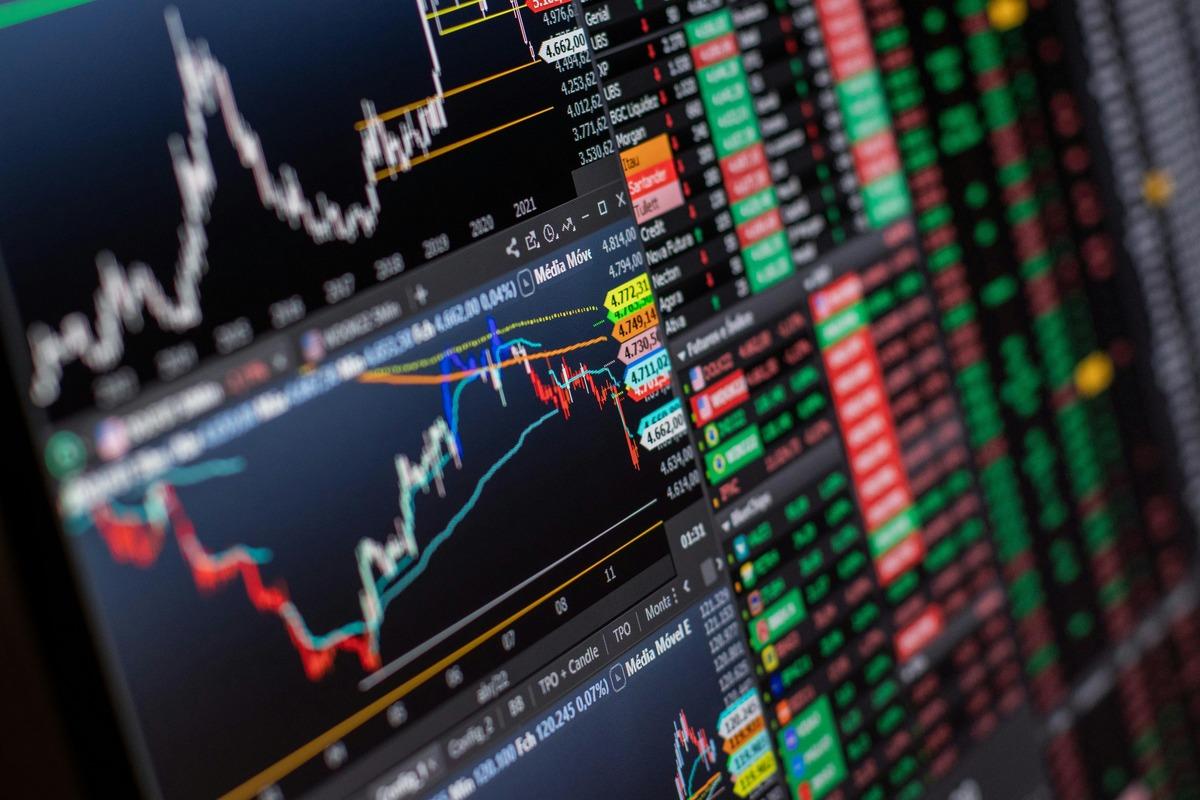


The landscape of retail trading has morphed into something nearly unrecognizable from a decade ago.
If you go back to the early 2020s, the “retail revolution” was mostly about individuals trying to catch a lucky break on meme stocks or high-leverage crypto plays using their own savings.
Fast forward to 2026, and the vibe has shifted entirely.
We aren’t seeing a decline in participation; rather, we’re seeing a professionalization of the individual trader.
A massive wave of market participants is moving away from the “personal account” model and toward a structured, funded environment.
This isn’t just a fad; it’s a calculated response to a global economy that has become increasingly expensive and volatile.
Between rising capital requirements and the sheer evolution of funded models, trading with your own rent money is becoming a thing of the past.

1. The Evolution of Retail Trading Participation
The retail trading growth we’re witnessing today has its roots in the massive boom of the pandemic era.
Back then, everyone was stuck at home, and the barriers to entry were slashed by a new generation of online trading platforms.
What started as a hobby for millions has matured into a global movement.
Today, global traders are more educated than their predecessors.
We’ve moved past the simple “buy and hold” mentality.
Trading participation trends show that people aren’t just looking for a place to park their money; they are looking for a career path.
The democratization of information means that a trader in a remote village has the same access to real-time data as someone in a Manhattan high-rise.
This level playing field has naturally funneled people toward more sophisticated ways of interacting with the market.
2. Market Volatility and Its Impact on Retail Traders
If 2026 has taught us anything, it’s that the “quiet market” is a relic of history.
We are seeing sustained market volatility across the board, from the forex market trends influenced by shifting interest rates to the wild swings in equities and crypto.
For the solo trader, this is a double-edged sword.
Volatility creates opportunity, but it’s also a meat grinder for small accounts.
Economic uncertainty has made trading risk management a non-negotiable skill.
When you’re trading a $2,000 personal account, a single “black swan” event can wipe you out before you even have time to click “close.”
This fragility is pushing people away from the isolation of personal accounts and toward the structured, risk-controlled environments of professional firms.
3. Capital Constraints and the Need for External Funding
Let’s be honest: you can’t make a living off a $1,000 account without taking reckless, “gambling-style” risks.
As inflation has bitten into personal savings, the average person has less “disposable” capital to risk on a brokerage account.
If you want to see meaningful returns, the kind that pay bills, you need a significant bankroll.
Trading with your own life savings is psychologically draining.
The fear of losing the money meant for your mortgage leads to “scared money” trading, which almost always fails.
Access to external capital has become the great equalizer.
It allows skilled traders to bypass the years of “penny-stacker” grind and move straight into managing sizes that can actually change their financial trajectory.
4. The Rise of Prop Trading as an Alternative Model
This is where the industry has really stepped up.
The growing popularity of Prop Trading reflects a shift toward performance-based capital allocation in modern financial markets.
Instead of you bringing the money, you bring the skill.
Proprietary trading firms provide the liquidity, and you provide the strategy.
The prop trading model is built on a simple “skin in the game” philosophy: profit-sharing.
Most funded trader programs allow the trader to keep 80% or even 90% of the gains.
More importantly, these firms provide trading capital access within a structured risk framework.
You aren’t just given a pile of cash and told to go wild; you’re given a set of rules that actually help you stay in the game longer.
5. Cost Considerations and Accessibility of Prop Firms
The math of a prop firm is hard to argue with.
To trade a $100,000 account on your own, you need $100,000.
To trade a $100,000 funded account, you might only need a few hundred dollars for an evaluation fee.
This has fundamentally changed trading affordability.
Many traders now explore options like the cheapest prop trading firm to minimize upfront costs while accessing larger capital.
These low-cost trading options act as a filter.
Instead of risking your entire net worth, you’re essentially “renting” professional-grade capital.
When you compare prop firm fees to the potential losses of a personal account, the “entry fee” model looks a lot more like a smart insurance policy than an expense.
6. Technology and Infrastructure Driving the Shift
We couldn’t have this conversation without mentioning the tech.
Prop trading platforms have moved far beyond basic charts.
Today’s traders are using a suite of trading technology, from the classic MT4 and MT5 to the more modern cTrader and bespoke proprietary dashboards.
These systems offer trading analytics tools that were once only available to institutional hedge funds.
Real-time risk monitoring keeps traders from blowing up, while automated dashboards track every metric of your performance.
For the firms, this tech allows them to manage thousands of traders simultaneously across the globe without losing sleep over a single rogue actor.
7. Changing Trader Mindset and Behavior
Perhaps the most positive shift is in trading psychology. The “get rich quick” mentality is dying.
Because prop firms have strict drawdown rules, they essentially force you to be a better trader.
You can’t just “YOLO” into a position if you want to keep your funding.
This has fostered a culture of disciplined trading.
Traders are now focusing on consistency in trading rather than home-run swings.
The strict rules of a funded program act as a mentor, punishing bad habits before they become fatal.
People are finally starting to treat trading like a business rather than a trip to the casino.
8. Global Expansion and Accessibility
The beauty of this model in 2026 is its borderless nature.
Remote trading opportunities mean that someone in Southeast Asia can trade for a firm based in London or New York.
Global trading access has removed the geographical barriers that once kept high finance locked behind the doors of major financial hubs.
Traders often compare the best prop firms for us traders and global platforms to find suitable funding opportunities.
While international traders often have more flexibility, the US market remains a massive hub for innovation in the space.
This competition between firms to attract the best talent, regardless of where they live, is a huge win for the individual.
9. Competitive Landscape and Industry Growth
The sheer number of prop firms entering the space has created a buyer’s market.
We’re seeing constant innovation: instant funding models and no-time-limit evaluations.
We also see aggressive scaling plans that allow a trader to grow from managing $50k to $1M in a matter of months.
This competitive pressure is forcing firms to offer better spreads, lower commissions, and higher profit splits just to keep their seats filled with talented people.
10. What This Shift Means for the Future of Retail Trading
We are witnessing the “institutionalization” of the retail trader.
The lines are blurring; a funded retail trader using institutional tools and capital is, for all intents and purposes, a professional.
As more traders enter the space, understanding how different prop firms operate becomes essential for navigating this evolving landscape.
The future of trading isn’t about who has the biggest bank account; it’s about who has the best edge.
Performance-based funding is the new standard.
Conclusion
The rise of funded trading is more than just a pivot in strategy; it’s a total overhaul of the retail ecosystem.
Driven by a volatile economy, the need for capital, and incredible technological leaps, the modern trader has realized that they don’t have to go it alone.
By adopting funded models, the “little guy” finally has the firepower to compete on the big stage.
We’ve moved into an era where skill is the only true currency, and that’s a win for everyone involved.


