






TLDR
- A study by Amberdata found WLFI dropped more than five hours before a $6.93 billion crypto liquidation on October 10, 2025
- WLFI’s hourly trading volume hit $474 million — 21.7x normal levels — shortly after tariff-related news broke
- Funding rates on WLFI perpetual futures reached 2.87% per eight hours, implying a 131% annualized borrowing cost
- Analyst Mike Marshall said the five-hour lead time was “hard to dismiss as a coincidence”
- WLFI’s realized volatility was nearly eight times that of Bitcoin during the event
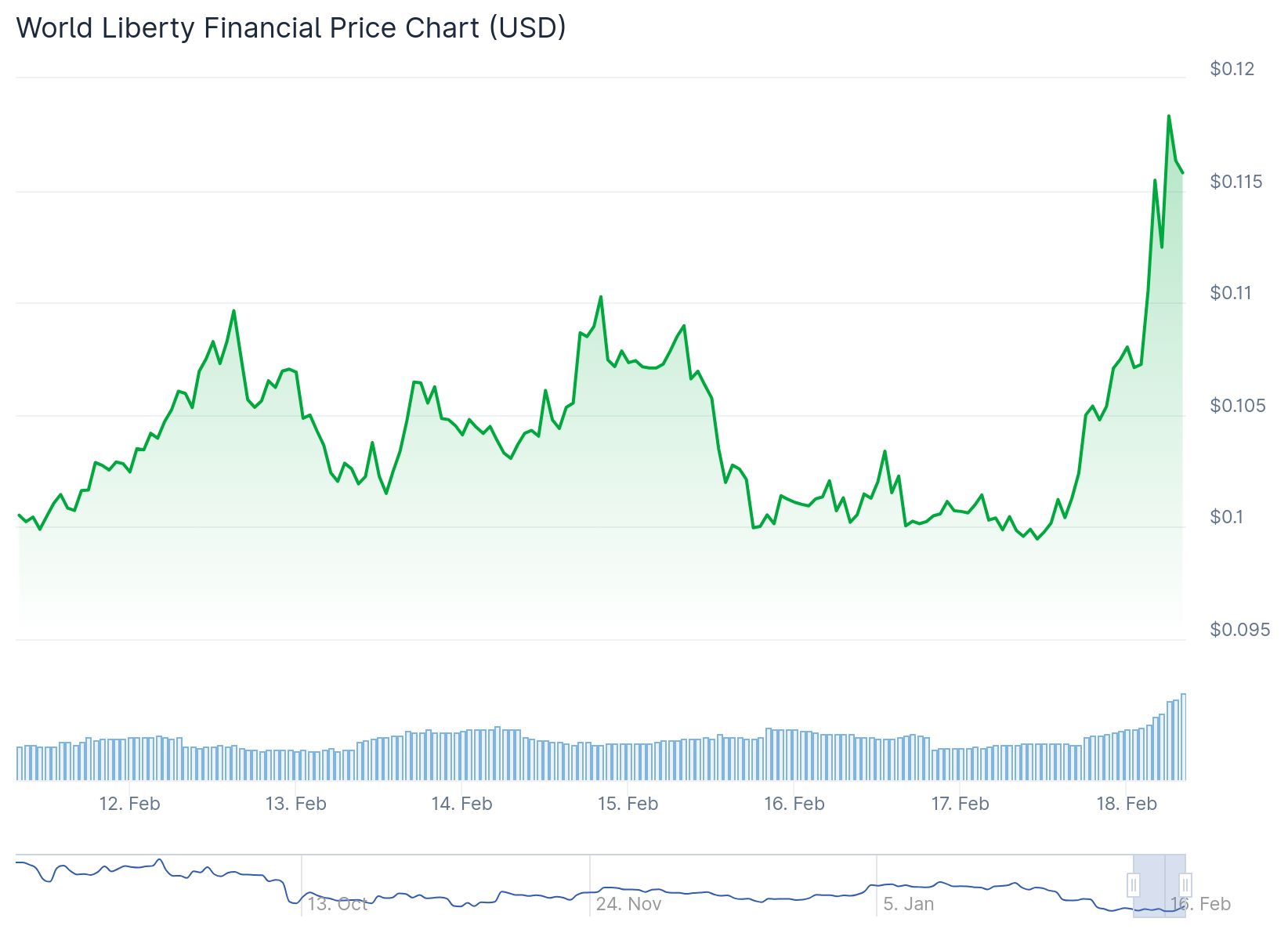
World Liberty Financial (WLFI) is currently trading at $0.116. The Trump-backed DeFi governance token has drawn attention after a new study suggested it may have predicted one of crypto’s biggest liquidation events.
On October 10, 2025, WLFI dropped sharply. What followed was a $6.93 billion liquidation cascade that hit the broader crypto market roughly five hours later.
The research comes from Amberdata analyst Mike Marshall. He identified three key anomalies in WLFI’s behavior before the crash: a surge in trading volume, a sharp divergence from Bitcoin’s price, and extreme leverage levels.
WLFI’s hourly trading volume hit approximately $474 million shortly after tariff-related political headlines broke. That was 21.7 times its normal volume.
WLFI broke first. Bitcoin followed.
5+ hours before $6.93B in liquidations hit the market, $WLFI was already flashing stress:
• 21.7x volume spike
• 131% annualized funding
• 8x BTC volatilityBTC was still near $121K.
When leveraged collateral cracks, contagion spreads… pic.twitter.com/LwSI0J8cRq— Amberdata (@Amberdataio) February 16, 2026
Funding rates on WLFI perpetual futures climbed to 2.87% every eight hours. That translated to an annualized borrowing cost of around 131%, showing traders were paying heavily to hold leveraged positions.
Marshall noted that trading activity accelerated just three minutes after the tariff news went public. He said that speed pointed to prepared execution rather than a typical retail reaction.

How WLFI’s Structure Spread the Damage
WLFI’s holder base is described by Amberdata as concentrated among politically connected participants. This differs from Bitcoin’s wider distribution.
When concentrated assets fall quickly, margin buffers shrink. Exchanges then trigger automatic liquidations, forcing the sale of other assets including Bitcoin and Ethereum.
During the October event, Bitcoin fell around 15% and Ether dropped roughly 20%. Smaller tokens lost as much as 70% in the same window.
WLFI’s realized volatility during the episode was nearly eight times that of Bitcoin. Marshall said this showed the token reacted to stress much faster than larger assets.
The study also noted that WLFI’s influence on the market exceeded what its market cap alone would suggest, due to its role as collateral in leveraged positions.
Signal Value and Its Limits
Marshall was careful to note the analysis covered only a single event. That limits how much statistical confidence can be placed in the pattern.
He also pointed out that market signals tend to lose value once traders start watching them closely. The more attention the “WLFI Signal” gets, the less predictive it may become.
The study did not allege insider trading, but it raised questions about how concentrated ownership and cross-collateralization can distort price discovery.
A separate Senate inquiry into WLFI’s reported $500 million investment from the UAE remains ongoing.
WLFI is currently trading at $0.116.


