

2025’s DeFi landscape has exposed the cost of opacity. According to cybersecurity firm Hacken, Web3 projects lost $3.1 billion to hacks in just the first half of the year — with 59% of incidents tied to access-control flaws and insider key compromises. The Q1 2025 report from Immunefi measured another $1.63 billion in crypto losses, while De.Fi’s REKT Q3 Report recorded $434 million drained across more than 40 exploits — 87 % of which came from the ten largest attacks. Collectively, these figures confirm that the industry’s core weakness lies in hidden code and unverified teams.
In this environment, XRP Tundra attracts analyst attention for its methodical transparency. Every operational element — from smart-contract audits to presale economics — is public, allowing investors to examine evidence directly and confirm the project’s integrity.
Verified from Code to Team Identity
Three independent audits — Cyberscope, Solidproof, and FreshCoins — cover Tundra’s contracts on both Solana and XRPL. Each report details logic validation, supply controls, and exploit testing. Public accessibility means anyone can cross-check the audit scope and confirm remediation.
Complementing the technical layer, Tundra’s team completed identity verification through Vital Block KYC. The certification functions as formal accountability infrastructure. Many 2025 rug-pulls involved anonymous or unreachable founders, leaving no traceable party once funds vanished. Public KYC documentation creates a measurable deterrent and establishes a legal trail, converting transparency into a working layer of investor protection.
Dual-Token Clarity and Predictable Economics
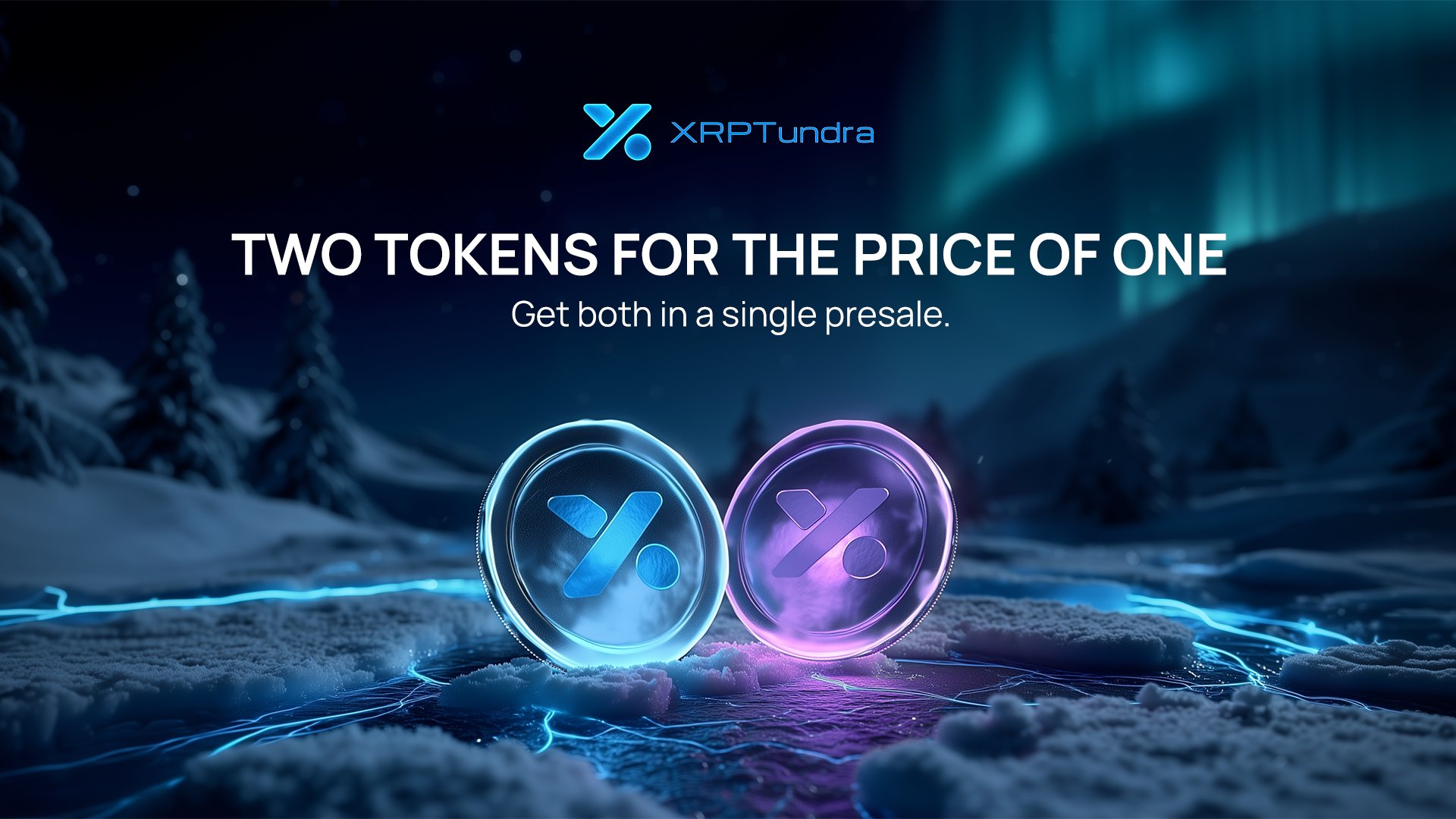
Many DeFi launches merge governance, liquidity, and reward functions into a single token, creating confusion and audit blind spots. XRP Tundra applies a transparent split between roles. TUNDRA-X, built on the XRP Ledger, manages reserves and governance decisions. TUNDRA-S, deployed on Solana, drives staking activity and liquidity operations. This separation allows auditors to review each function independently and removes the conditions that enabled supply manipulation in several 2025 token failures.
Economic data surrounding the project are published in full. Phase 9 sets TUNDRA-S at $0.147 with an 11 % token bonus, and includes free TUNDRA-X at a $0.0735 reference price. Confirmed listing targets — $2.5 for TUNDRA-S and $1.25 for TUNDRA-X — define valuation parameters openly, while more than $2 million in presale funding can be verified on-ledger.

Reward distribution follows the same standard of openness. The Arctic Spinner mechanism converts token purchases into on-chain spin-based bonuses recorded in real time. Each spin result — 4 %, 10 %, 16 %, or 20 % — appears on the ledger and is credited instantly to participant wallets. This eliminates the off-chain accounting gaps that caused several presale collapses during 2024 and 2025.
Market reviewers, including HotCuppaCrypto, have noted that such economic clarity limits speculation by letting buyers see complete parameters before they participate. Transparency becomes part of the product design, not a post-launch promise.
Architecture That Addresses 2025 Attack Patterns
The year’s largest breaches highlight two dominant exploit classes:
1. Contract vulnerabilities — re-entrancy, unchecked minting, and upgrade backdoors.
2. Operational failures — private-key leaks, bridge exploits, and unverified liquidity withdrawals.
Tundra’s audit-and-ledger model mitigates both.
- Audit coverage on XRPL and Solana explicitly tests for re-entrancy and admin-key control, blocking the backdoor routes used in billion-dollar incidents identified by Hacken and Immunefi.
- Ledger-native staking through Cryo Vaults means users stake XRP without wrapping tokens or surrendering custody, eliminating the cross-chain bridge vector that accounted for roughly 40 % of 2025’s stolen value.
- DAMM V2 liquidity pools on Solana use dynamic fee schedules — starting near 50 % and normalizing to 0.25 % — to make rapid dump-and-drain behavior economically unfeasible.
- Finally, the public KYC and open audit trail give regulators and security researchers identifiable operators, improving post-incident recovery prospects — a rarity in anonymous DeFi.
The result is a security posture built on observable mechanisms, not marketing reassurances.
Transparency as Competitive Edge
In an environment where the average DeFi exploit now costs hundreds of millions, transparency has become an asset class of its own. XRP Tundra translates that reality into engineering: every audit public, every allocation fixed, every reward traceable. Analysts describe it as “verifiable by design” — a principle that aligns institutional oversight with retail participation.